
These notes explain the concept of elasticity in physics. They cover the basic principles and key terms you need to know.
What’s covered?
| Topic | Description |
|---|---|
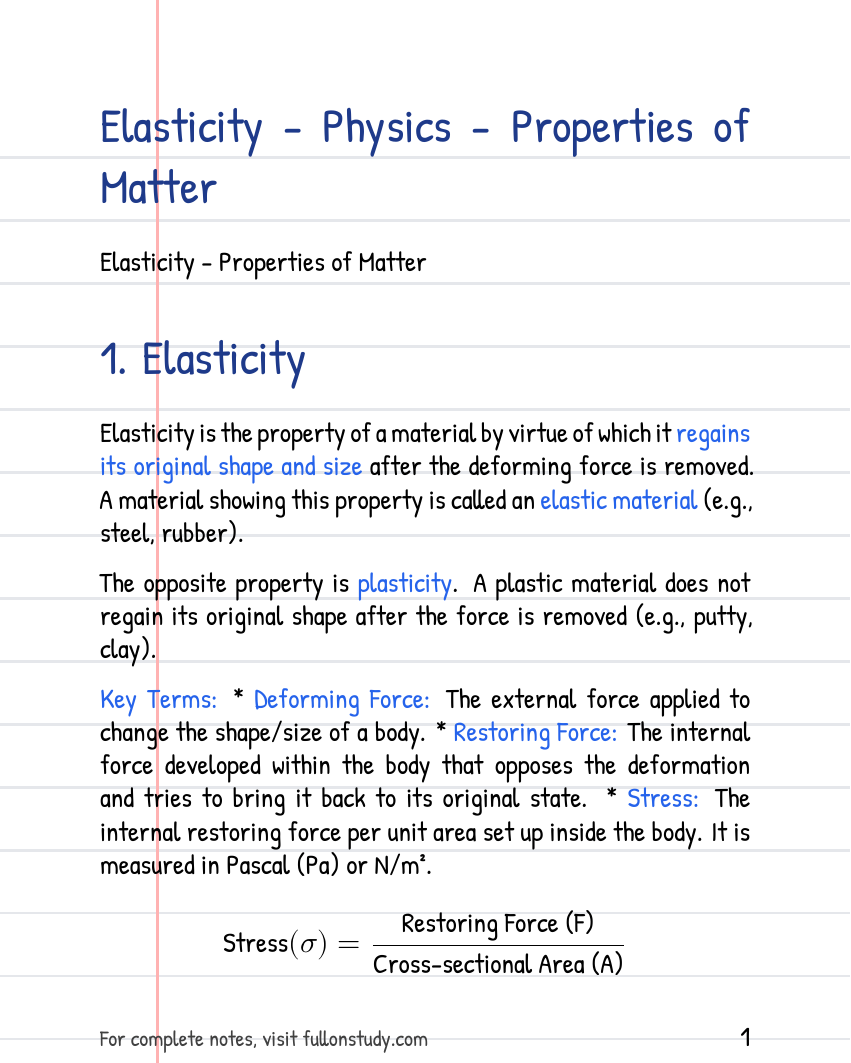
| Elasticity | The property of a material to regain its original shape after force is removed. |
| Plasticity | The opposite property where a material does not return to its original shape. |
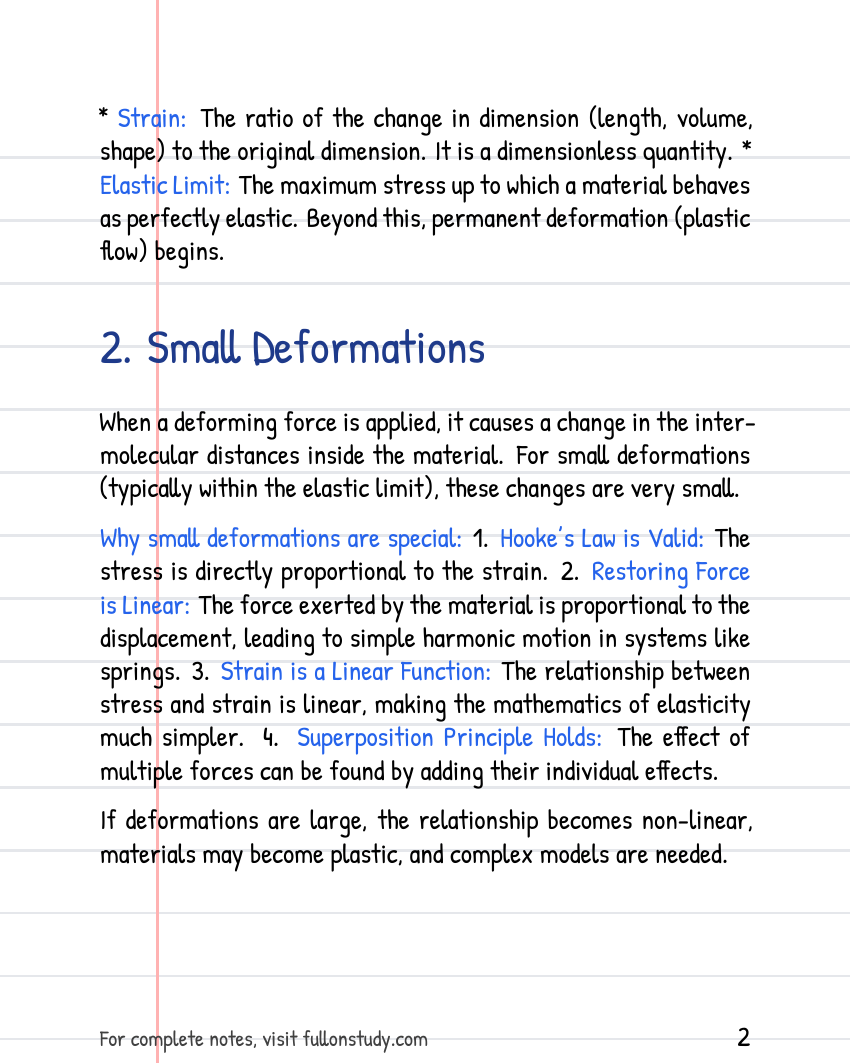
| Key Terms | Definitions of deforming force, restoring force, stress, strain, and elastic limit. |
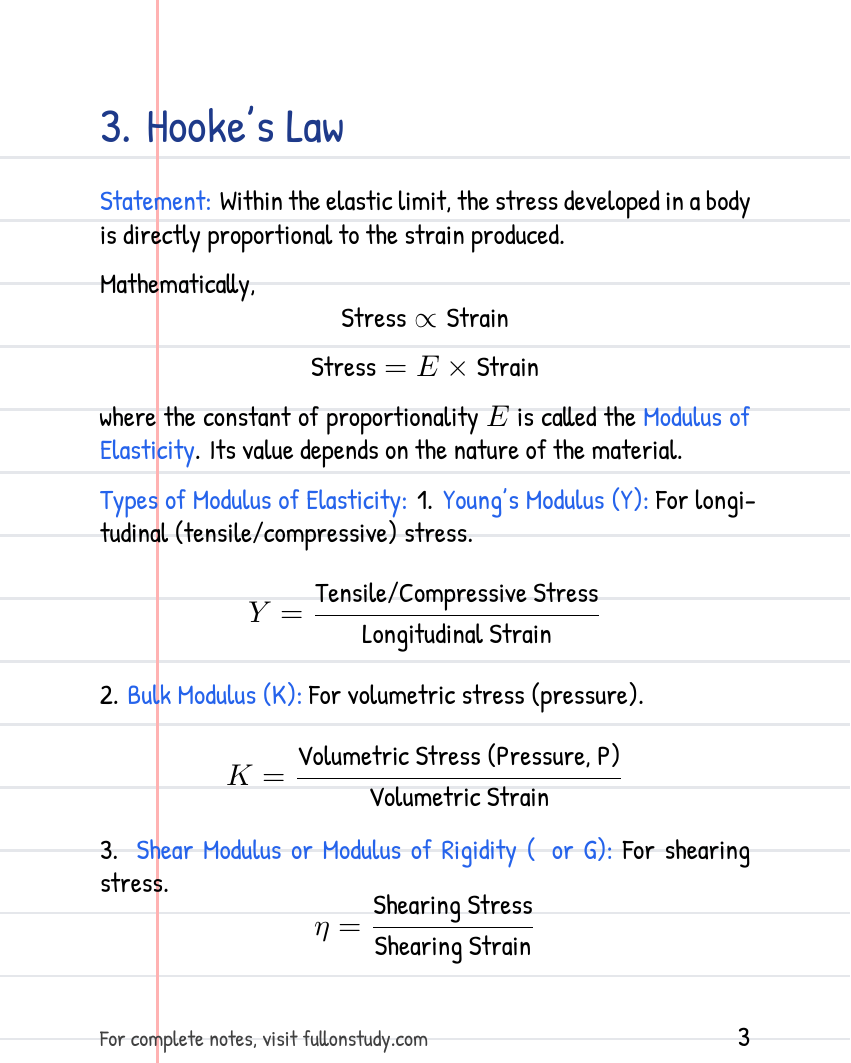
| Small Deformations | Why small deformations are special, including Hooke’s Law and linear relationships. |
Features
- Easy to understand explanations with clear examples.
- Complete syllabus covered for BSc Physics notes.
- Free to download in pdf format for offline study.
- Questions and answers at the end of each topic to test your knowledge.
FAQs
What is elasticity?
Elasticity is the property of a material that allows it to return to its original shape and size after a deforming force is removed. Steel and rubber are common elastic materials.
What is the difference between stress and strain?
Stress is the internal restoring force per unit area inside a material, measured in Pascal. Strain is the ratio of change in dimension to the original dimension, and it has no units.
Why are small deformations important?
For small deformations, Hooke’s Law applies, making the stress-strain relationship linear. This simplifies calculations and allows the superposition principle to work.
- 📄 Format PDF Document
- 🔓 Access Free
- 💾 File Size 0.08 MB
- 📖 Pages 10
- ✅ Reviewed By Manisha Joshi, M.Sc, Physics
- 🗓️ Last Updated April 10, 2026
×
![Preview enlarged]()