
Get a clear overview of the skeletal system for your BSc Nursing Anatomy course. This guide covers basic concepts, directional terms, and bone classification.
What’s covered?
| Topic | Description |
|---|---|
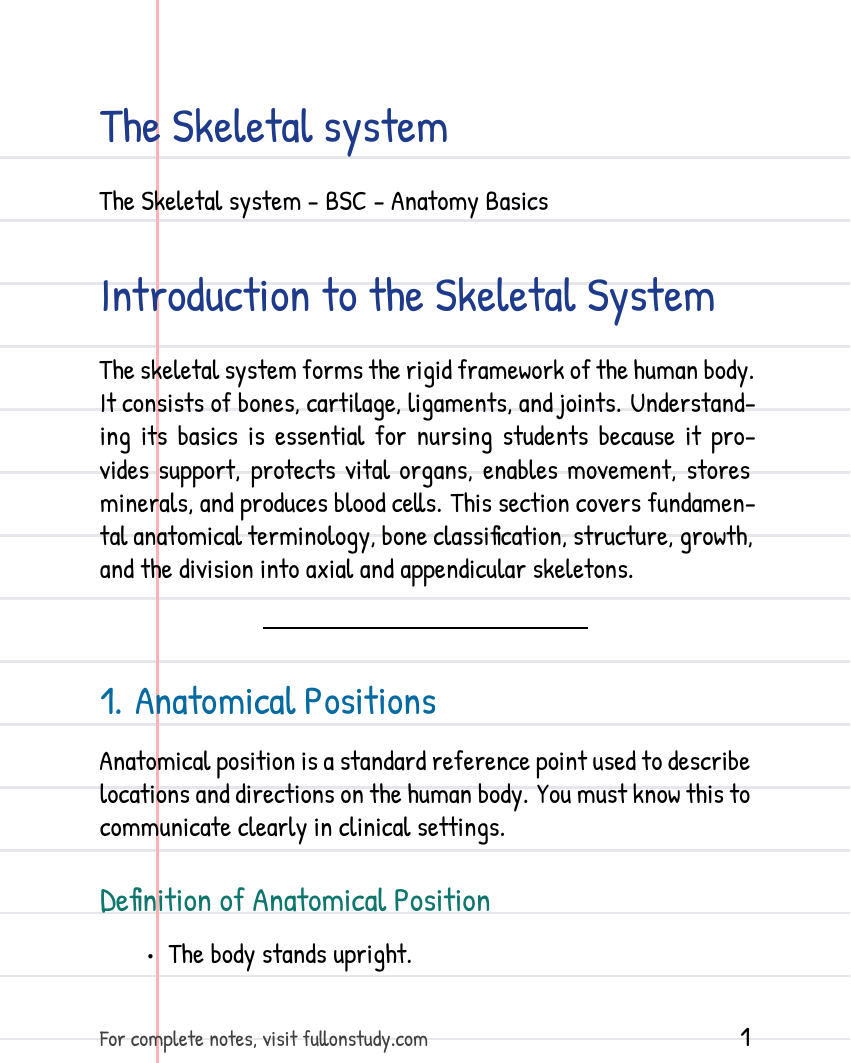
| Anatomical Position | Standard reference point for body descriptions |
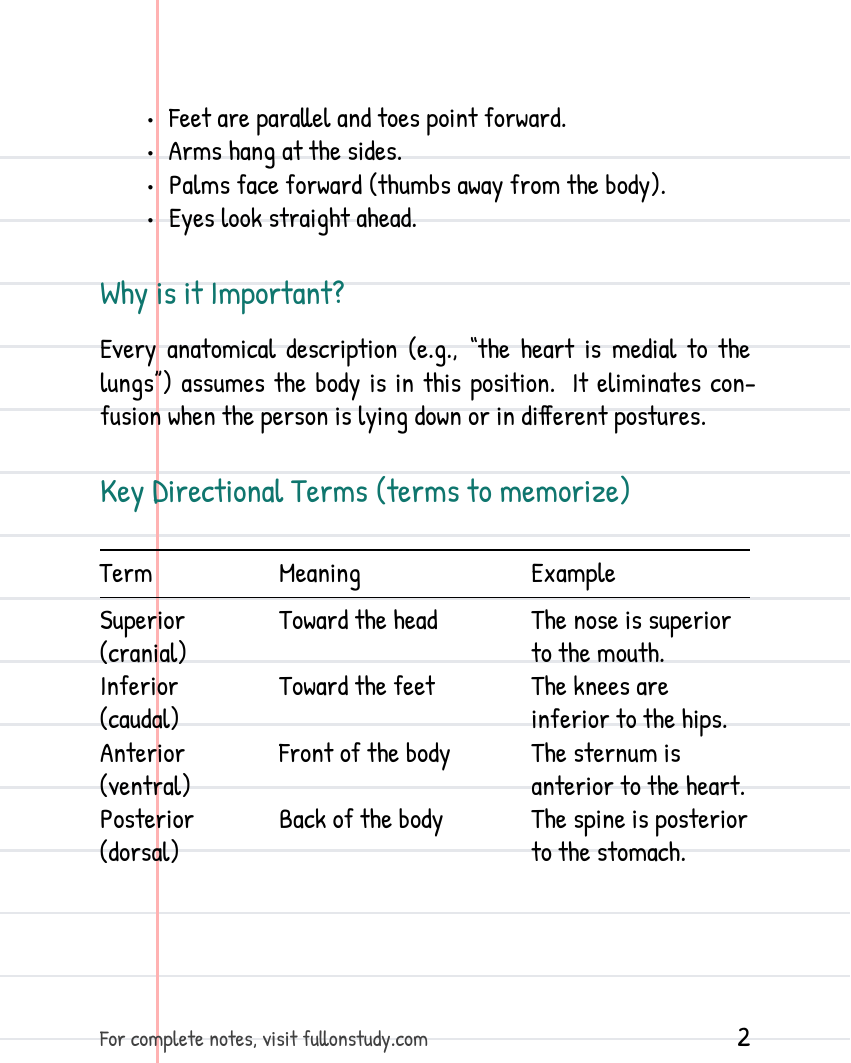
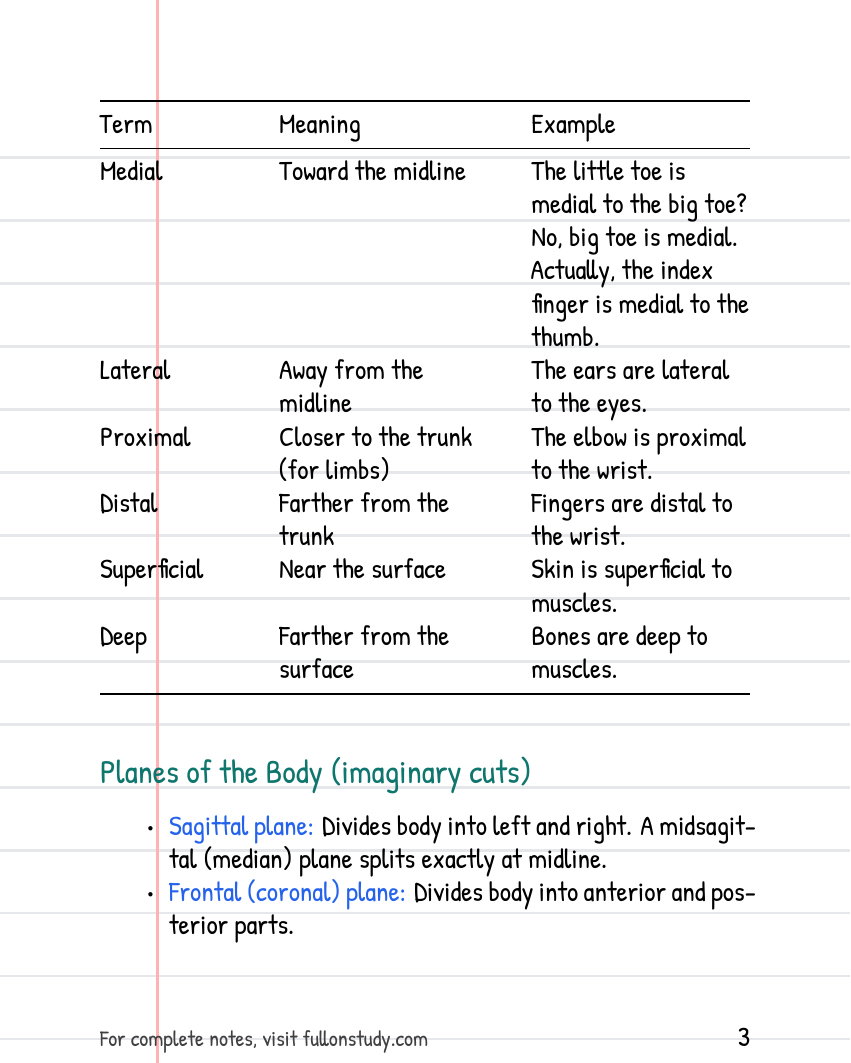
| Directional Terms | Superior, inferior, anterior, posterior, medial, lateral, proximal, distal |
| Bone Classification | Types of bones based on shape |
| Bone Structure | Compact and spongy bone |
| Axial vs Appendicular Skeleton | Division of the skeleton |
Features
- Easy to understand language
- Complete syllabus covered
- Free to download in pdf format
- Questions and answers at end of each topic
FAQs
What is the anatomical position? It is a standard upright stance with palms facing forward, used to describe body parts consistently.
Why are directional terms important? They provide precise communication in clinical settings, regardless of the patient’s posture.
How are bones classified? By shape: long, short, flat, irregular, and sesamoid.
- 📄 Format PDF Document
- 🔓 Access Free
- 💾 File Size 0.06 MB
- 📖 Pages 13
- ✅ Reviewed By Team Fullonstudy
- 🗓️ Last Updated May 29, 2026
×
![Preview enlarged]()