
Looking for comprehensive Blood notes for your BSC Applied Physiology course? This guide provides a complete overview of blood, its functions, and characteristics, perfect for exam revision. You can access these B.Sc. Applied Physiology notes as a free download in pdf format.
What’s covered?
| Topic | Description |
|---|---|
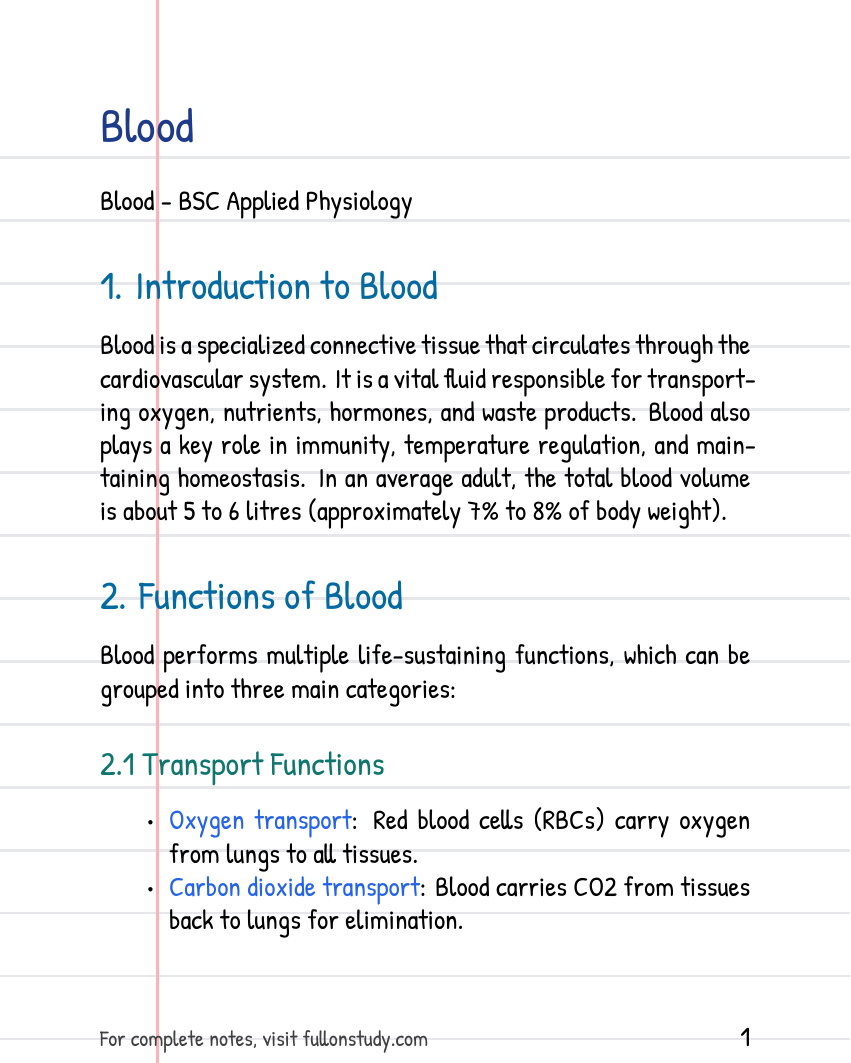
| Introduction to Blood | Definition, composition, volume |
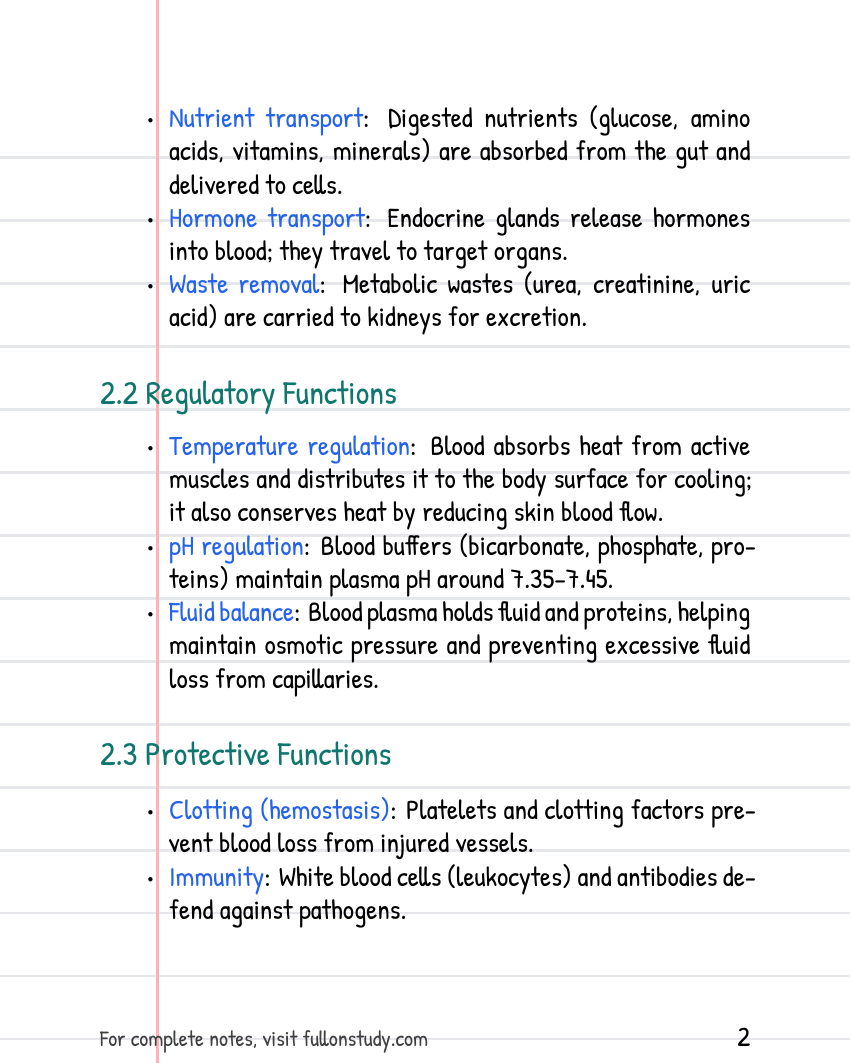
| Functions of Blood | Transport, regulatory, protective |
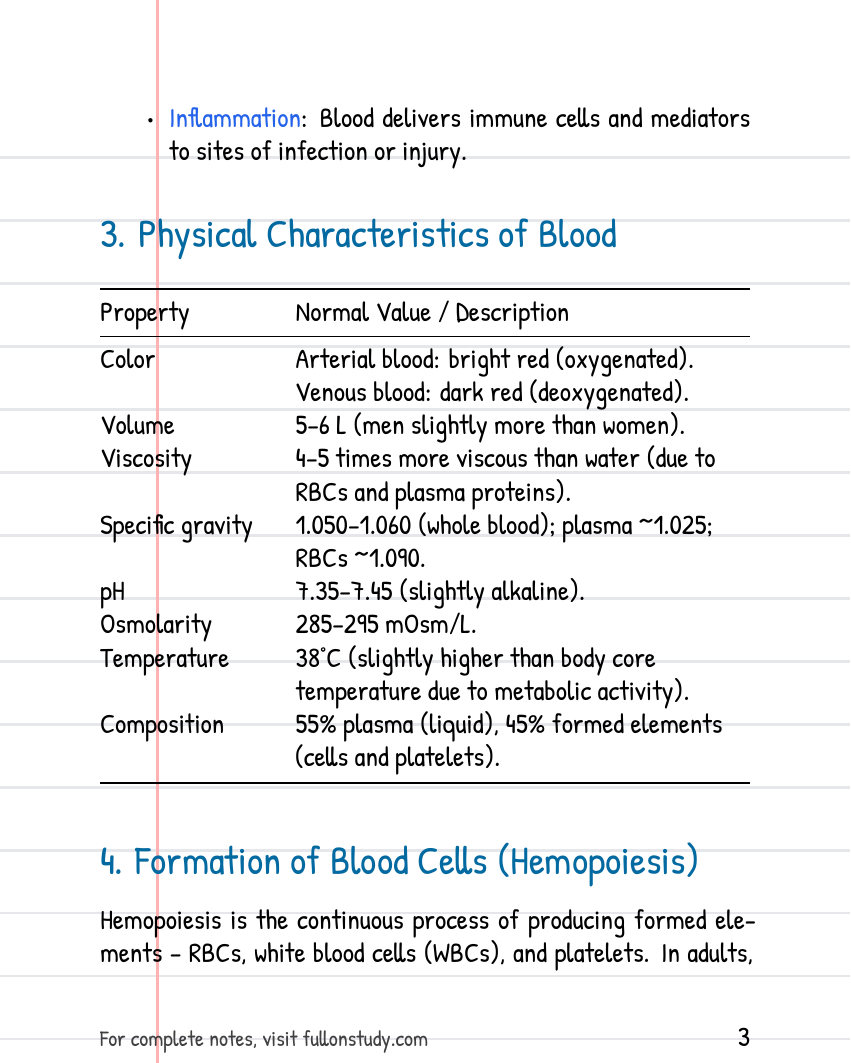
| Physical Characteristics | Color, pH, viscosity, etc. |
Features
- Easy to understand language
- Complete syllabus covered
- Free to download in pdf format
- Questions and answers at end of each topic
FAQs
What is the main function of blood? Blood transports oxygen, nutrients, hormones, and waste, regulates pH and temperature, and protects via immunity and clotting.
How is blood volume measured? Average adult has 5-6 liters, about 7-8% of body weight.
What are the physical characteristics of blood? Blood is slightly alkaline (pH 7.35-7.45), viscous, and bright red when oxygenated.
- 📄 Format PDF Document
- 🔓 Access Free
- 💾 File Size 0.12 MB
- 📖 Pages 23
- ✅ Reviewed By Team Fullonstudy
- 🗓️ Last Updated May 29, 2026
×
![Preview enlarged]()