
Looking for detailed The Sensory Organs notes for your nursing or physiology course? These notes cover applied physiology of skin functions in an easy-to-understand format.
What’s covered?
| Topic | Description |
|---|---|
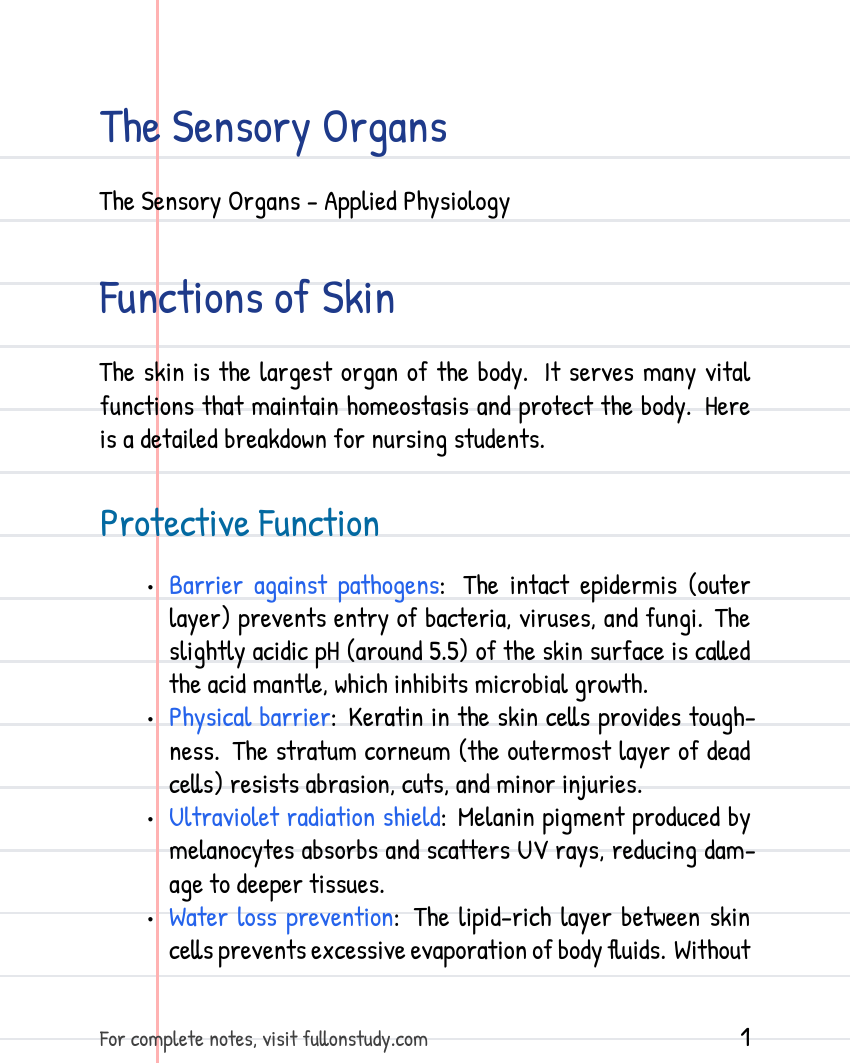
| Protective Function | Barrier against pathogens, UV radiation, water loss prevention |
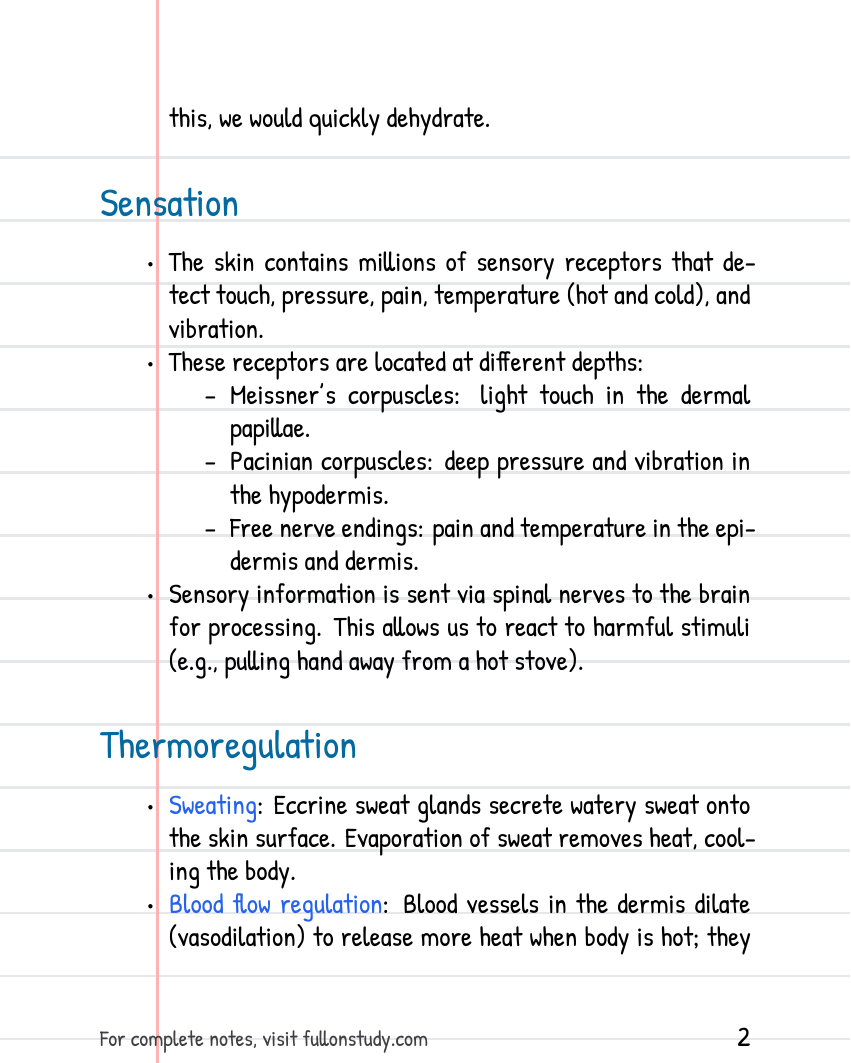
| Sensation | Types of sensory receptors (Meissner’s, Pacinian, free nerve endings) |
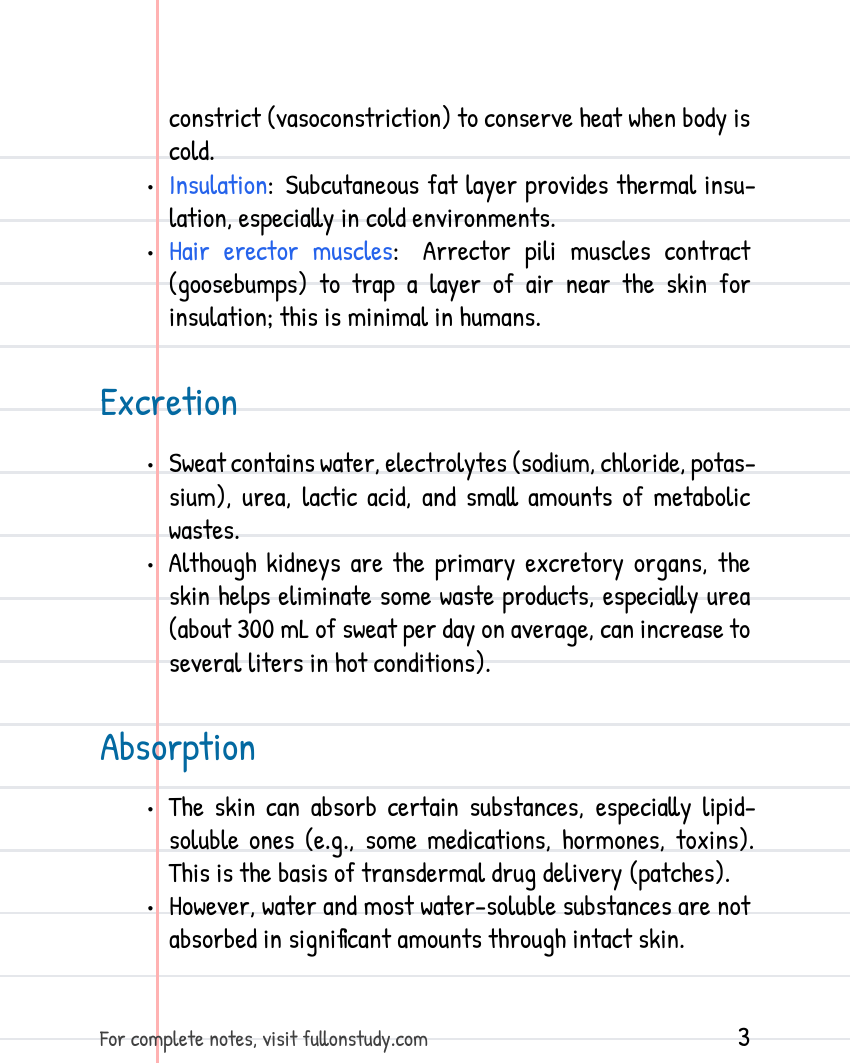
| Thermoregulation | Sweating, blood flow regulation, insulation by subcutaneous fat |
Features
- Easy to understand language with clear bullet points
- Complete syllabus covered for applied physiology of sensory organs
- Free to download in pdf format
- Questions and answers at the end of each topic for self-assessment
FAQs
What are the main functions of skin? The skin protects against pathogens and UV rays, provides sensation, regulates body temperature, and prevents water loss.
How does skin help in thermoregulation? Through sweating (evaporation cools the body) and by adjusting blood flow in dermal vessels (dilating to release heat, constricting to conserve heat).
Which receptors detect touch and pressure? Meissner’s corpuscles detect light touch, and Pacinian corpuscles detect deep pressure and vibration.
- 📄 Format PDF Document
- 🔓 Access Free
- 💾 File Size 0.08 MB
- 📖 Pages 15
- ✅ Reviewed By Team Fullonstudy
- 🗓️ Last Updated May 20, 2026
×
![Preview enlarged]()