
Get a clear overview of Psychological Assessment and Tests – a key topic in BSc Nursing Applied Psychology. These notes explain the different types of psychological tests used in healthcare settings, with nursing applications for each.
What’s covered?
| Topic | Description |
|---|---|
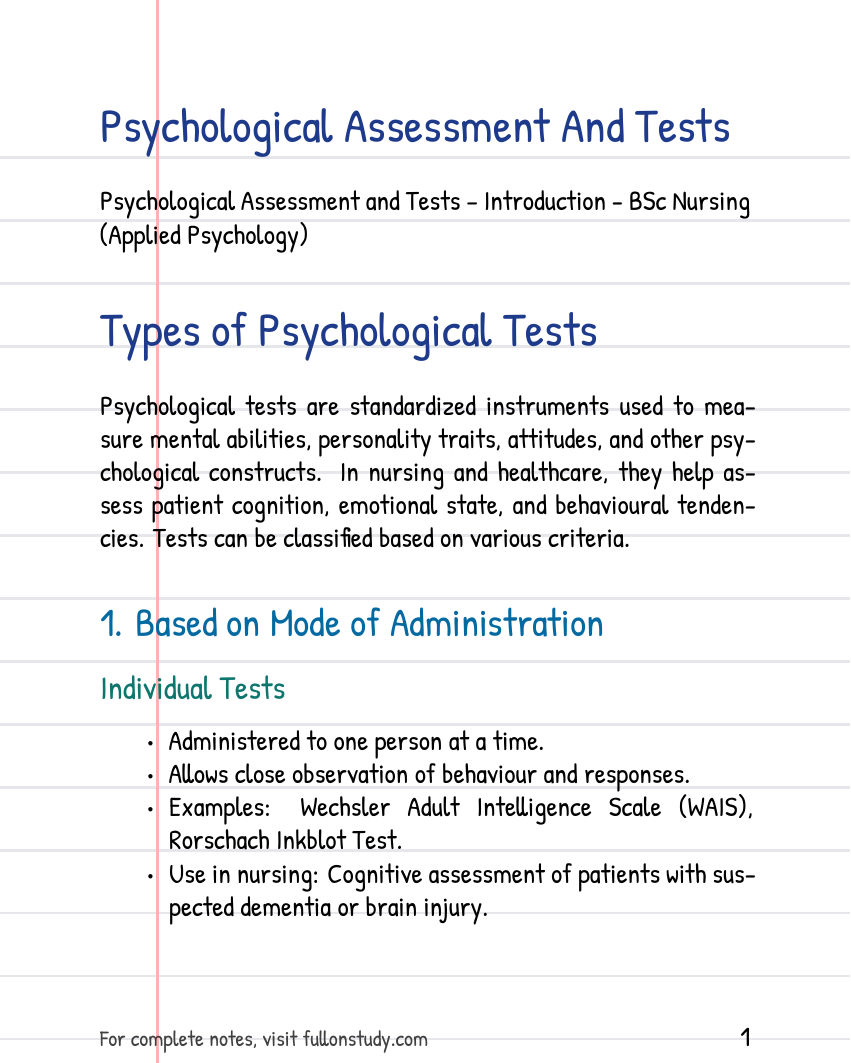
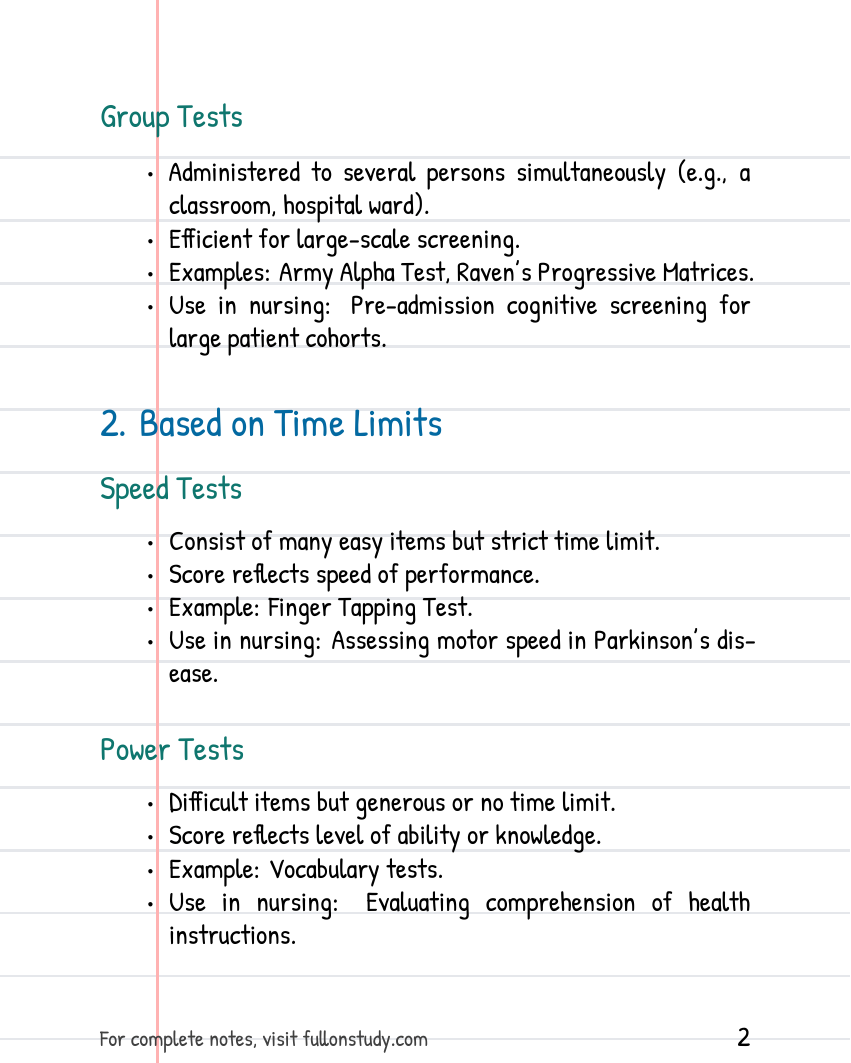
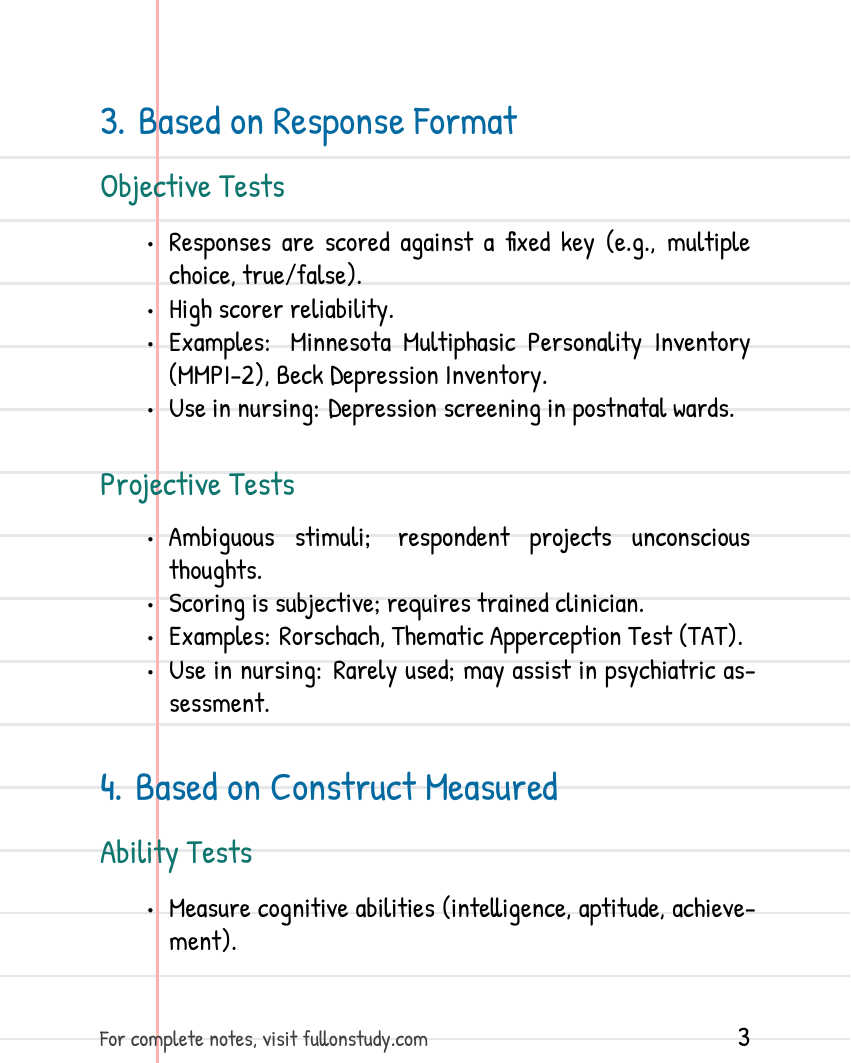
| Types of Psychological Tests | Classification based on mode of administration, time limits, and response format |
| Individual Tests | Examples like WAIS, Rorschach; used for cognitive assessment in dementia |
| Group Tests | Examples like Army Alpha Test; used for large-scale screening |
| Speed Tests | Example: Finger Tapping Test; measures motor speed |
| Power Tests | Example: Vocabulary tests; measures ability without time pressure |
| Objective Tests | Example: MMPI-2, Beck Depression Inventory; used for depression screening |
| Projective Tests | Example: Rorschach; requires trained interpretation |
Features
- Easy to understand explanations with practical nursing examples
- Complete syllabus coverage for BSc Nursing Applied Psychology
- Free to download in pdf format
- Includes questions and answers at the end of each topic
FAQs
1. What is the difference between a speed test and a power test? Speed tests have many easy items but a strict time limit, measuring how fast you work. Power tests have difficult items but no strict time limit, measuring your maximum ability.
2. Can you give an example of an objective test used in nursing? The Beck Depression Inventory is an objective test commonly used for depression screening in postnatal wards.
3. Why are projective tests like Rorschach less common in nursing? They require a trained clinician to interpret ambiguous responses and are more subjective, so they are used less often in routine nursing assessments.
- 📄 Format PDF Document
- 🔓 Access Free
- 💾 File Size 0.07 MB
- 📖 Pages 14
- ✅ Reviewed By Team Fullonstudy
- 🗓️ Last Updated July 25, 2026