
Get comprehensive Vital Signs notes for BSC Nursing Foundations I. These notes cover guidelines, techniques, and key concepts for accurate measurement. Perfect for exam prep and clinical reference.
What’s covered?
| Topic | Description |
|---|---|
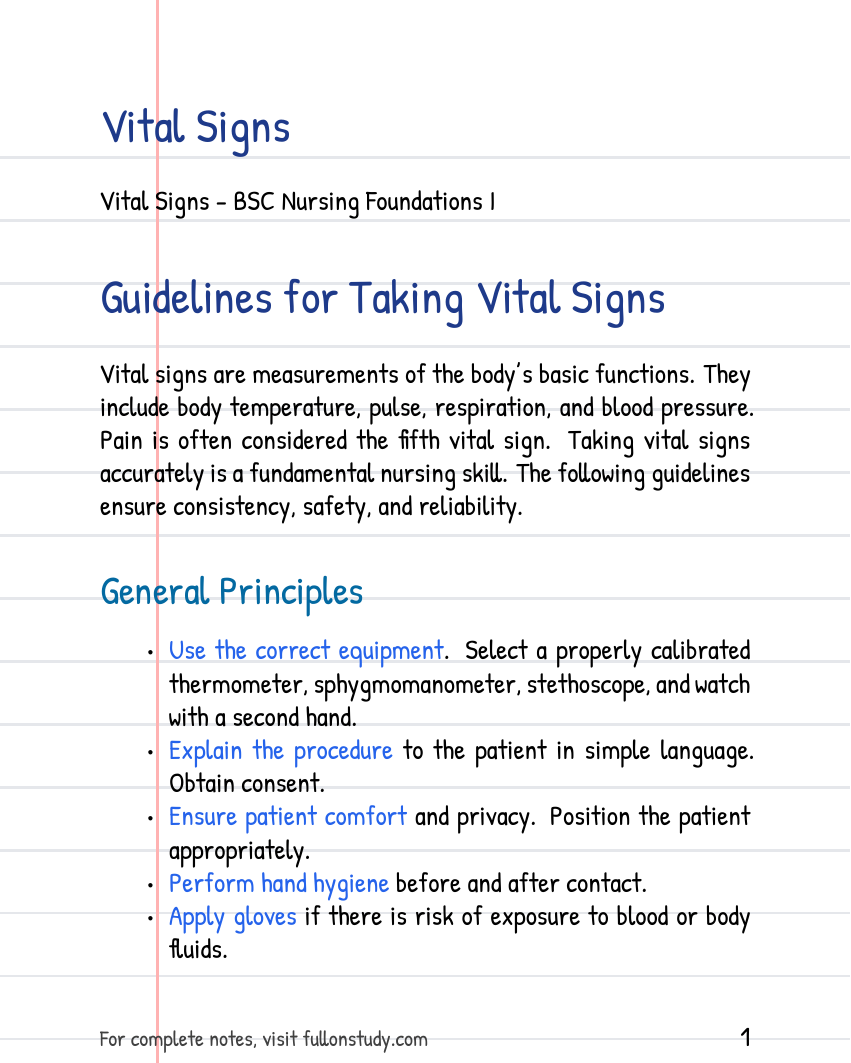
| General Principles | Correct equipment, patient preparation, hand hygiene, documentation |
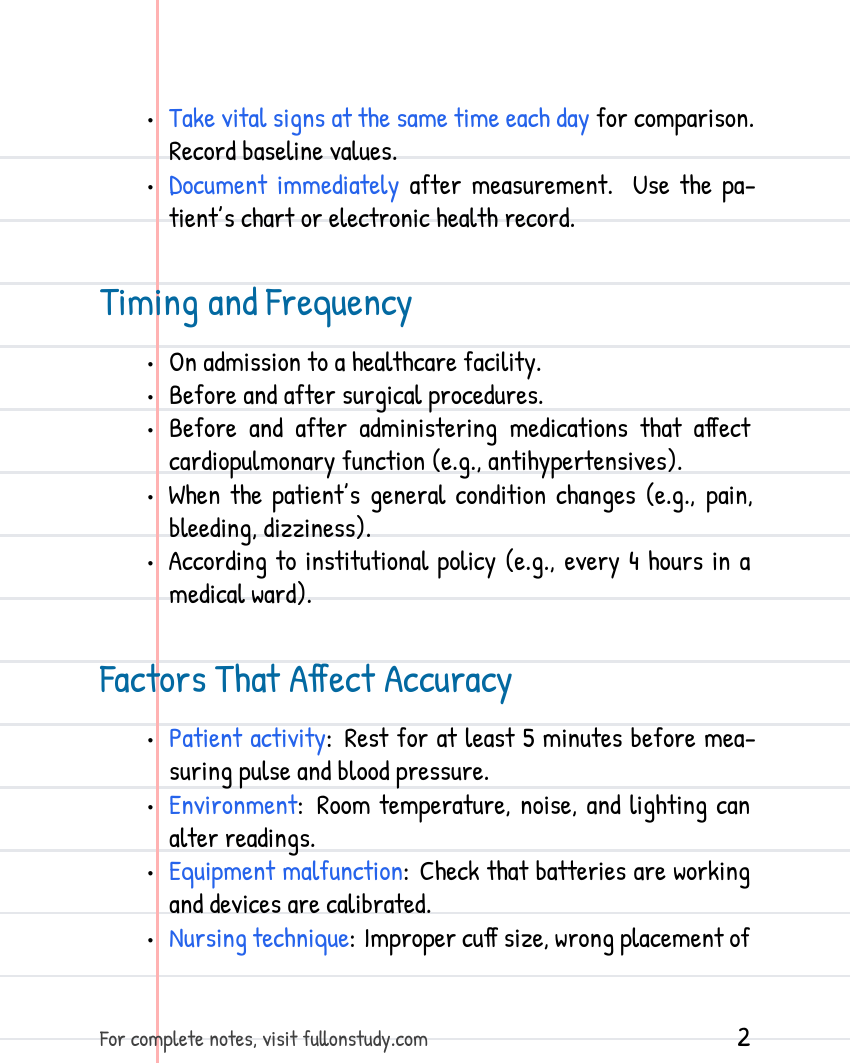
| Timing and Frequency | When to measure vital signs in clinical settings |
| Factors Affecting Accuracy | Patient activity, environment, equipment, nursing technique |
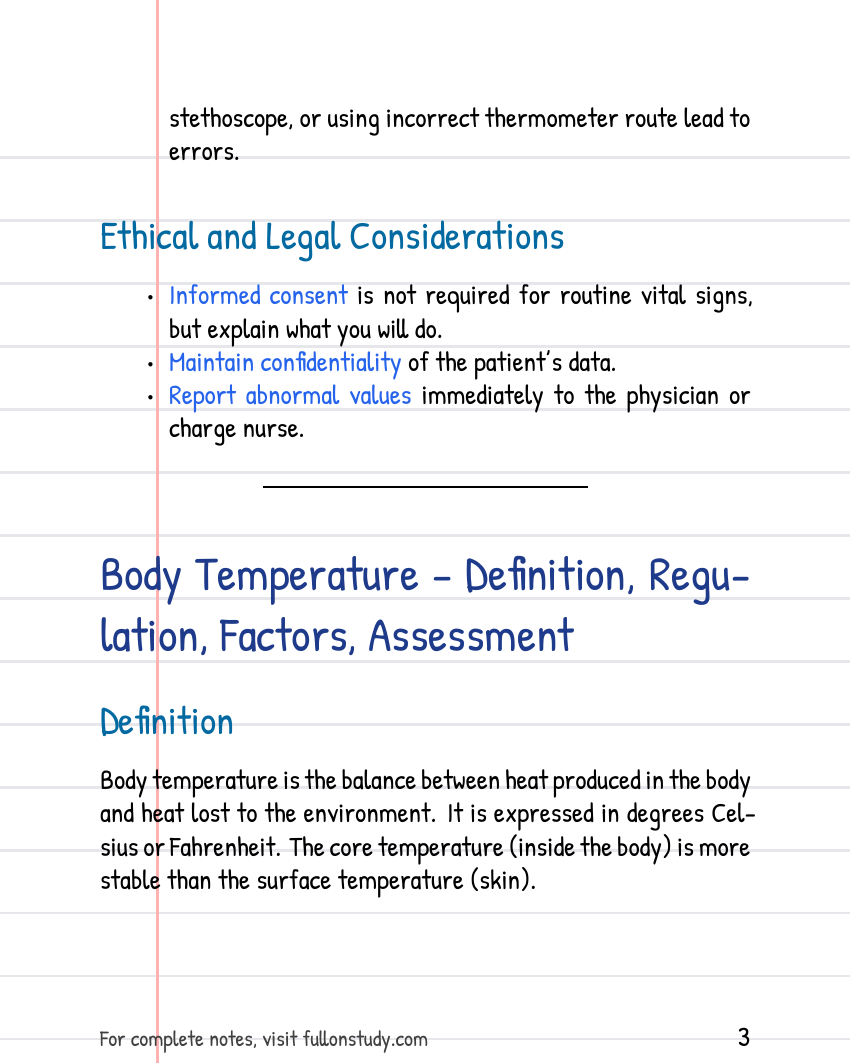
| Ethical and Legal Considerations | Informed consent, confidentiality |
Features
- Easy to understand language suitable for nursing students
- Complete syllabus covered for BSC Nursing Foundations I
- Free to download in pdf format
- Questions and answers at end of each topic for self-assessment
FAQs
Q: What are the five vital signs? A: Body temperature, pulse, respiration, blood pressure, and pain (often considered the fifth).
Q: How often should vital signs be taken? A: It depends on the patient’s condition and institutional policy. Common times include on admission, before/after surgery, and with changes in condition.
Q: What factors can affect accuracy? A: Patient activity, environment, equipment malfunction, and improper nursing technique can all lead to inaccurate readings.
- 📄 Format PDF Document
- 🔓 Access Free
- 💾 File Size 0.14 MB
- 📖 Pages 30
- ✅ Reviewed By Team Fullonstudy
- 🗓️ Last Updated June 13, 2026
×
![Preview enlarged]()