
Get comprehensive Clinical Enzymology notes for BSc Applied Biochemistry. These notes cover isoenzymes, their properties, and clinical importance. Perfect for exam prep and free to download in PDF format.
What’s covered?
| Topic | Description |
|---|---|
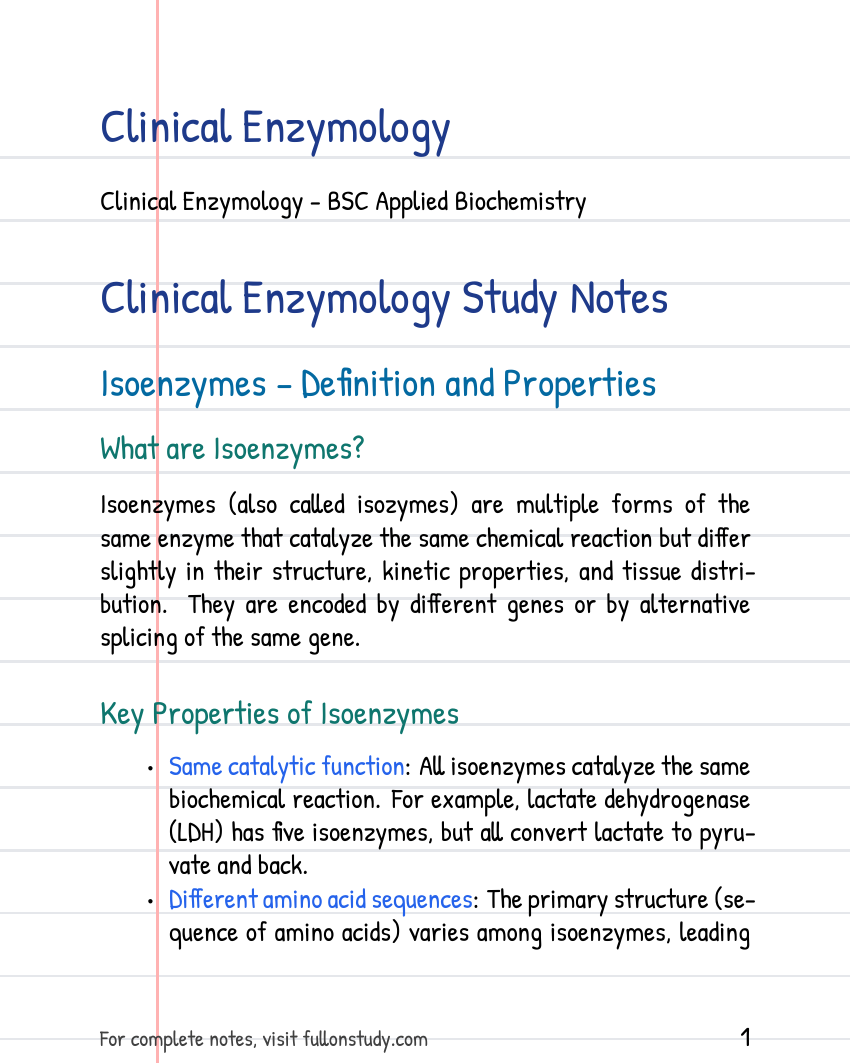
| Isoenzymes Definition | What are isoenzymes and how they differ from regular enzymes |
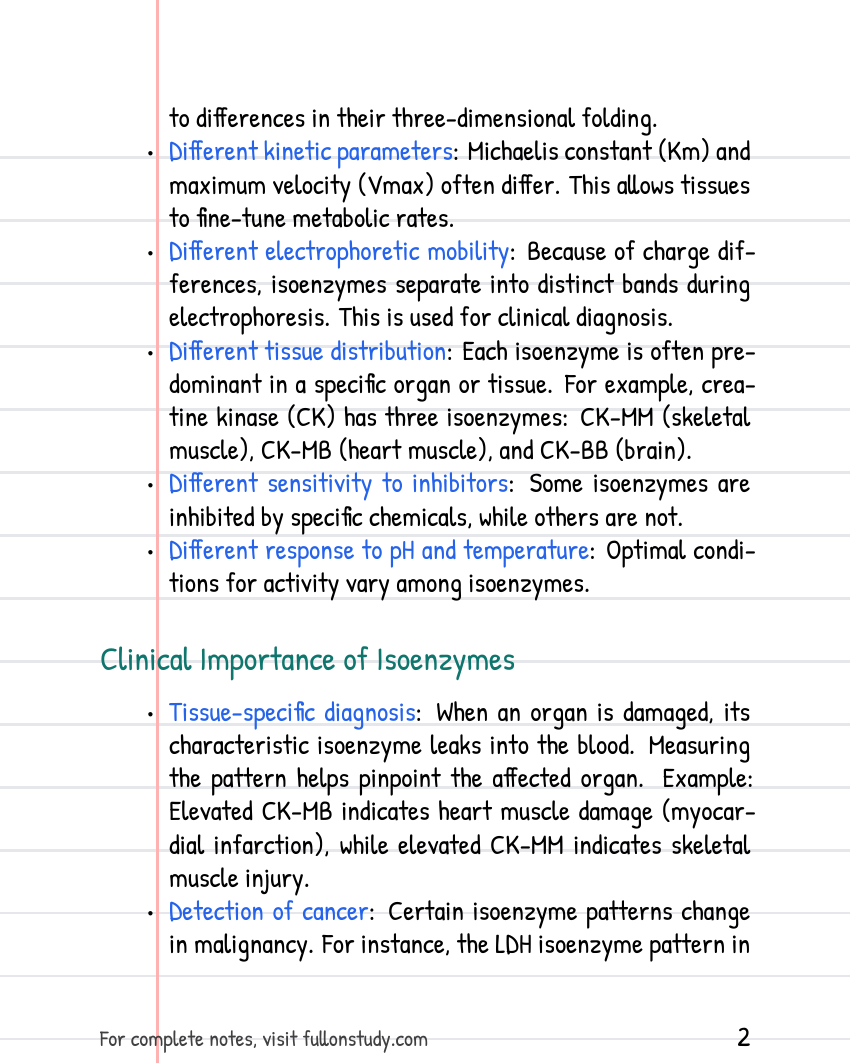
| Key Properties of Isoenzymes | Same catalytic function, different amino acid sequences, kinetic parameters, etc. |
| Clinical Importance | Tissue-specific diagnosis and detection of cancer |
Features
- Easy to understand explanations with clear examples
- Complete syllabus covered for BSc Applied Biochemistry Clinical Enzymology
- Free to download in PDF format
- Questions and answers at the end of each topic for self-assessment
FAQs
What is the difference between an isoenzyme and a regular enzyme? Isoenzymes catalyze the same reaction but have different structures and tissue distributions, while regular enzymes are single forms.
Why are isoenzymes clinically important? They help pinpoint which organ is damaged based on the specific isoenzyme elevated in blood.
How many isoenzymes does lactate dehydrogenase (LDH) have? LDH has five isoenzymes.
- 📄 Format PDF Document
- 🔓 Access Free
- 💾 File Size 0.07 MB
- 📖 Pages 14
- ✅ Reviewed By Team Fullonstudy
- 🗓️ Last Updated July 25, 2026
×![Preview enlarged]()