
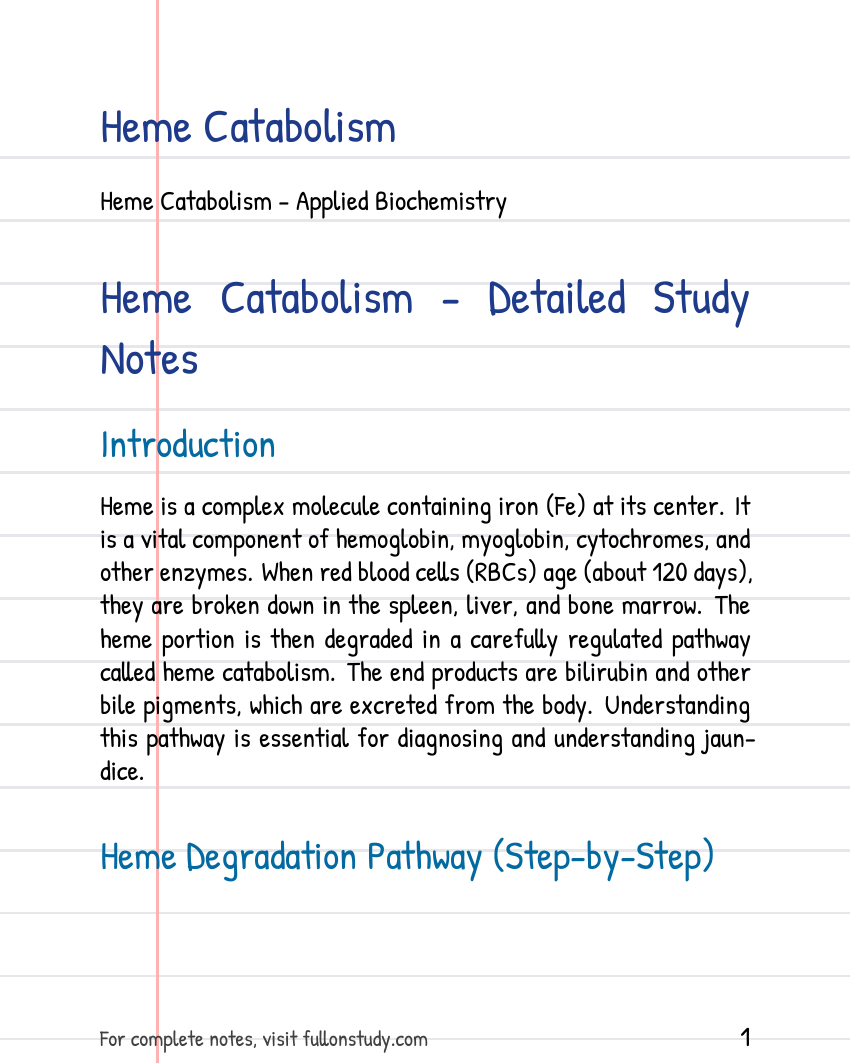
Get comprehensive Heme Catabolism notes for Biochemistry. Learn the step-by-step degradation pathway of heme, from biliverdin to bilirubin, and understand its clinical relevance. Perfect for university students in India, these notes are free to download in pdf format.
What’s covered?
| Topic | Description |
|---|---|
| Introduction | Overview of heme and its breakdown in the body |
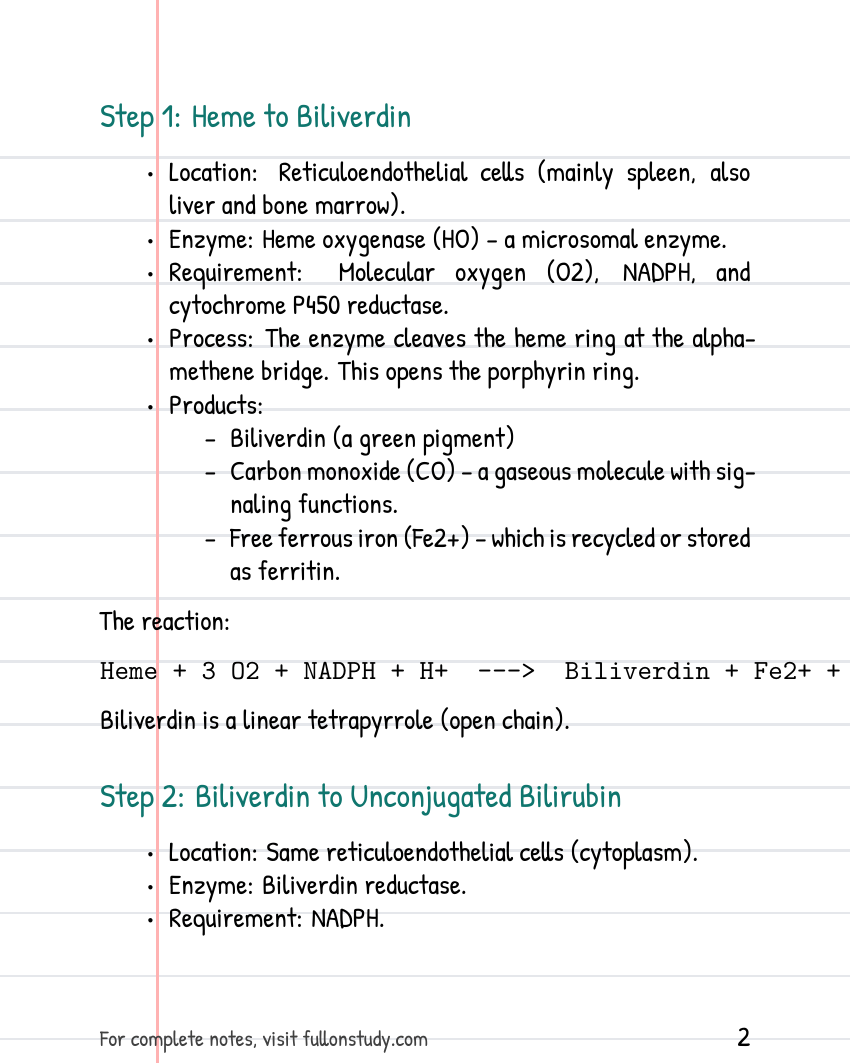
| Heme to Biliverdin | Reaction catalyzed by heme oxygenase, products (CO, Fe2+) |
| Biliverdin to Unconjugated Bilirubin | Reduction by biliverdin reductase |
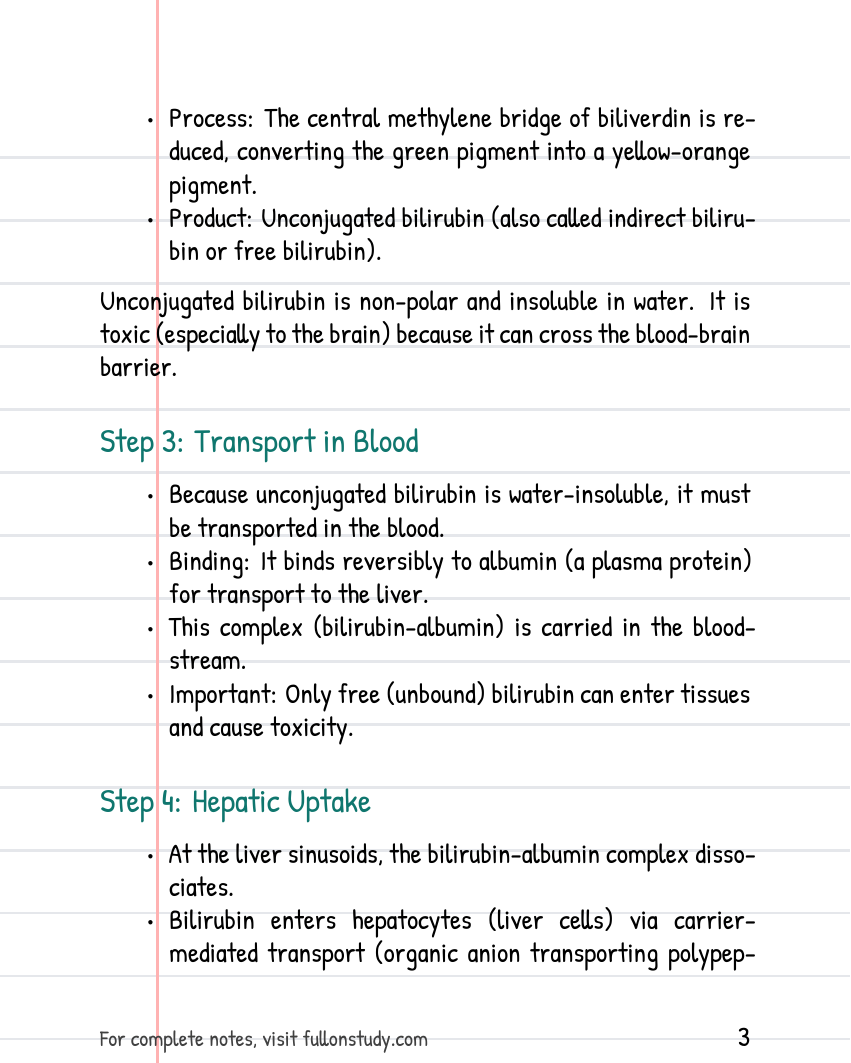
| Transport in Blood | How unconjugated bilirubin travels bound to albumin |
| Conjugation in Liver | Formation of conjugated bilirubin |
| Excretion | Secretion into bile and gut, formation of urobilinogen |
| Clinical Significance | Jaundice types (pre-hepatic, hepatic, post-hepatic) |
Features
- Easy to understand language and clear diagrams
- Complete syllabus covered as per university guidelines
- Free to download in pdf format
- Questions and answers at the end of each topic for self-assessment
FAQs
What is the main enzyme in heme degradation? Heme oxygenase (HO) is the rate-limiting enzyme that converts heme to biliverdin.
Why is unconjugated bilirubin toxic? It is lipid-soluble and can cross the blood-brain barrier, causing kernicterus in newborns.
How is bilirubin excreted from the body? Conjugated bilirubin is secreted into bile, then converted to urobilinogen in the gut and excreted in feces or urine.
- 📄 Format PDF Document
- 🔓 Access Free
- 💾 File Size 0.04 MB
- 📖 Pages 6
- ✅ Reviewed By Team Fullonstudy
- 🗓️ Last Updated July 25, 2026
×![Preview enlarged]()