
Looking for clear and concise Immunochemistry notes for your BSc Applied Biochemistry course? This guide covers the structure and functions of immunoglobulins (antibodies) with easy explanations and diagrams.
What’s covered?
| Topic | Description |
|---|---|
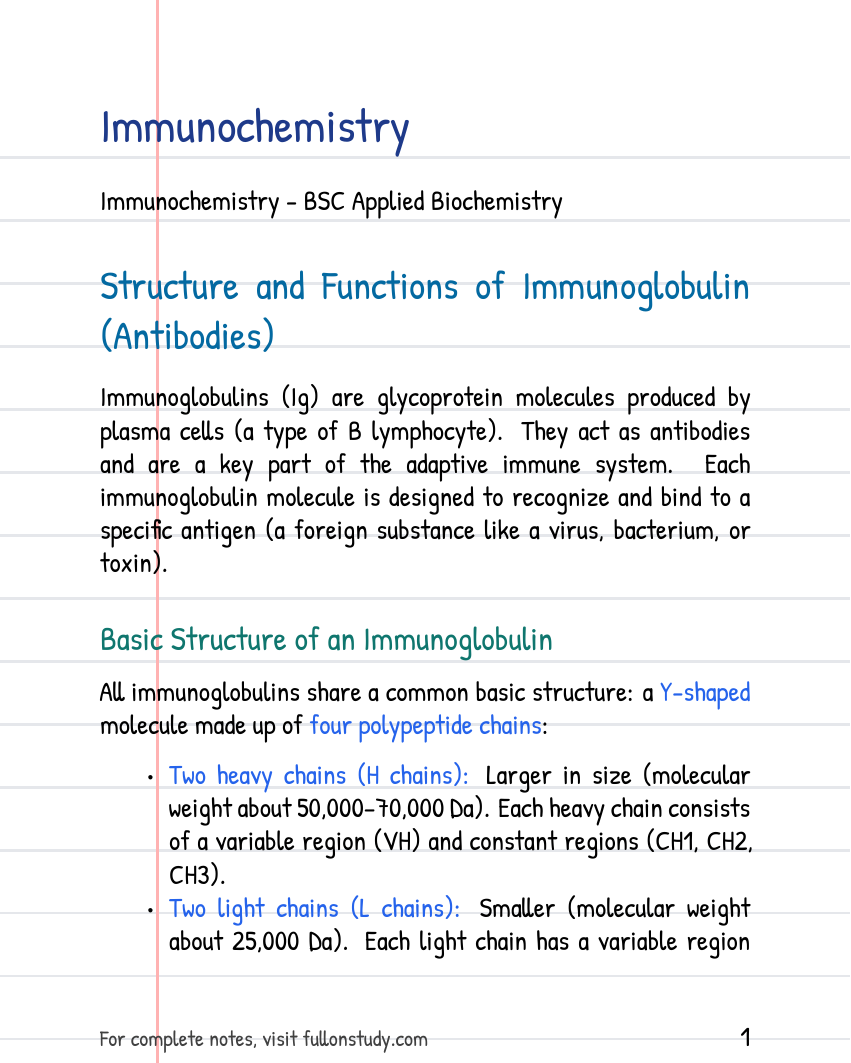
| Basic Structure of Immunoglobulin | Y-shaped molecule with heavy and light chains linked by disulfide bonds |
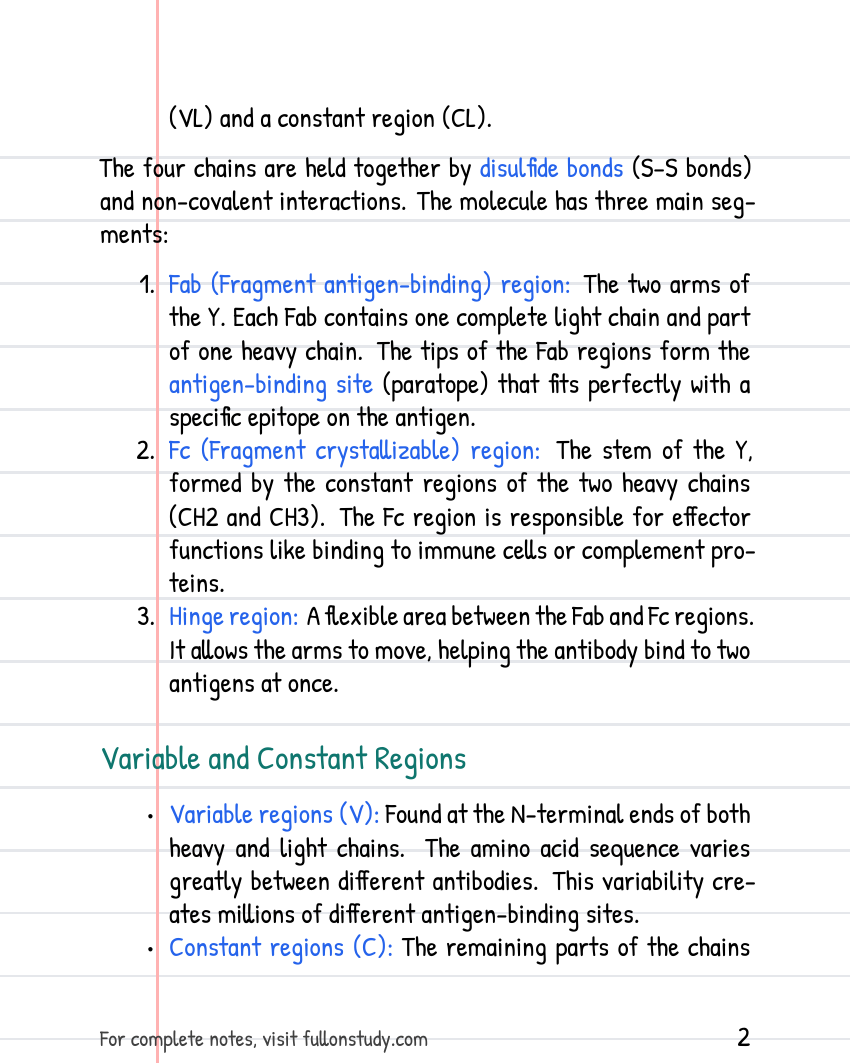
| Fab and Fc Regions | Antigen-binding and effector functions |
| Variable and Constant Regions | Sequence variability for antigen specificity |
Features
- Easy to understand explanations with diagrams
- Complete syllabus covered for BSc Applied Biochemistry
- Free to download in pdf format
- Questions and answers at the end of each topic to test your understanding
FAQs
What are the main parts of an antibody? The antibody has three main parts: two Fab regions that bind antigens, one Fc region that interacts with immune cells, and a hinge region for flexibility.
How do antibodies recognize so many different antigens? The variable regions of heavy and light chains have huge sequence diversity, creating millions of unique binding sites.
Where can I get these notes for free? You can download the complete Immunochemistry notes in pdf format from this page.
- 📄 Format PDF Document
- 🔓 Access Free
- 💾 File Size 0.04 MB
- 📖 Pages 5
- ✅ Reviewed By Team Fullonstudy
- 🗓️ Last Updated July 25, 2026
×
![Preview enlarged]()