
Looking for Carbohydrates in Applied Nutrition notes? This guide covers the key topics from your BSc Applied Nutrition and Dietetics course. You can free download the full content in pdf format for easy revision.
What’s covered?
| Topic | Description |
|---|---|
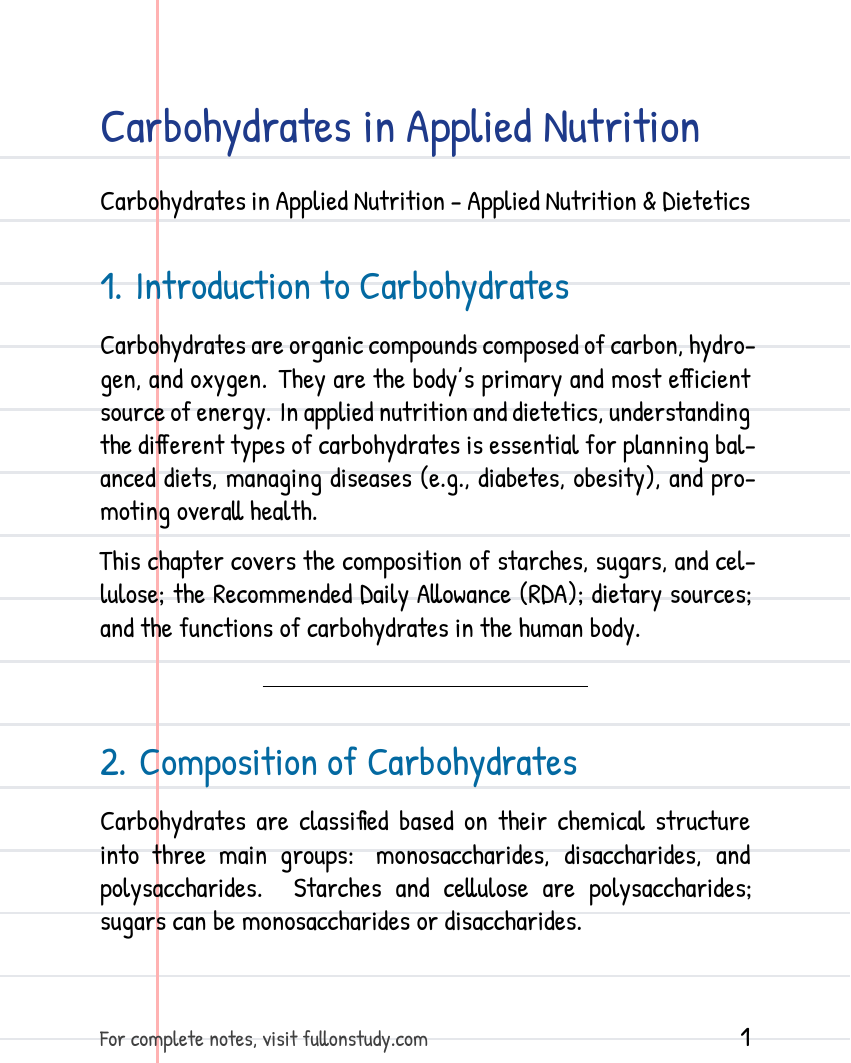
| Introduction to Carbohydrates | Organic compounds as primary energy source, role in diet planning and disease management |
| Composition of Carbohydrates | Classification into monosaccharides, disaccharides, polysaccharides |
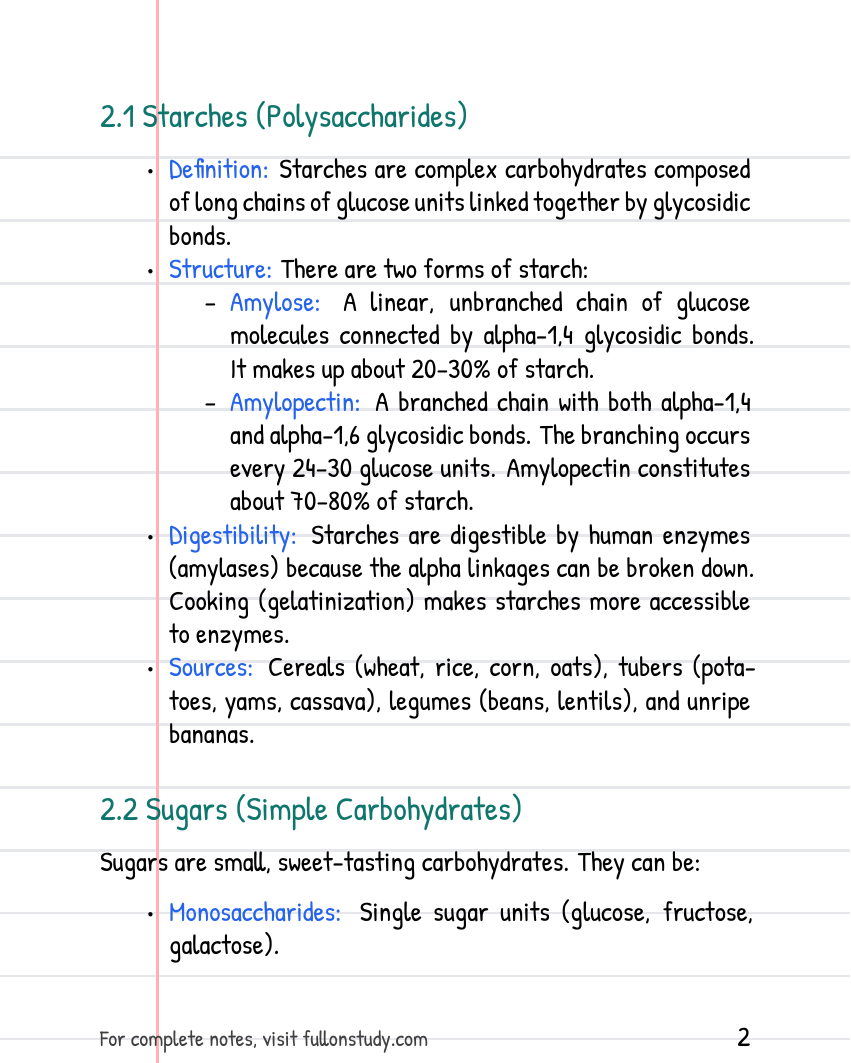
| Starches | Structure of amylose and amylopectin, digestibility, food sources |
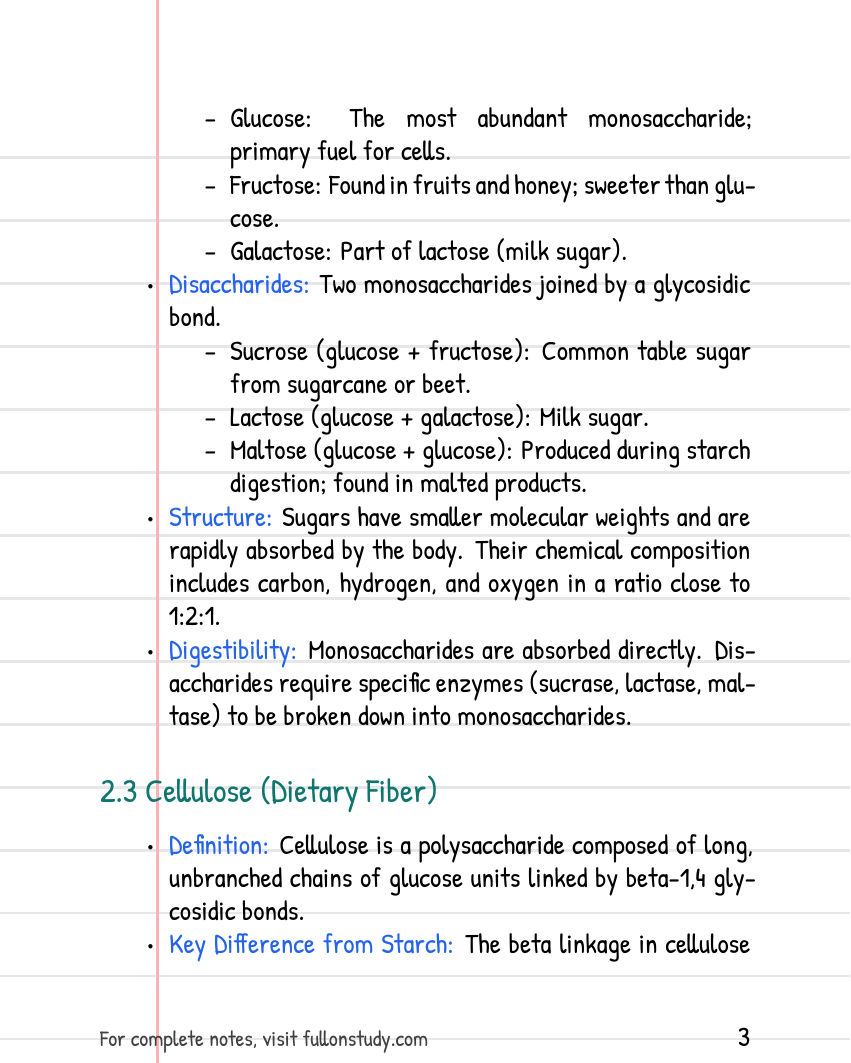
| Sugars | Monosaccharides (glucose, fructose, galactose) and disaccharides |
| Cellulose | Dietary fiber, indigestible polysaccharide, sources and health benefits |
Features
- Easy to understand explanations
- Complete syllabus covered
- Free to download in pdf format
- Questions and answers at end of each topic
FAQs
What is the difference between amylose and amylopectin?
Amylose is linear and unbranched, while amylopectin is branched. Amylose makes up 20-30% of starch, amylopectin 70-80%.
Why are carbohydrates important in applied nutrition?
They are the body’s primary energy source and essential for managing conditions like diabetes and obesity.
What foods contain complex carbohydrates?
Whole grains, legumes, tubers, and vegetables like potatoes and corn.
- 📄 Format PDF Document
- 🔓 Access Free
- 💾 File Size 0.04 MB
- 📖 Pages 6
- ✅ Reviewed By Team Fullonstudy
- 🗓️ Last Updated July 25, 2026
×
![Preview enlarged]()