
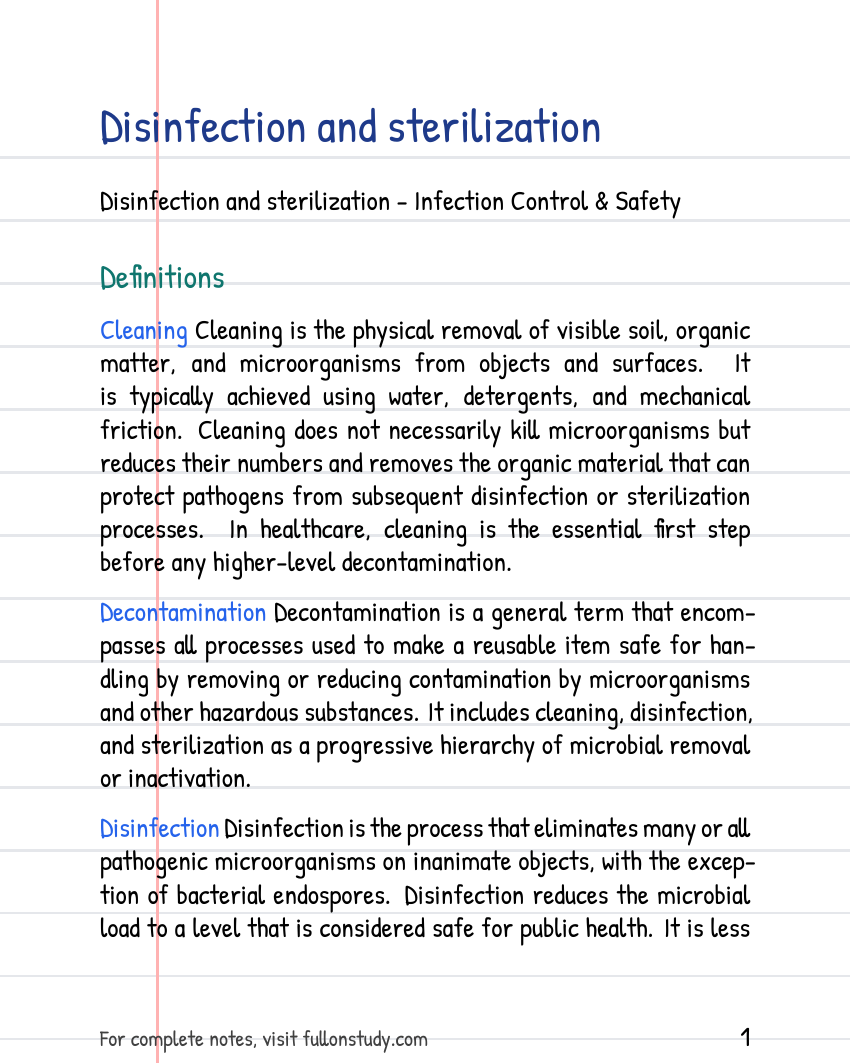
These notes on Disinfection and Sterilization are essential for any student of Infection Control. They cover all key concepts and are available for free download in PDF format.
What’s covered?
The table below lists the main topics included in these notes.
| Topic | Description |
|---|---|
| Cleaning | Physical removal of visible soil and microorganisms using water and detergents. |
| Decontamination | Process of making reusable items safe by removing contamination. |
| Disinfection | Elimination of most pathogens except bacterial spores on inanimate objects. |
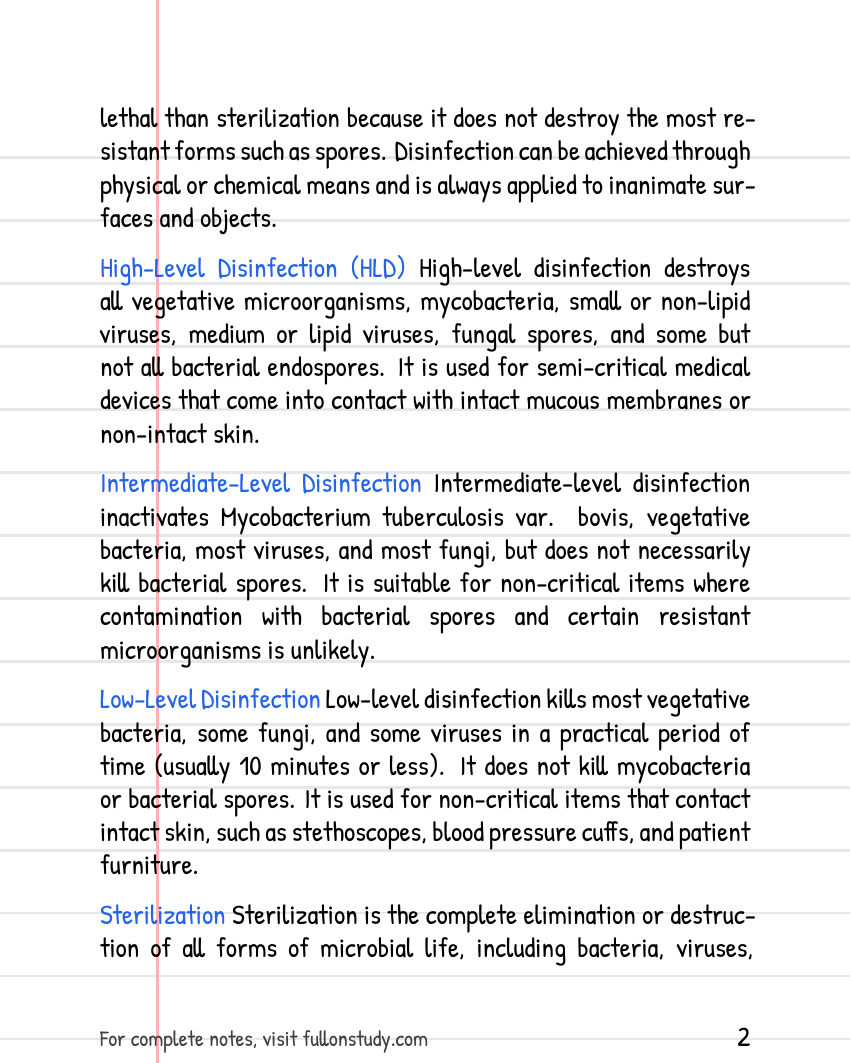
| High-Level Disinfection | Destroys all vegetative microorganisms and some bacterial endospores. |
| Intermediate-Level Disinfection | Inactivates M. tuberculosis, vegetative bacteria, most viruses and fungi. |
Features
- Easy to understand language for quick learning.
- Covers complete syllabus as per university guidelines.
- Free to download in PDF format for offline study.
- Includes practice questions and answers at the end of each topic.
FAQs
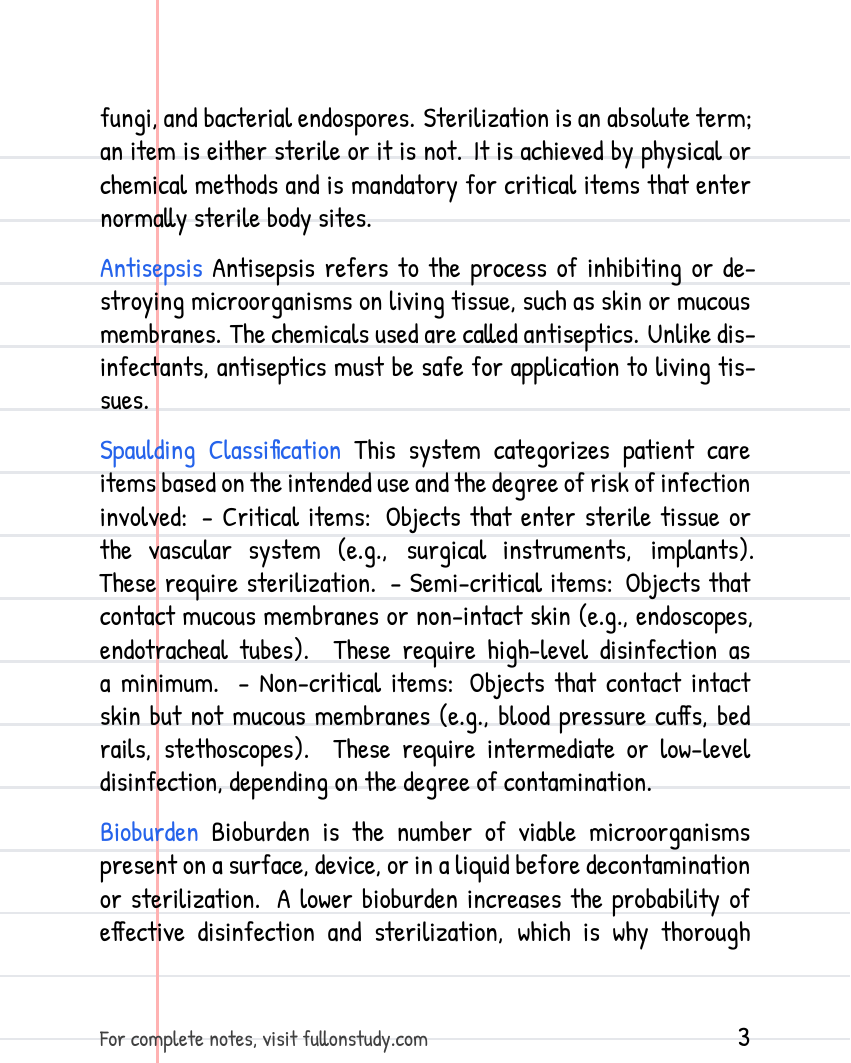
What is the main difference between disinfection and sterilization?
Disinfection kills most pathogens but not all spores, while sterilization destroys all microbial life including spores.
When is high-level disinfection used?
It is used for semi-critical medical devices that touch mucous membranes, like endoscopes.
Does cleaning alone make an item safe?
No, cleaning reduces microbes but does not kill them. It must be followed by disinfection or sterilization.
- 📄 Format PDF Document
- 🔓 Access Free
- 💾 File Size 0.09 MB
- 📖 Pages 14
- ✅ Reviewed By Team Fullonstudy
- 🗓️ Last Updated August 8, 2026
×
![Preview enlarged]()