
Communicable Diseases Drugs
Hey BSc Nursing student, ready to make sense of all those antimicrobials in Pharmacology I? These Communicable Diseases Drugs notes for BSc Nursing Pharmacology I break down penicillins, cephalosporins, aminoglycosides, and macrolides into bite-sized explanations that actually stick. No more drowning in drug names, just clear, exam-ready summaries.
What’s covered?
| Topic | What you will learn |
|---|---|
| General Principles | Definitions, classification, selective toxicity, bactericidal vs bacteriostatic |
| Penicillins | Mechanism, spectrum, examples, and key nursing considerations |
| Cephalosporins | Generations, uses, and common adverse effects |
| Aminoglycosides | Dosing principles, toxicity risks, and important examples |
| Macrolides | Indications, safety profile, and role in respiratory infections |
Features
- Simple explanation of each drug class with easy comparisons.
- Full syllabus alignment for BSc Nursing Pharmacology I notes, so you study only what matters.
- Free PDF download of these Communicable Diseases Drugs pdf notes for offline revision.
- Step-by-step breakdowns from basic definitions to clinical uses.
- Clear comparison charts to remember bactericidal versus bacteriostatic agents at a glance.
FAQs
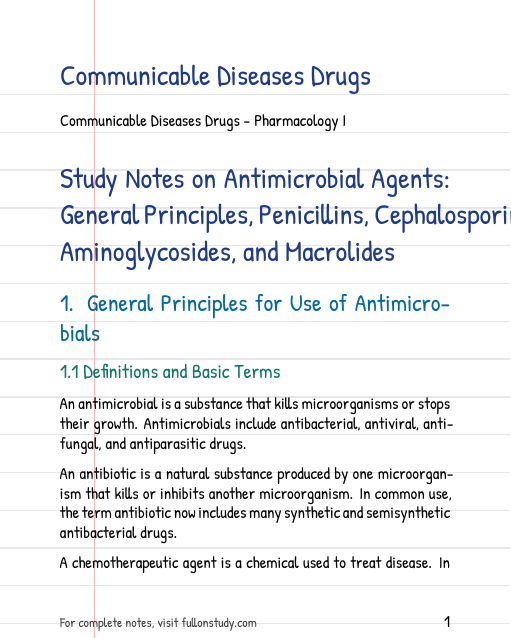
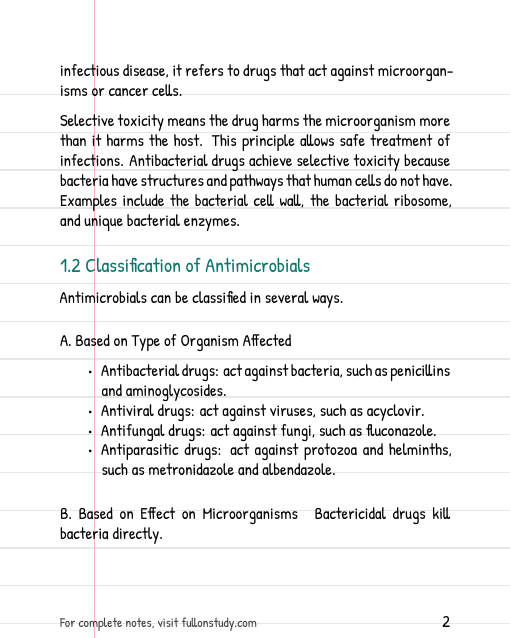
Q: What is selective toxicity? A: Selective toxicity means an antimicrobial harms the microorganism much more than the host. This principle makes safe treatment possible because bacterial cell walls and ribosomes differ from human cells.
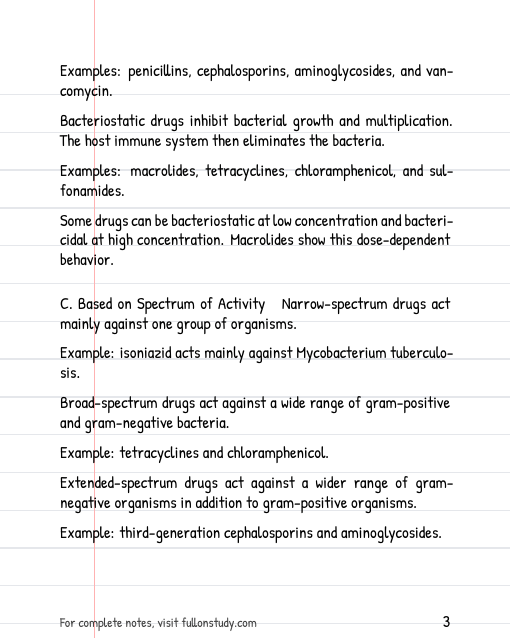
Q: What is the difference between bactericidal and bacteriostatic drugs? A: Bactericidal drugs kill bacteria directly, like penicillins and aminoglycosides. Bacteriostatic drugs stop bacteria from multiplying, like macrolides and tetracyclines, so your immune system can clear the infection.
Q: Which drugs belong to the penicillin class? A: Common penicillins include penicillin G, penicillin V, amoxicillin, and ampicillin. They work by blocking bacterial cell wall synthesis and are mainly active against gram-positive bacteria.
Q: Why do aminoglycosides require careful dosing? A: Aminoglycosides such as gentamicin and amikacin can cause kidney damage and hearing loss. Nurses must monitor renal function and drug levels to prevent toxicity.
Q: What are macrolides used for? A: Macrolides like azithromycin and erythromycin treat respiratory tract infections, atypical pneumonia, and some sexually transmitted infections. They are often used in patients allergic to penicillin.
Q: How do cephalosporins differ from penicillins? A: Cephalosporins also target the bacterial cell wall but have a broader spectrum and are grouped into generations. Later generations cover more gram-negative bacteria, while early ones focus on gram-positive infections.
Q: What should I focus on for exams in communicable diseases drugs? A: For BSc Nursing Pharmacology I exams, focus on drug classifications, mechanisms, common side effects, and nursing responsibilities like monitoring for allergic reactions and toxicity. Revise the tables in these notes regularly.
Q: Are these notes enough for my Pharmacology I practical exam? A: Yes, these Communicable Diseases Drugs notes cover the core drug classes and key nursing points. Always cross-check with your university syllabus and clinical guidelines for complete preparation.
- 📄 Format PDF Document
- 🔓 Access Free
- 💾 File Size 0.49 MB
- 📖 Pages 148
- ✅ Reviewed By Team Fullonstudy
- 🗓️ Last Updated September 1, 2026