
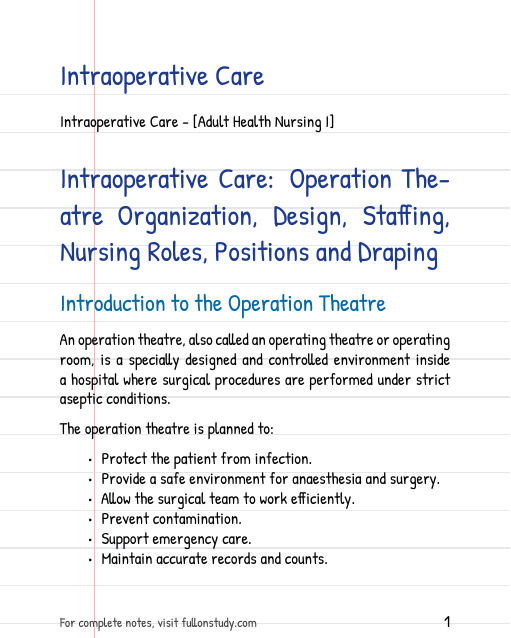
Hey BSc Nursing students! Intraoperative care is one of those topics where practical clarity matters as much as textbook definitions, especially in Adult Health Nursing I. These Intraoperative Care notes break down the operation theatre environment, from zoning and design to the nurse’s role during surgery, so you can revise with confidence.
What’s covered?
| Subtopic | What You Will Learn |
|---|---|
| Operation Theatre Organization | Zones, traffic flow, and aseptic control |
| OT Design and Physical Setup | Ventilation, lighting, and equipment placement |
| Staffing and Surgical Team | Roles of surgeons, anaesthetists, and OT nurses |
| Nursing Roles in Intraoperative Care | Scrub nurse and circulating nurse duties |
| Patient Positions and Draping | Common surgical positions and sterile draping steps |
Features
- Simple explanation of every OT zone and nursing responsibility.
- Full syllabus alignment with your BSc Nursing Adult Health Nursing I notes for exam-focused study.
- Free PDF download to revise on the go.
- Step-by-step breakdowns of patient positioning and sterile draping.
- Easy access to an Intraoperative Care pdf that covers all key points.
FAQs
What are the three zones of an operation theatre?
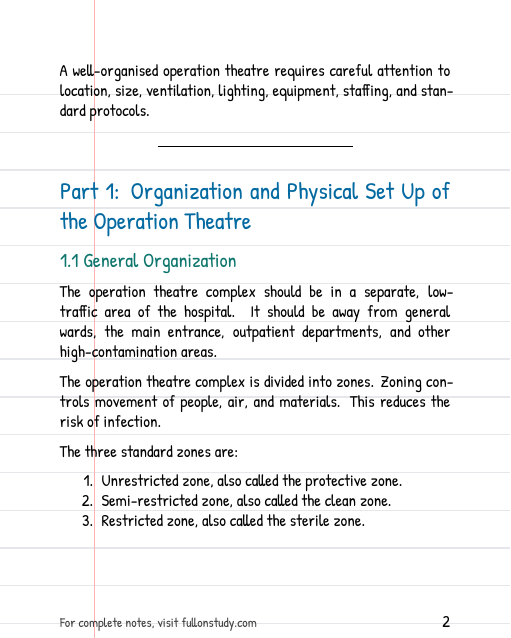
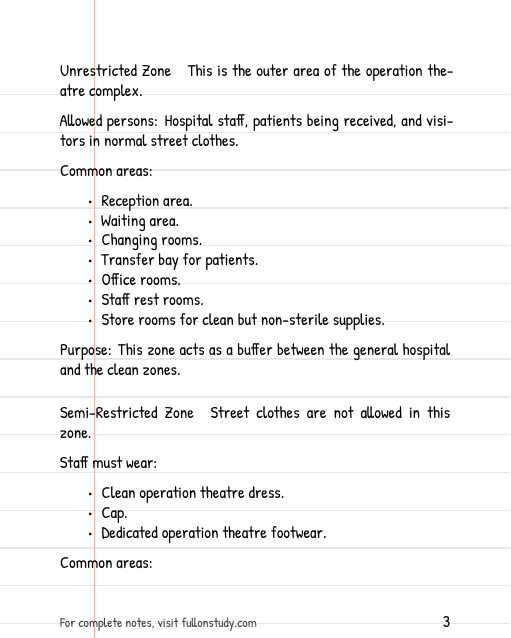
The operation theatre is divided into unrestricted, semi-restricted, and restricted zones. These zones control movement and reduce infection risk by separating outer areas from the sterile core.
What is the role of a scrub nurse during surgery?
A scrub nurse maintains the sterile field, passes instruments to the surgeon, and counts sponges and needles before and after the procedure to prevent retained items.
What are the common patient positions used in intraoperative care?
Common positions include supine, prone, lateral, lithotomy, and Trendelenburg. The position depends on the surgical site and the access the surgeon needs.
How is draping done in an operation theatre?
Draping involves covering the patient with sterile sheets, leaving only the surgical site exposed. This helps maintain asepsis and reduces contamination of the operative field.
Why is zoning important in the operation theatre?
Zoning separates unrestricted, semi-restricted, and restricted areas to control airflow, personnel movement, and material transfer, which directly lowers surgical site infection risk.
- 📄 Format PDF Document
- 🔓 Access Free
- 💾 File Size 0.35 MB
- 📖 Pages 111
- ✅ Reviewed By Team Fullonstudy
- 🗓️ Last Updated September 6, 2026