
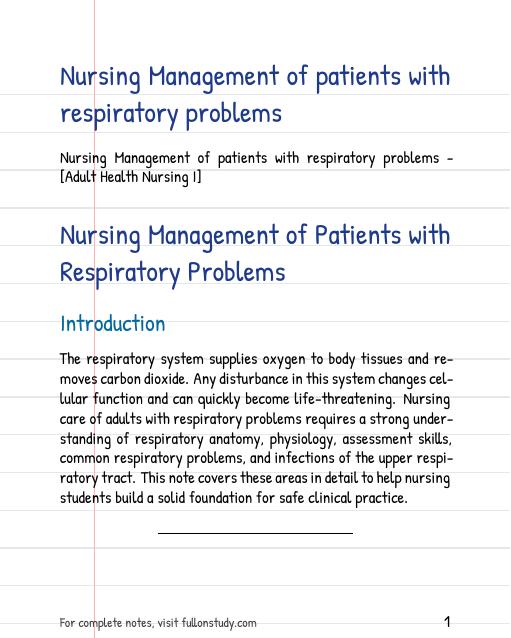
Hey BSc Nursing students! Adult Health Nursing I brings a lot of respiratory content, and it is easy to get lost in the details. These Nursing Management of patients with respiratory problems notes are here to help you study smarter. They focus on the exact assessment points, nursing interventions, and common respiratory conditions you need for exams and clinicals.
What’s covered?
| Subtopic | Key focus |
|---|---|
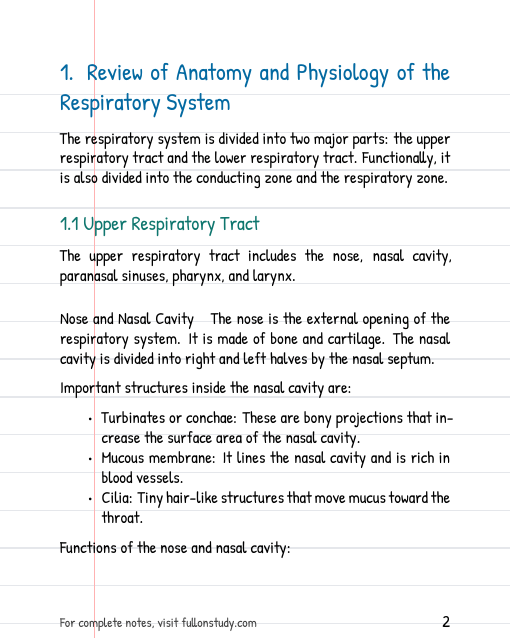
| Anatomy and physiology of respiratory system | Upper and lower respiratory tract structures and their functions |
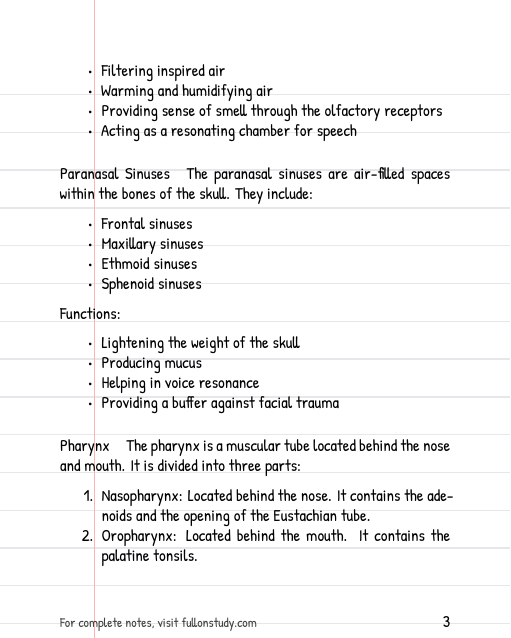
| Upper respiratory tract | Nose, nasal cavity, paranasal sinuses, pharynx, larynx |
| Nursing management of respiratory problems | Assessment, nursing diagnosis, interventions, and evaluation |
| Upper respiratory infections | Common infections, symptoms, and nursing care |
Features
- Simple explanation of every topic with clinical examples you can relate to.
- Full syllabus alignment for BSc Nursing Adult Health Nursing I notes.
- Free PDF download for offline study anytime, anywhere.
- Step-by-step breakdowns of assessments and care plans.
- Covers all high-weightage exam topics without unnecessary fluff.
- Includes quick revision tables and mnemonics for key signs and symptoms.
- Written in simple language that connects textbook theory with real patient care.
FAQs
- What are the most common respiratory problems in adult patients?
- Asthma, COPD, pneumonia, and upper respiratory infections are common in adult patients. Nursing care focuses on maintaining a patent airway, improving oxygenation, monitoring vital signs, and preventing complications like respiratory failure.
- How do I perform a respiratory assessment?
- Use inspection, palpation, percussion, and auscultation in a systematic way. Check respiratory rate, rhythm, depth, oxygen saturation, and breath sounds. Document any abnormal findings immediately.
- What nursing interventions help a patient with dyspnea?
- Position the patient upright, give oxygen as prescribed, encourage pursed-lip breathing, and monitor vital signs and oxygen saturation. Also reduce anxiety and keep the environment calm to ease breathing effort.
- What are common upper respiratory infections and their nursing management?
- Common cold, sinusitis, pharyngitis, and laryngitis are frequent. Provide rest, fluids, humidified air, and symptom relief as ordered. Teach patients about hand hygiene and when to seek medical help.
- Where can I download the Nursing Management of patients with respiratory problems pdf?
- You can get a free pdf download of the full notes from our website. The BSc Nursing Adult Health Nursing I notes include all topics mentioned above.
- What are the key nursing diagnoses for a patient with pneumonia?
- Ineffective airway clearance, impaired gas exchange, and activity intolerance are common. Prioritise airway management and oxygen therapy while monitoring for complications.
- 📄 Format PDF Document
- 🔓 Access Free
- 💾 File Size 0.24 MB
- 📖 Pages 66
- ✅ Reviewed By Team Fullonstudy
- 🗓️ Last Updated September 7, 2026
×![Preview enlarged]()