
Hello BSc Nursing students! Adult Health Nursing I brings you deep into caring for patients with digestive system disorders, and this topic on Nursing management of patients with disorders of digestive system is a must-study. These notes start with a quick anatomy review so you can connect structure to clinical nursing actions.
What’s covered?
| Subtopic | What You Will Learn |
|---|---|
| Review of Anatomy and Physiology of GI System | Overall process of digestion, absorption, and waste removal. |
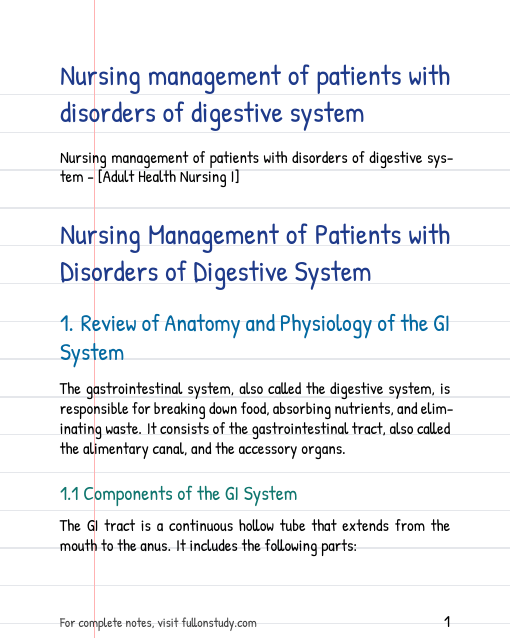
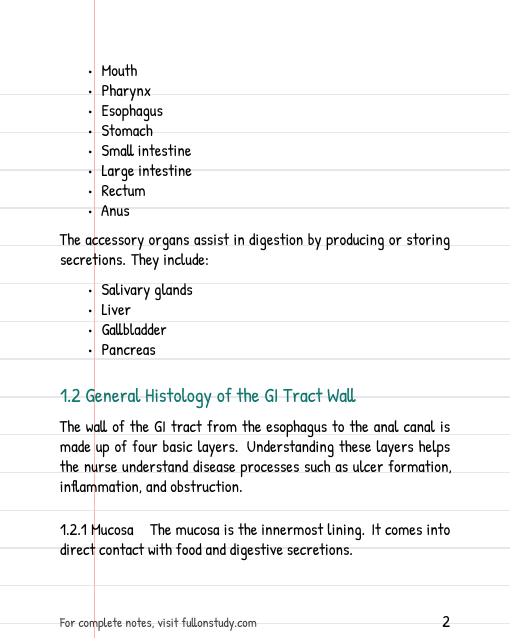
| Components of GI System | The hollow tract from mouth to anus plus salivary glands, liver, gallbladder, and pancreas. |
| General Histology of GI Tract Wall | The four layers that form the tube wall and why they matter in disease. |
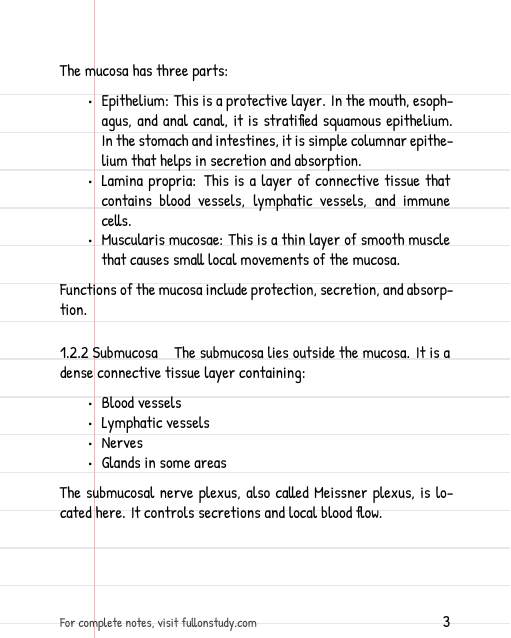
| Mucosa and Submucosa | Detailed structure of the innermost and second layers, including epithelium and connective tissue. |
| Clinical Link to Nursing Management | How changes in these layers lead to ulcers, inflammation, and obstruction that nurses assess and manage. |
Features
- Simple explanation of every layer, organ, and nursing care step.
- Full syllabus alignment with BSc Nursing Adult Health Nursing I.
- Step-by-step breakdowns from normal anatomy to patient management.
- Free PDF download of Nursing management of patients with disorders of digestive system notes for offline study.
FAQs
What is the first step in nursing management of a patient with a digestive disorder? Start with a thorough history and physical assessment, focusing on pain, bowel habits, appetite, and any nausea or vomiting.
Why do nurses need to know the four layers of the GI tract wall? Because disorders like ulcers and inflammation affect specific layers, and nursing care changes based on the depth and type of tissue damage.
Which accessory organs are most important in digestive disorders? The liver, gallbladder, and pancreas are common sources of problems like gallstones, hepatitis, or pancreatitis, and nurses monitor their function closely.
How does diet management help in digestive system disorders? Nurses teach patients about small frequent meals, low fat options, avoiding irritants, and maintaining hydration to reduce symptoms and promote healing.
What are common nursing diagnoses for patients with digestive disorders? Common diagnoses include acute pain, imbalanced nutrition less than body requirements, risk for fluid volume deficit, and risk for infection.
How can I download these notes as a free PDF? Scroll to the download button and grab the complete Nursing management of patients with disorders of digestive system pdf for offline revision.
- 📄 Format PDF Document
- 🔓 Access Free
- 💾 File Size 0.43 MB
- 📖 Pages 130
- ✅ Reviewed By Team Fullonstudy
- 🗓️ Last Updated September 8, 2026