
Hey BSc Nursing student, let’s make sense of the drugs that keep your patient’s kidneys, blood pressure, and fluid balance in check. This Pharmacology II topic on drugs used in the urinary system frequently appears in both theory and viva exams, so reading it the right way once can save you a lot of last-minute stress. These Drugs used in urinary system notes focus on mechanisms, classifications, and nursing considerations that actually show up in exams.
What’s covered?
| Subtopic | Key focus |
|---|---|
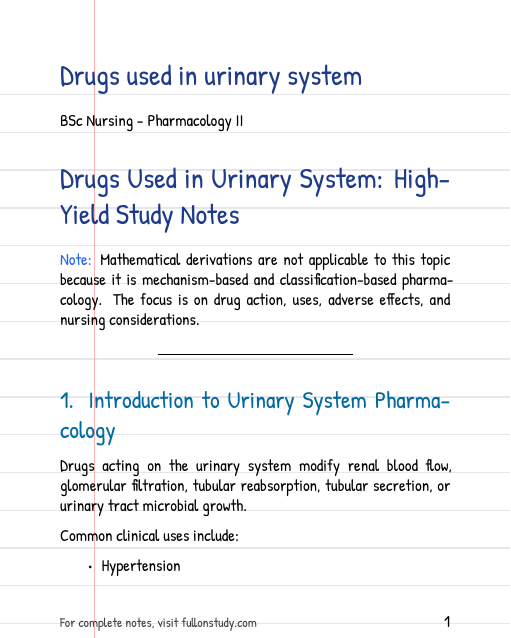
| Introduction to urinary system pharmacology | Renal mechanisms and common clinical uses |
| Kidney vulnerability to drug toxicity | Why high renal blood flow matters for nurses |
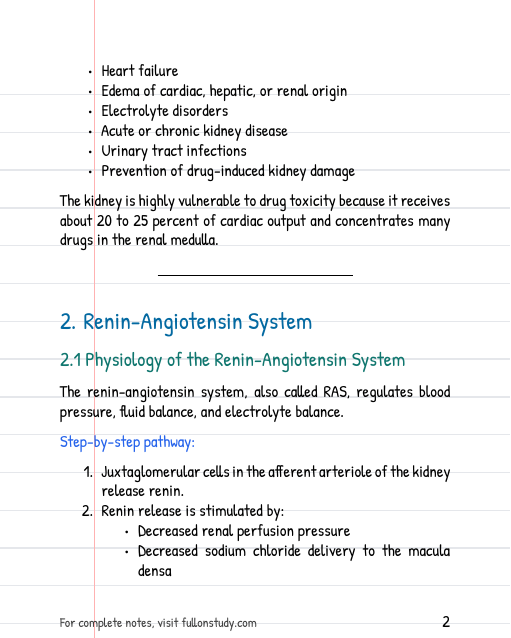
| Renin-Angiotensin System (RAS) | Step-by-step pathway from renin release to angiotensin II |
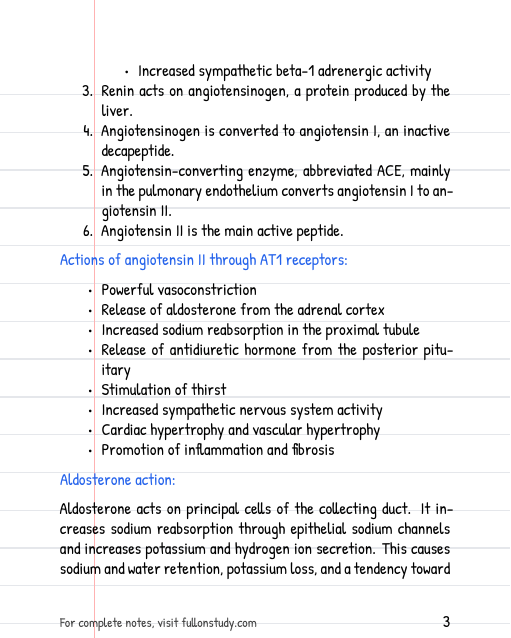
| Actions of Angiotensin II | Vasoconstriction, aldosterone, sodium reabsorption, ADH release |
Features
- Simple explanation of every drug class and mechanism, written for BSc Nursing Pharmacology II notes.
- Full syllabus alignment with your university’s Pharmacology II curriculum.
- Free PDF download of these Drugs used in urinary system notes and the complete Drugs used in urinary system pdf for quick revision.
- Step-by-step breakdowns of RAS and other pathways, so nothing feels abstract.
FAQs
What are the common clinical uses of drugs acting on the urinary system?
These drugs are used for hypertension, heart failure, edema of cardiac, hepatic, or renal origin, electrolyte disorders, acute or chronic kidney disease, and urinary tract infections.
Why is the kidney highly vulnerable to drug toxicity?
The kidney receives about 20 to 25 percent of cardiac output, and many drugs get concentrated in the renal medulla. This high exposure and concentration make renal tissue susceptible to damage.
What triggers renin release in the kidney?
Renin release is stimulated by decreased renal perfusion pressure, decreased sodium chloride delivery to the macula densa, and increased sympathetic beta-1 adrenergic activity.
What are the main actions of angiotensin II through AT1 receptors?
Angiotensin II causes powerful vasoconstriction, stimulates aldosterone release from the adrenal cortex, increases sodium reabsorption in the proximal tubule, and triggers antidiuretic hormone release.
What role does angiotensin-converting enzyme (ACE) play in the RAS?
ACE, located mainly in the pulmonary endothelium, converts the inactive angiotensin I into angiotensin II, the main active peptide of the renin-angiotensin system.
- 📄 Format PDF Document
- 🔓 Access Free
- 💾 File Size 0.16 MB
- 📖 Pages 48
- ✅ Reviewed By Team Fullonstudy
- 🗓️ Last Updated September 13, 2026