

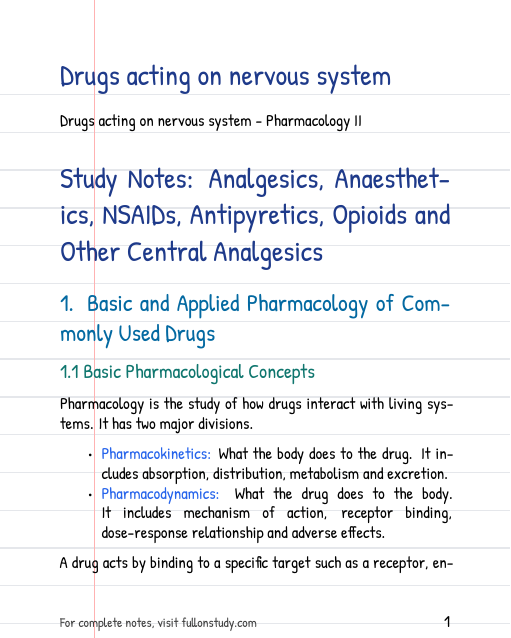
If you’re a BSc Nursing student trying to make sense of how drugs influence the nervous system, you’re in the right place. These Drugs acting on nervous system notes are designed specifically for Pharmacology II, breaking down analgesics, anaesthetics, NSAIDs, antipyretics, and opioids without the usual textbook overwhelm. Use these notes to quickly revise mechanisms, clinical uses, and important safety points before your exams.
What’s covered?
| Topic | Key focus |
|---|---|
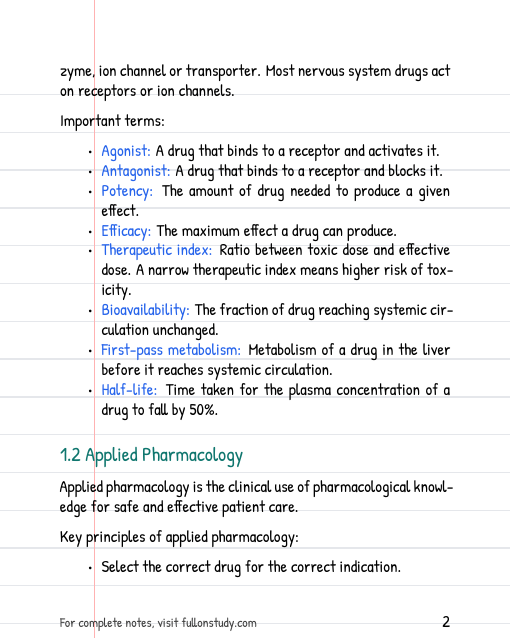
| Basic pharmacological concepts | Pharmacokinetics, pharmacodynamics, receptors, key terms |
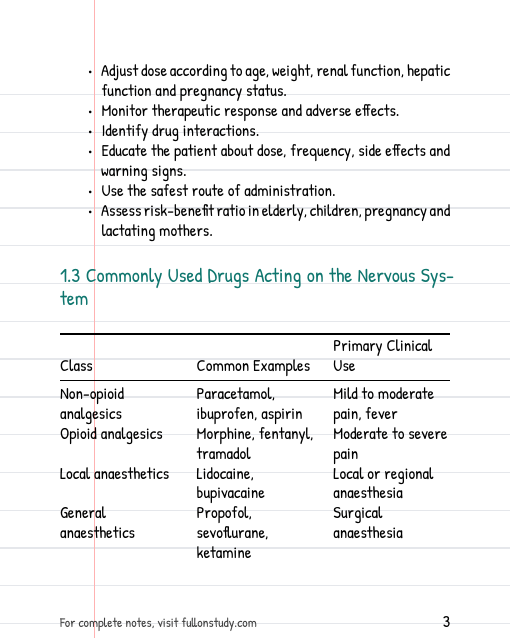
| Applied pharmacology | Clinical use, dose adjustment, monitoring, interactions |
| Analgesics and NSAIDs | Pain relief, anti-inflammatory actions, common examples |
| Anaesthetics | Local and general anaesthetic mechanisms |
| Opioids and central analgesics | Strong pain management, opioid receptors, safety concerns |
| Antipyretics | Fever reduction and common drugs |
Features
- Simple explanation of complex mechanisms
- Full syllabus alignment for BSc Nursing Pharmacology II
- Free PDF download for offline revision
- Step-by-step breakdowns of drug classes and actions
- Get the complete Drugs acting on nervous system pdf for quick reference
- No complicated jargon, just clear explanations that make revision faster
FAQs
What is the difference between analgesics and anaesthetics?
Analgesics reduce pain without loss of consciousness, while anaesthetics cause reversible loss of sensation, often with or without unconsciousness.
How do NSAIDs work as analgesics and antipyretics?
NSAIDs block cyclooxygenase (COX) enzymes, reducing prostaglandin synthesis, which lowers pain, inflammation, and fever.
What are the common side effects of opioid analgesics?
Common side effects include constipation, nausea, sedation, respiratory depression, and risk of dependence with long-term use.
Which drugs are used as antipyretics besides paracetamol?
NSAIDs like ibuprofen and aspirin also reduce fever, but paracetamol is preferred for its safety profile in most patients.
Why is the therapeutic index important for drugs acting on the nervous system?
Many CNS drugs have a narrow therapeutic index, meaning small dose changes can cause toxicity or loss of effect, so close monitoring is essential.
Are these notes enough for BSc Nursing Pharmacology II exams?
Yes, these notes cover the essential drug classes, mechanisms, and clinical uses prescribed in the BSc Nursing Pharmacology II syllabus and are perfect for quick revision.
- 📄 Format PDF Document
- 🔓 Access Free
- 💾 File Size 0.27 MB
- 📖 Pages 82
- ✅ Reviewed By Team Fullonstudy
- 🗓️ Last Updated September 14, 2026