

If you’re a BSc Nursing student trying to piece together all the emergency drugs and supportive therapies in Pharmacology II, these notes are for you. This Miscellaneous Drugs – notes page brings together the essential information on CPR drugs, antihistamines, corticosteroids, and IV fluids without the clutter.
What’s covered?
| Subtopic | Key Points |
|---|---|
| Drugs Used in CPR and Emergency | Adrenaline mechanism, dosage, and emergency indications |
| Antihistamines | Classification, uses in allergy and anaphylaxis, side effects |
| Corticosteroids | Anti-inflammatory actions, clinical uses, and tapering principles |
| Intravenous Fluids and Electrolyte Replacement | Types of IV fluids, composition, and replacement protocols |
Features
- Simple explanations of each drug class made for nursing students.
- Full syllabus alignment for BSc Nursing Pharmacology II.
- Step-by-step breakdowns of mechanisms, doses, and clinical applications.
- Free PDF download of the Miscellaneous Drugs – pdf notes for offline revision.
FAQs
What is the first-line drug in cardiac arrest?
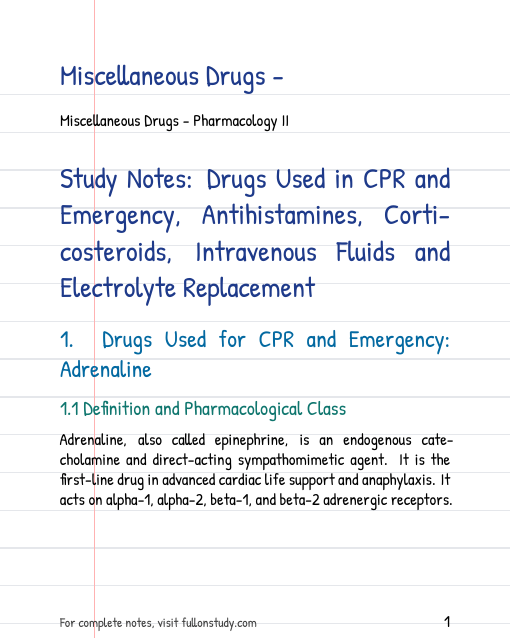
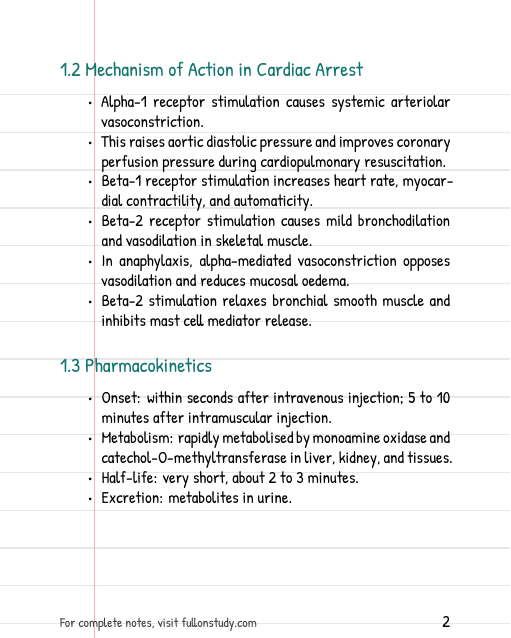
Adrenaline is the first-line drug. It acts on alpha-1 receptors to cause vasoconstriction, which increases coronary perfusion pressure during CPR.
How do antihistamines help in anaphylaxis?
Antihistamines block H1 receptors, reducing itching, hives, and vasodilation. They are given as adjuncts after adrenaline, not as the primary treatment.
What are the common side effects of corticosteroids?
Short-term use can cause hyperglycemia, mood changes, and fluid retention. Long-term use may lead to adrenal suppression, osteoporosis, and increased infection risk.
When are intravenous fluids used in emergency care?
IV fluids restore blood volume in shock, dehydration, and severe electrolyte imbalance. Crystalloids like normal saline are usually given first for rapid volume expansion.
What is the difference between crystalloids and colloids?
Crystalloids contain small molecules that move into interstitial spaces. Colloids contain larger molecules that stay in the blood vessels longer, but crystalloids are preferred in most emergencies.
What is the dose of adrenaline in cardiac arrest for adults?
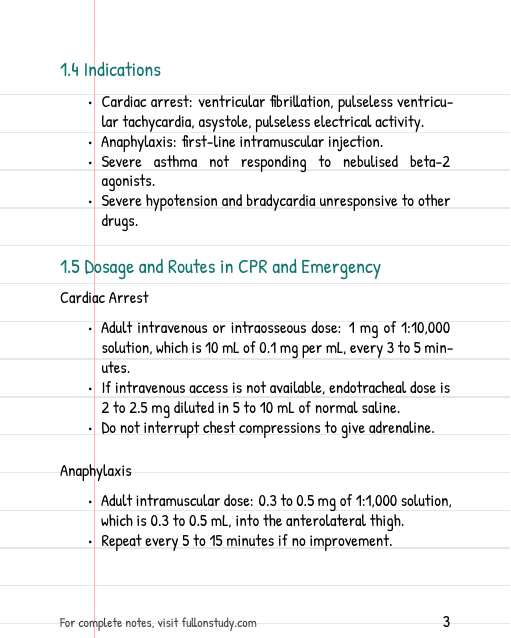
The standard adult dose is 1 mg of 1:10,000 solution (10 mL) given intravenously or intraosseously every 3 to 5 minutes during CPR.
- 📄 Format PDF Document
- 🔓 Access Free
- 💾 File Size 0.11 MB
- 📖 Pages 27
- ✅ Reviewed By Team Fullonstudy
- 🗓️ Last Updated September 15, 2026