
BSc Nursing students, occupational health often feels like a heavy topic packed with workplace hazards and legal rules. But once you see the flow, it becomes one of the most scoring chapters in Adult Health Nursing II. These Nursing Management of Occupational and Industrial Disorders notes break down every concept in a simple, exam-friendly way.
What’s covered?
| Subtopic | What you’ll learn |
|---|---|
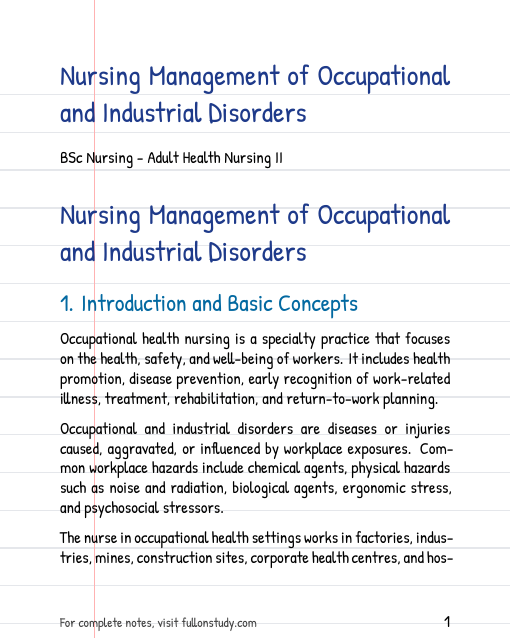
| Introduction to Occupational Health Nursing | Role of nurses in factories, industries, and corporate health centres |
| Common Workplace Hazards | Chemical, physical, biological, ergonomic, and psychosocial risk factors |
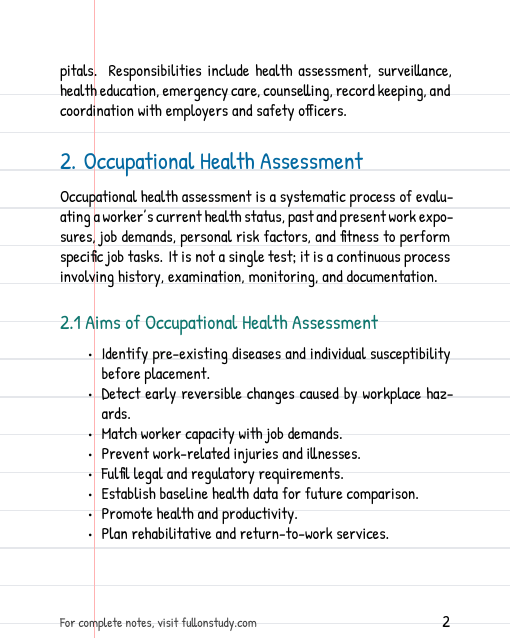
| Occupational Health Assessment | Continuous process of evaluating worker health and fitness for job tasks |
| Aims of Occupational Health Assessment | Early detection, prevention, baseline data, and legal compliance |
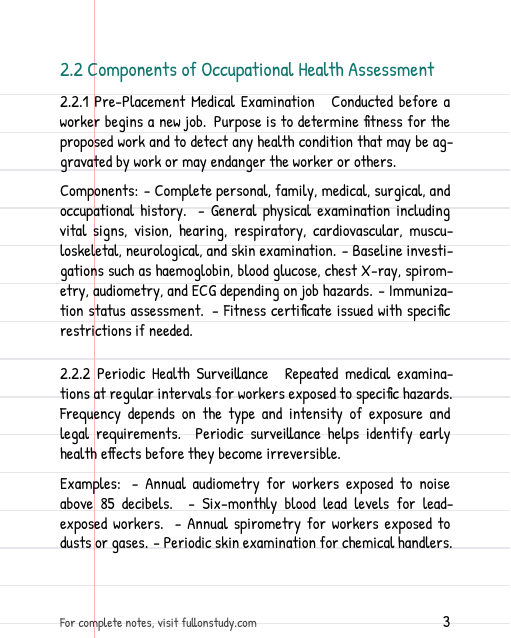
| Components of Occupational Health Assessment | Pre-placement examination, history, monitoring, and documentation |
| Pre-Placement Medical Examination | Assessment before employment to match worker capacity with job demands |
| Nursing Management Principles | Treatment, rehabilitation, health education, and return-to-work planning |
| Record Keeping and Documentation | Maintaining health surveillance data and legal compliance |
Features
- Simple explanation with step-by-step breakdowns of every concept
- Full syllabus alignment for BSc Nursing Adult Health Nursing II notes
- Free PDF download available for quick revision
- Covers all major topics from hazard identification to return-to-work planning
FAQs
What are the common workplace hazards that cause occupational disorders?
The main hazards include chemical agents, noise, radiation, biological agents, poor ergonomics, and psychosocial stress. Nurses use this classification to plan preventive care, health education, and early detection of work-related illness.
What is the role of a nurse in occupational health settings?
Nurses conduct health assessments, provide health education, manage emergencies, maintain records, and coordinate with employers and safety officers. Their goal is to promote worker health, prevent occupational disease, and support rehabilitation when injuries occur.
What is a pre-placement medical examination?
It is a health check done before a worker joins a job. It identifies pre-existing diseases and individual susceptibility, and it helps match worker capacity with job demands to prevent future illness or injury. The nurse plays a key role in collecting history and performing basic examinations.
What are the aims of occupational health assessment?
The aims include early detection of work-related changes, prevention of injuries, establishing baseline health data, fulfilling legal requirements, and supporting return-to-work plans. This approach keeps the workforce healthy, productive, and safe from long-term harm.
What is the difference between occupational disease and industrial injury?
Occupational disease develops over time due to repeated workplace exposure, like occupational asthma or hearing loss. Industrial injury is a sudden event, such as a fall or chemical burn. Both require nursing management and prevention strategies in the workplace.
How can I download Nursing Management of Occupational and Industrial Disorders notes in PDF?
You can grab the Nursing Management of Occupational and Industrial Disorders pdf from the download link on this page. It is free, comprehensive, and perfect for last-minute revision before your Adult Health Nursing II exam.
- 📄 Format PDF Document
- 🔓 Access Free
- 💾 File Size 0.07 MB
- 📖 Pages 15
- ✅ Reviewed By Team Fullonstudy
- 🗓️ Last Updated October 15, 2026