
Hello BSc Nursing student! If you are starting Mental Health Nursing I, this introduction gives you a clear starting point. These Introduction to Mental Health Nursing notes break down definitions, characteristics, and biological factors in a way that actually makes sense.
What’s covered?
| Topic | What you’ll learn |
|---|---|
| Perspectives of Mental Health | How mental health is viewed across different frameworks |
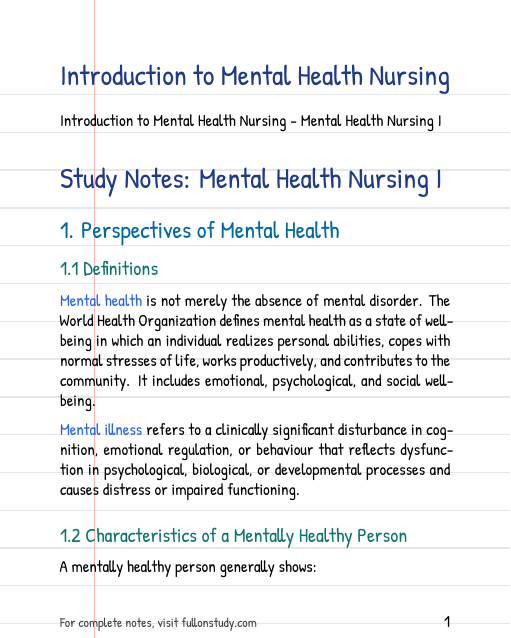
| Definitions of Mental Health and Illness | WHO definition of mental health and clinical meaning of mental illness |
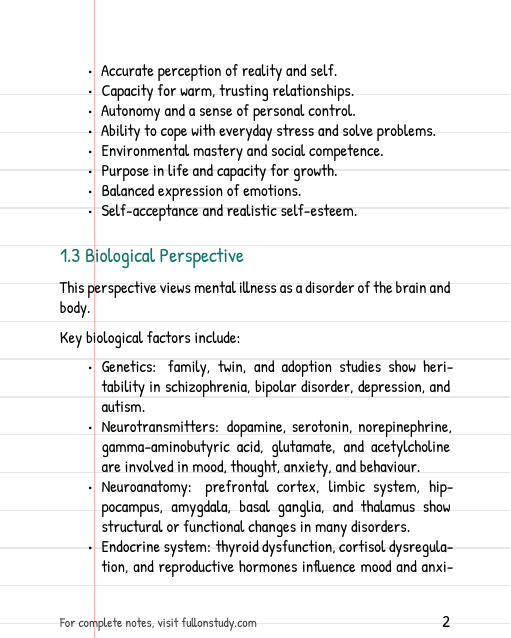
| Characteristics of Mentally Healthy Person | Key traits like perception, relationships, autonomy, and coping |
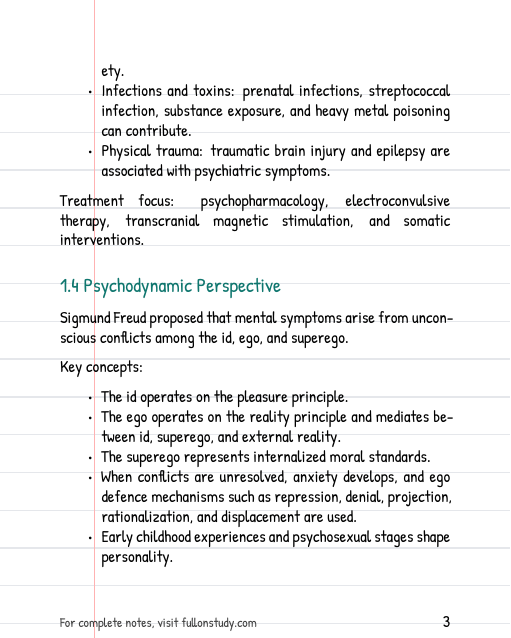
| Biological Perspective | Role of genetics, neurotransmitters, brain structures, hormones, and infections |
Features
- Simple explanation of every core concept without heavy jargon.
- Full syllabus alignment with BSc Nursing Mental Health Nursing I notes.
- free pdf download – get the Introduction to Mental Health Nursing pdf for offline study.
- Step-by-step breakdown of biological factors and mental health characteristics.
FAQs
What is mental health according to WHO?
Mental health is a state of well-being where a person realizes their abilities, copes with normal stress, works productively, and contributes to their community.
How is mental illness different from mental health?
Mental illness is a clinically significant disturbance in cognition, emotional regulation, or behaviour that causes distress or impaired functioning, while mental health is a broader state of well-being.
What are the main characteristics of a mentally healthy person?
Key traits include accurate perception of reality, capacity for trusting relationships, autonomy, coping skills, environmental mastery, purpose in life, balanced emotions, and self-acceptance.
Which biological factors are linked to mental illness?
Genetics, neurotransmitter imbalances, structural brain changes, endocrine dysfunction, and prenatal infections or toxins can all contribute to mental disorders.
Are genetics the only cause of mental disorders?
No. Genetics increase risk, but mental illness usually results from a combination of biological, psychological, and social factors. This is called the biopsychosocial model.
How do neurotransmitters affect mental health?
Imbalances in dopamine, serotonin, norepinephrine, GABA, glutamate, and acetylcholine are linked to mood, anxiety, thought, and behaviour changes. Restoring balance is a key goal in treatment.
What is the importance of mental health nursing?
Mental health nurses support patients with mental disorders, promote recovery, and reduce stigma. This subject builds your foundation for clinical practice.
- 📄 Format PDF Document
- 🔓 Access Free
- 💾 File Size 0.14 MB
- 📖 Pages 35
- ✅ Reviewed By Team Fullonstudy
- 🗓️ Last Updated November 4, 2026