
Hey BSc Nursing student, struggling to keep all the blood disorder concepts straight for Adult Health Nursing I? These Nursing Management of patients with disorders of blood notes are written the way your brain actually wants to learn. Stick around for a clear breakdown and a free pdf download that covers everything from blood basics to nursing care.
What’s covered?
| Subtopic | Key focus |
|---|---|
| Review of Anatomy and Physiology of Blood | Blood composition, general characteristics, and major functions |
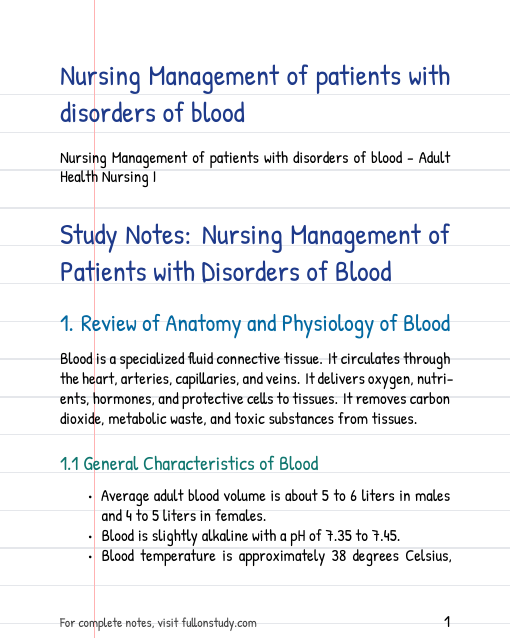
| General Characteristics of Blood | Volume, pH, temperature, viscosity, and body weight percentage |
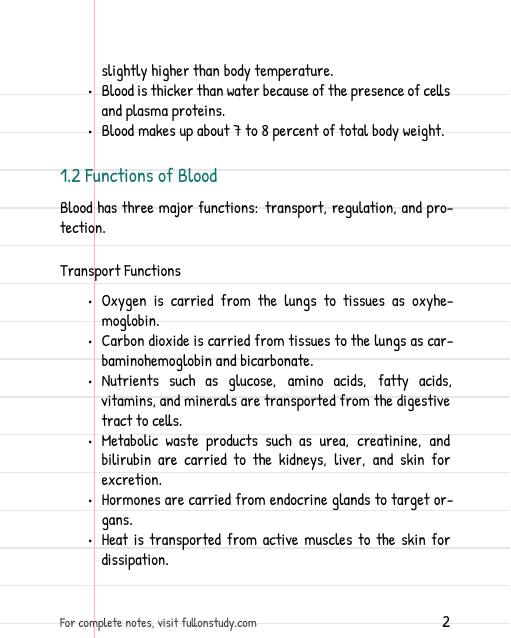
| Transport Functions of Blood | Oxygen, carbon dioxide, nutrients, wastes, hormones, and heat movement |
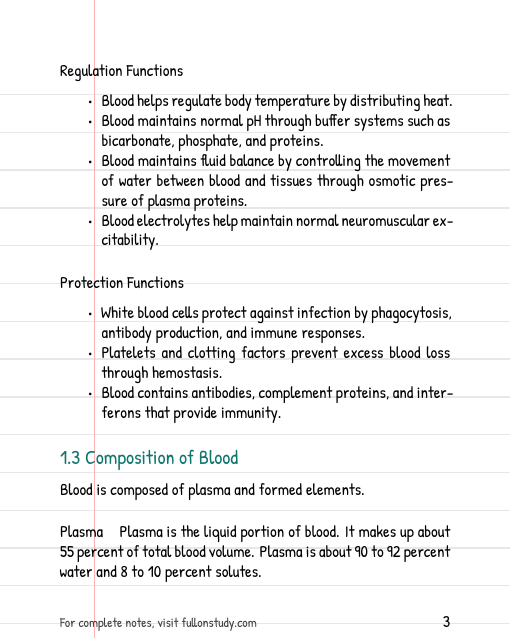
| Regulation and Protection Functions | Body temperature, pH balance, fluid balance, and immune defense |
| Nursing Management of Blood Disorders | Assessment, interventions, and care planning for common blood conditions |
Features
- Simple explanation that cuts through medical jargon so you actually remember key points.
- Full syllabus alignment for BSc Nursing Adult Health Nursing I notes.
- Free PDF download of the complete Nursing Management of patients with disorders of blood pdf.
- Step-by-step breakdowns of blood functions and nursing care actions.
FAQs
What is the normal blood volume in adults? Adult males typically have 5 to 6 liters, and females have 4 to 5 liters. This volume stays fairly constant unless blood loss or dehydration occurs.
What are the three major functions of blood? Blood performs transport, regulation, and protection. Transport moves oxygen, nutrients, hormones, and waste. Regulation keeps pH, temperature, and fluid balance stable. Protection involves clotting and immune cells.
How does blood regulate body temperature? Blood absorbs heat from active muscles and carries it to the skin. The skin then releases heat through sweating and radiation, helping maintain normal body temperature.
Which common blood disorders should a BSc Nursing student focus on? Focus on anemia, polycythemia, leukemia, thrombocytopenia, and hemophilia. Understand the pathophysiology, clinical signs, diagnostic tests, and nursing management for each.
What nursing assessments are essential for a patient with a suspected blood disorder? Check vital signs, skin color and temperature, mucous membranes for pallor or bleeding, lymph nodes, and signs of fatigue or shortness of breath. Review complete blood count and coagulation studies.
What dietary advice helps patients with iron deficiency anemia? Encourage iron-rich foods like green leafy vegetables, beans, red meat, and vitamin C sources to improve iron absorption. Avoid tea and coffee with meals because they reduce iron uptake.
- 📄 Format PDF Document
- 🔓 Access Free
- 💾 File Size 0.19 MB
- 📖 Pages 52
- ✅ Reviewed By Team Fullonstudy
- 🗓️ Last Updated September 9, 2026