
Hey BSc Nursing students, if cardiovascular topics feel heavy, these Nursing Management of patients with cardiovascular problems notes are here to lighten the load. They are written specifically for your Adult Health Nursing I course, keeping university exams and clinical postings in mind. You will find clear points and no unnecessary fluff.
What’s covered?
| Subtopic | What You’ll Review |
|---|---|
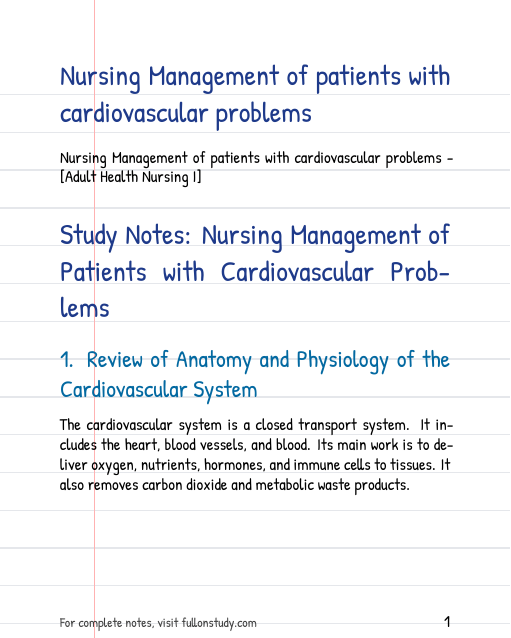
| Anatomy & Physiology Overview | Functions of the cardiovascular system as a closed transport system. |
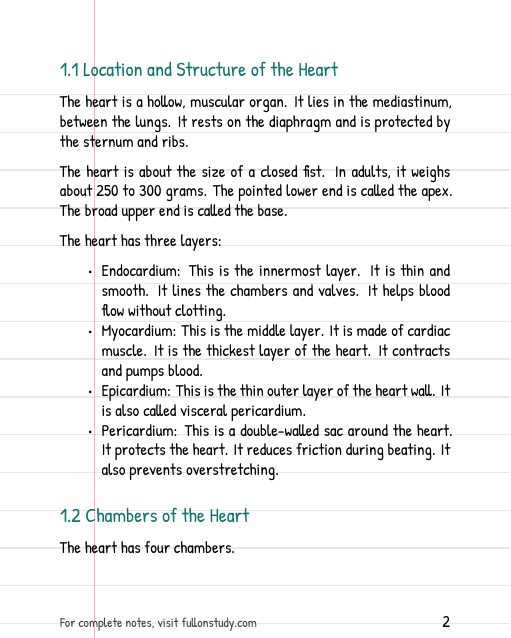
| Heart Location & Structure | Position in mediastinum, size, weight, apex and base. |
| Layers of the Heart | Endocardium, myocardium, epicardium, and pericardium with functions. |
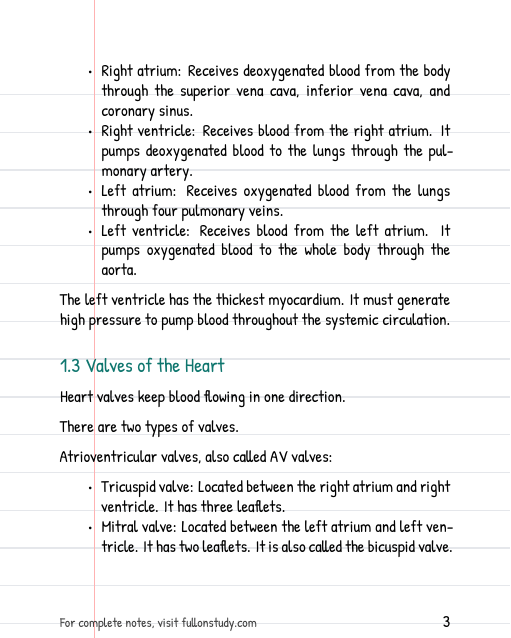
| Chambers of the Heart | Right and left atria, right and left ventricles and their roles in blood flow. |
Features
- Simple explanation: Complex cardiovascular concepts are broken into everyday language.
- Full syllabus alignment for BSc Nursing: Every section follows BSc Nursing Adult Health Nursing I notes structure and exam patterns.
- Free PDF download: Get the Nursing Management of patients with cardiovascular problems pdf for offline revision.
- Step-by-step breakdowns: From anatomy to nursing care, each block builds on the previous one.
FAQs
Q: What are the main nursing responsibilities when managing a patient with cardiovascular problems? A: Monitor vital signs, especially blood pressure and heart rate, assess for chest pain, administer prescribed medications, and educate the patient on lifestyle changes. Always follow your clinical protocols.
Q: How can I quickly memorize the layers of the heart for my Adult Health Nursing I exam? A: Use the mnemonic “Endo My Epi Peri” or think from inside to outside: Endocardium, Myocardium, Epicardium, then the outer Pericardium.
Q: Where can I find free PDF notes for Nursing Management of patients with cardiovascular problems? A: These notes include a free PDF download link right on this page. Just scroll to the download section and save it for offline revision.
Q: What is the difference between the right and left side of the heart in simple terms? A: The right side pumps deoxygenated blood to the lungs, while the left side pumps oxygenated blood to the entire body. The left ventricle has thicker walls for that higher pressure job.
Q: How does understanding heart anatomy help with nursing management of cardiovascular patients? A: Knowing the chambers and layers helps you understand blood flow, valve issues, and why certain symptoms appear. That foundation makes clinical decisions easier.
Q: What are common cardiovascular problems a BSc Nursing student should focus on for exams? A: Common topics include hypertension, coronary artery disease, heart failure, and myocardial infarction. Pay attention to nursing assessments and interventions for each.
- 📄 Format PDF Document
- 🔓 Access Free
- 💾 File Size 0.32 MB
- 📖 Pages 96
- ✅ Reviewed By Team Fullonstudy
- 🗓️ Last Updated September 8, 2026