
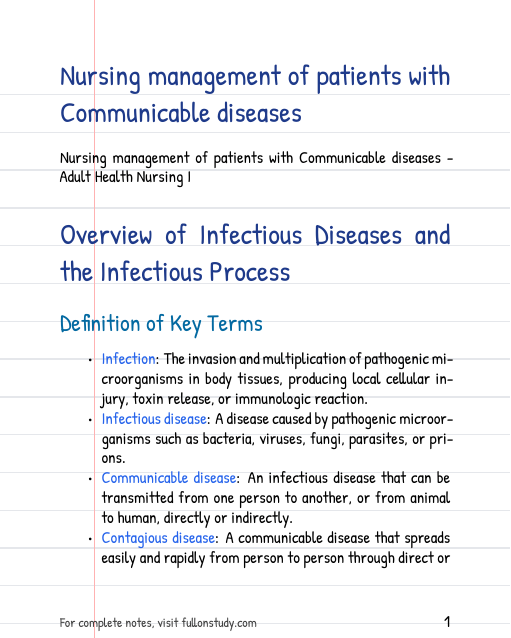
If you are a BSc Nursing student trying to make sense of how infections spread and what your role is in breaking that chain, you are in the right place. These Nursing management of patients with Communicable diseases notes are built specifically for your Adult Health Nursing I syllabus. We have kept things simple, exam-focused, and ready for quick revision.
What’s covered?
| Subtopic | What you will learn |
|---|---|
| Key definitions | Clear meanings of infection, communicable disease, carrier, reservoir, incidence, and prevalence. |
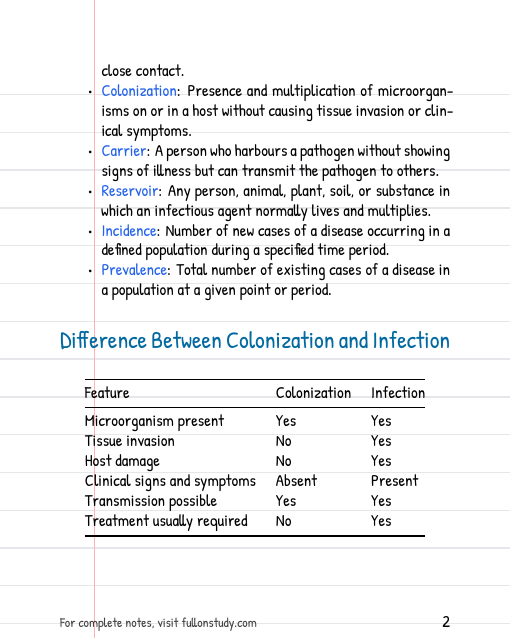
| Colonization vs infection | A side-by-side comparison to avoid confusion in exams. |
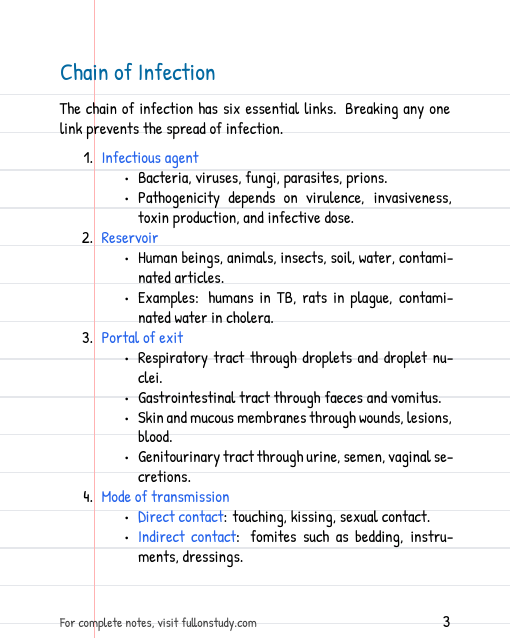
| Chain of infection | The six essential links and how breaking any one stops disease spread. |
Features
- Simple explanation of every concept without heavy jargon.
- Full syllabus alignment for BSc Nursing.
- Free PDF download for offline revision anytime.
- Step-by-step breakdowns of infection control and nursing responsibilities.
FAQs
What is the chain of infection and why is it important in nursing?
The chain of infection has six links: infectious agent, reservoir, portal of exit, mode of transmission, portal of entry, and susceptible host. Nurses break any link through hand hygiene, isolation, disinfection, and patient education to stop the spread.
What is the difference between colonization and infection?
The difference between colonization and infection is that colonization means microorganisms are present and multiplying without causing tissue damage or symptoms. Infection involves tissue invasion, host damage, and clinical signs. Carriers may be colonized and can still transmit pathogens.
What are the common modes of transmission for communicable diseases?
Direct contact, droplet spread, airborne transmission, vehicle-borne (food, water, fomites), and vector-borne routes. Nursing management focuses on interrupting these modes using standard and transmission-based precautions.
What is the nurse’s role in managing a patient with a communicable disease?
The nurse assesses vital signs and symptoms, implements isolation precautions, administers prescribed antimicrobials, educates the patient and family, and documents findings. Preventing cross-infection is the priority.
How do you remember the difference between incidence and prevalence?
Incidence counts new cases in a population over a specific time period. Prevalence counts all existing cases at one point or period. Think incidence equals new, prevalence equals total existing.
Where can I download Nursing management of patients with Communicable diseases pdf for free?
You can download the free PDF from this page. It aligns with BSc Nursing Adult Health Nursing I notes and covers all key definitions and the chain of infection in a simple format.
- 📄 Format PDF Document
- 🔓 Access Free
- 💾 File Size 0.3 MB
- 📖 Pages 84
- ✅ Reviewed By Team Fullonstudy
- 🗓️ Last Updated September 12, 2026