
If you are in your Adult Health Nursing II semester and starting the male reproductive disorders unit, this guide is written just for you. These Nursing Management of Male Reproductive Disorders notes become your quick reference for both class tests and university exams, and they fit perfectly with your BSc Nursing Adult Health Nursing II notes collection.
What’s covered?
| Topic | Key focus |
|---|---|
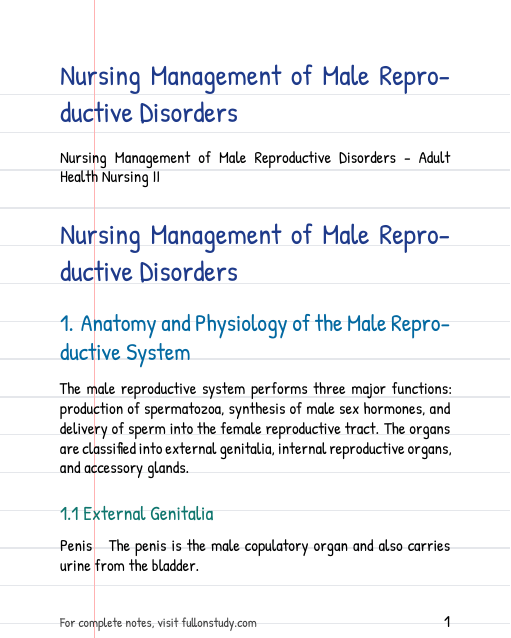
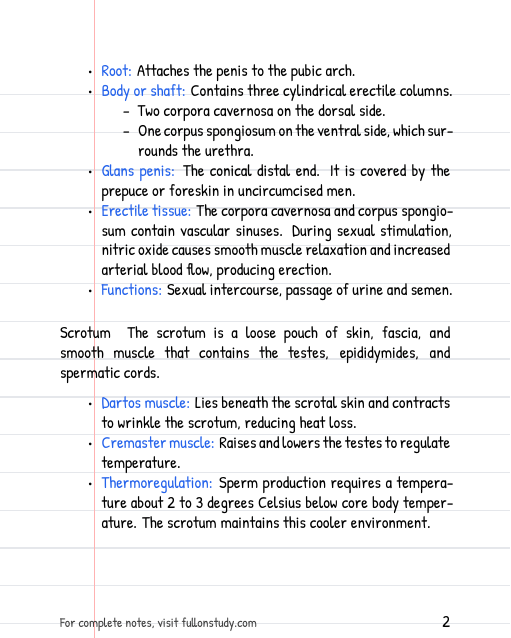
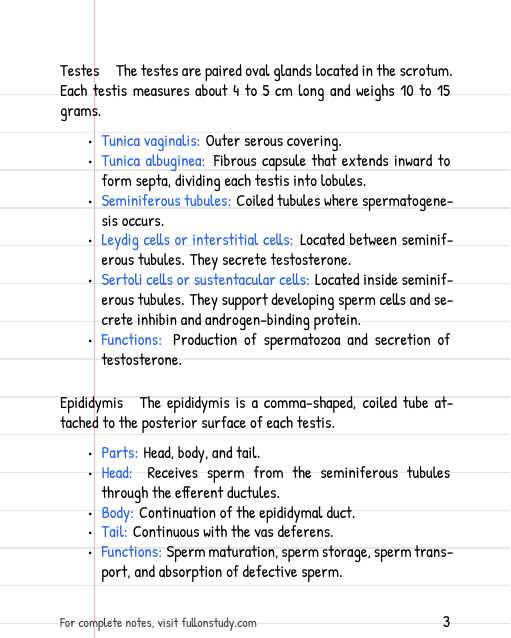
| Anatomy and physiology | Penis, scrotum, testes, spermatic cord |
| Common male reproductive disorders | BPH, prostatitis, epididymitis, testicular torsion, hydrocele, varicocele, erectile dysfunction |
| Nursing assessment and diagnostic tests | History taking, physical exam, ultrasound, PSA, urine culture |
| Medical and surgical management | Medications, TURP, orchiectomy, hydrocelectomy |
| Nursing interventions and patient education | Pain management, wound care, sexual health teaching, follow-up |
Features
- Simple explanation of complex male reproductive disorders with step-by-step breakdowns.
- Full syllabus alignment for BSc Nursing Adult Health Nursing II.
- Free PDF download of these Nursing Management of Male Reproductive Disorders notes for easy offline study.
- Concise tables and bullet points to help you revise faster before exams.
FAQs
What is the priority nursing diagnosis for a patient with benign prostatic hyperplasia? The priority nursing diagnosis is often acute pain related to bladder distension or urinary retention. Risk for infection and anxiety are also common.
How should a nurse monitor a patient after transurethral resection of the prostate (TURP)? Monitor continuous bladder irrigation for clot retention, assess urine color and output, watch for signs of TURP syndrome like confusion and hyponatremia, and manage pain.
Why is testicular torsion considered a surgical emergency? Testicular torsion cuts off blood supply to the testis. If not corrected within 4 to 6 hours, permanent ischemic damage and loss of the testis can occur.
What patient teaching is essential for a man with epididymitis? Teach him to complete the full antibiotic course, wear scrotal support, apply cold packs in the acute phase, and avoid heavy lifting until pain resolves.
How do nurses differentiate between hydrocele and varicocele during assessment? Hydrocele is a painless fluid-filled swelling around the testis that transilluminates. Varicocele feels like a bag of worms and may cause dull ache, especially when standing.
What is the role of PSA testing in male reproductive disorders? PSA is a blood test used to screen for prostate cancer and monitor response to treatment, but elevated levels can also occur in BPH and prostatitis.
- 📄 Format PDF Document
- 🔓 Access Free
- 💾 File Size 0.17 MB
- 📖 Pages 41
- ✅ Reviewed By Team Fullonstudy
- 🗓️ Last Updated September 17, 2026