
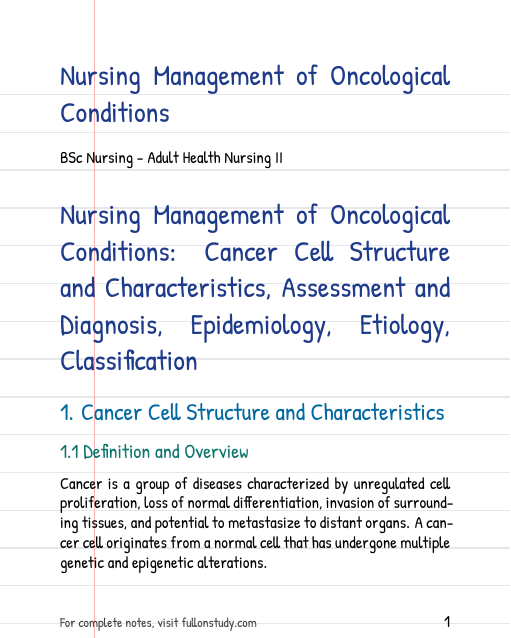
If you’re a BSc Nursing student in Adult Health Nursing II, oncology might feel like one of the most demanding units. This page breaks down Nursing Management of Oncological Conditions notes into the exact structure you need for exams and clinicals. Take a deep breath and use this as your quick revision companion.
What’s covered?
| Subtopic | Key Focus |
|---|---|
| Cancer Cell Structure and Characteristics | Morphological and chromosomal changes in malignant cells |
| Assessment and Diagnosis | Clinical evaluation, staging, and diagnostic tools |
| Epidemiology | Patterns, risk factors, and global burden of cancer |
| Etiology | Genetic, environmental, and lifestyle causes of cancer |
| Classification | Tumor types, grading, and staging systems |
Features
- Simple explanation of complex oncology concepts without heavy jargon.
- Full syllabus alignment with BSc Nursing Adult Health Nursing II notes for Indian universities.
- A free PDF download of the complete notes for offline revision.
- Step-by-step breakdowns of cell structure, assessment, and classification.
- Covers the Nursing Management of Oncological Conditions pdf in one place.
- Includes diagrams and comparison tables for quick recall.
FAQs
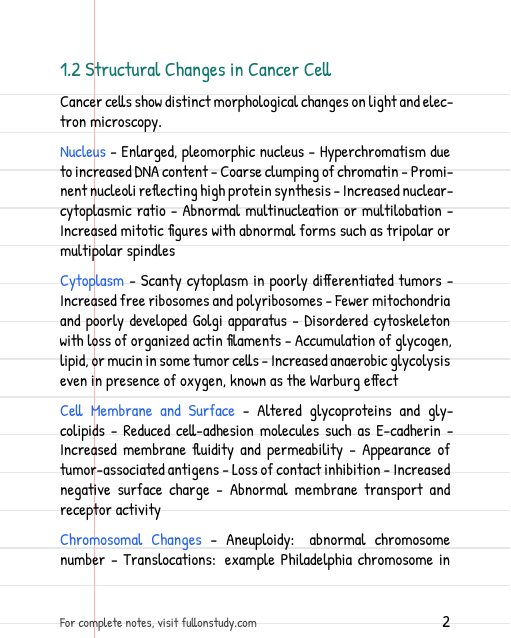
What are the key structural changes in cancer cells? Cancer cells have an enlarged pleomorphic nucleus, hyperchromatism, prominent nucleoli, and a high nuclear-cytoplasmic ratio. Cytoplasm shows fewer mitochondria and increased anaerobic glycolysis (Warburg effect).
How is cancer classified in nursing management? Cancer is classified by tissue of origin, histological grade, and TNM staging. Nurses use this classification to plan interventions and monitor progression. Staging also guides treatment decisions and nursing care plans.
What is the role of a nurse in the assessment of oncological conditions? The nurse performs a detailed history, physical assessment, and monitors for metastasis. They also coordinate diagnostic tests like biopsy, imaging, and tumor markers.
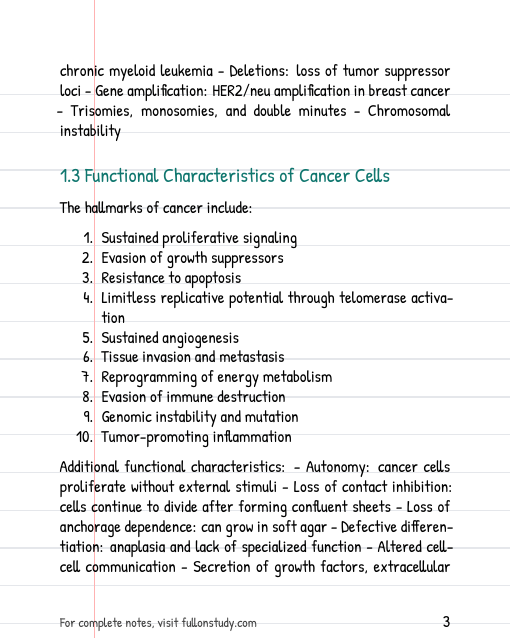
What are the common etiological factors of cancer? Genetic mutations, tobacco, alcohol, viruses, diet, and environmental carcinogens are common causes. Preventive education is a key nursing role.
Why is epidemiology important in oncology nursing? Epidemiology helps nurses identify high-risk groups and plan screening programs. It guides community health initiatives and resource allocation.
What is the Warburg effect and why does it matter? The Warburg effect is increased anaerobic glycolysis even in the presence of oxygen. It supports rapid tumor growth and is a potential diagnostic and therapeutic target.
- 📄 Format PDF Document
- 🔓 Access Free
- 💾 File Size 0.21 MB
- 📖 Pages 52
- ✅ Reviewed By Team Fullonstudy
- 🗓️ Last Updated September 25, 2026