
Looking for a clear and concise overview of acid base balance for your B.Sc. Biochemistry course? This note covers the essentials of pH, normal blood pH, and the three main regulatory mechanisms.
What’s covered?
| Topic | Description |
|---|---|
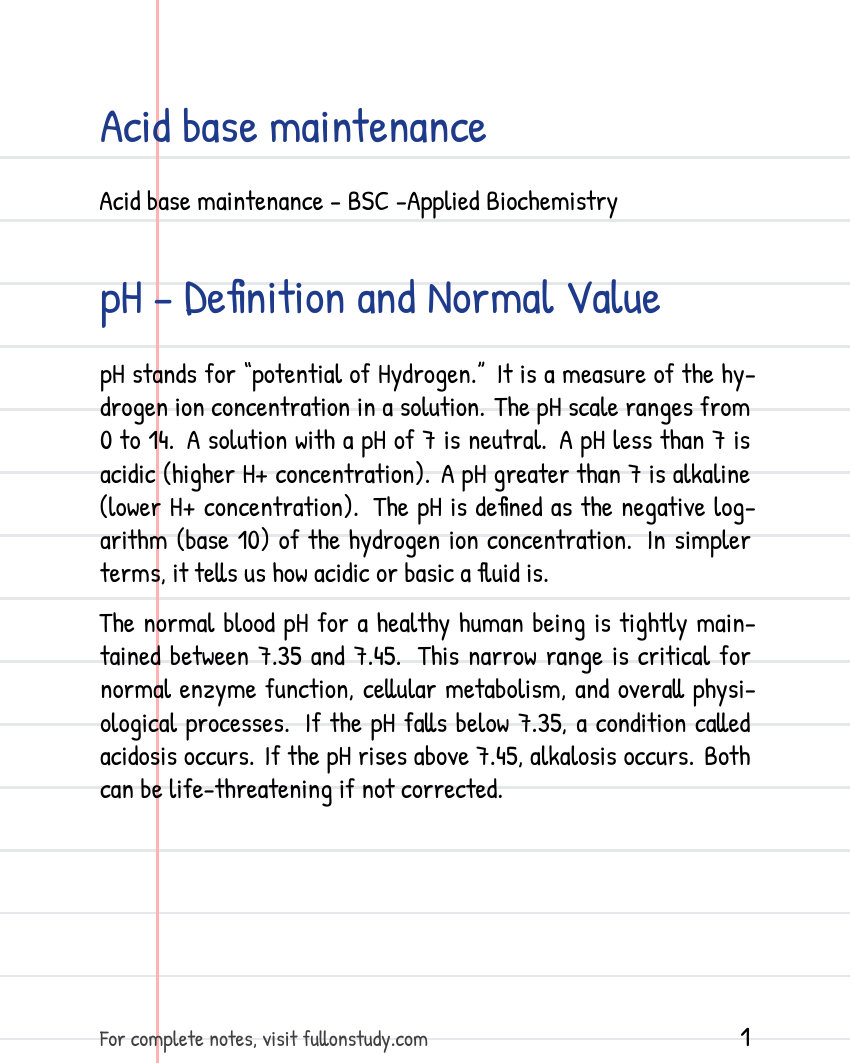
| pH – Definition and Normal Value | Explanation of pH scale, normal blood pH range (7.35-7.45), and consequences of acidosis/alkalosis. |
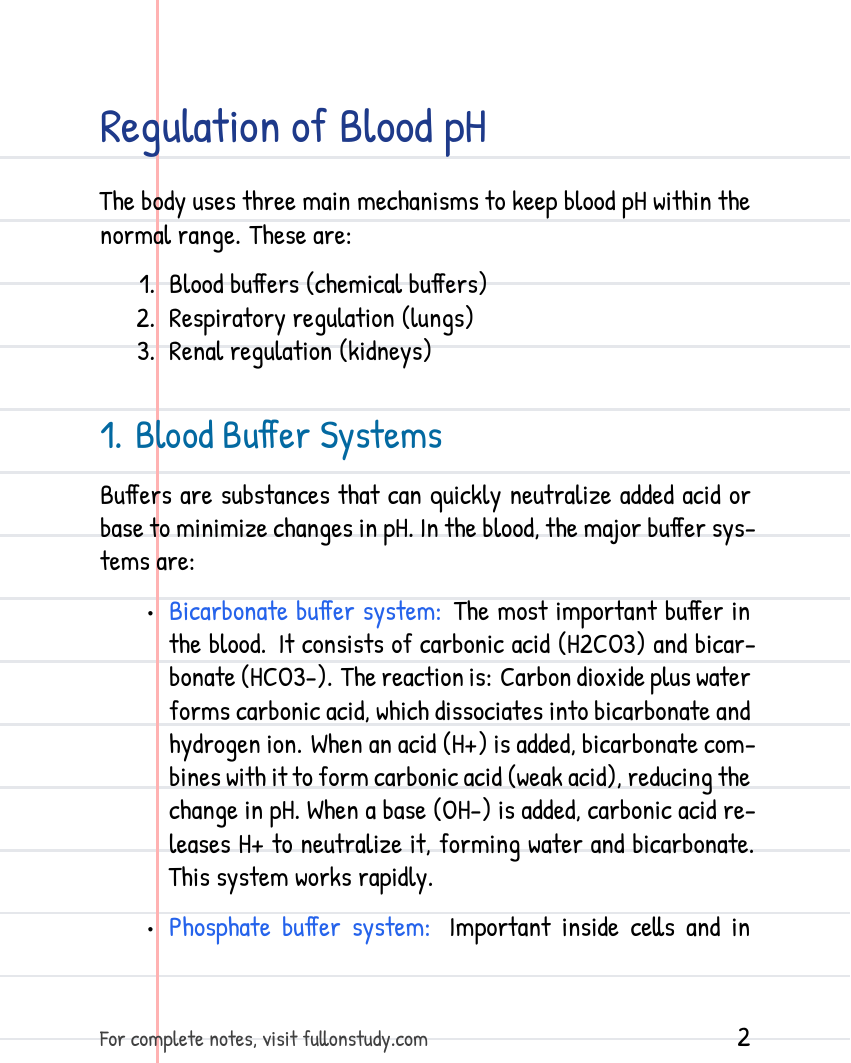
| Regulation of Blood pH | Overview of three mechanisms: blood buffers, respiratory regulation, renal regulation. |
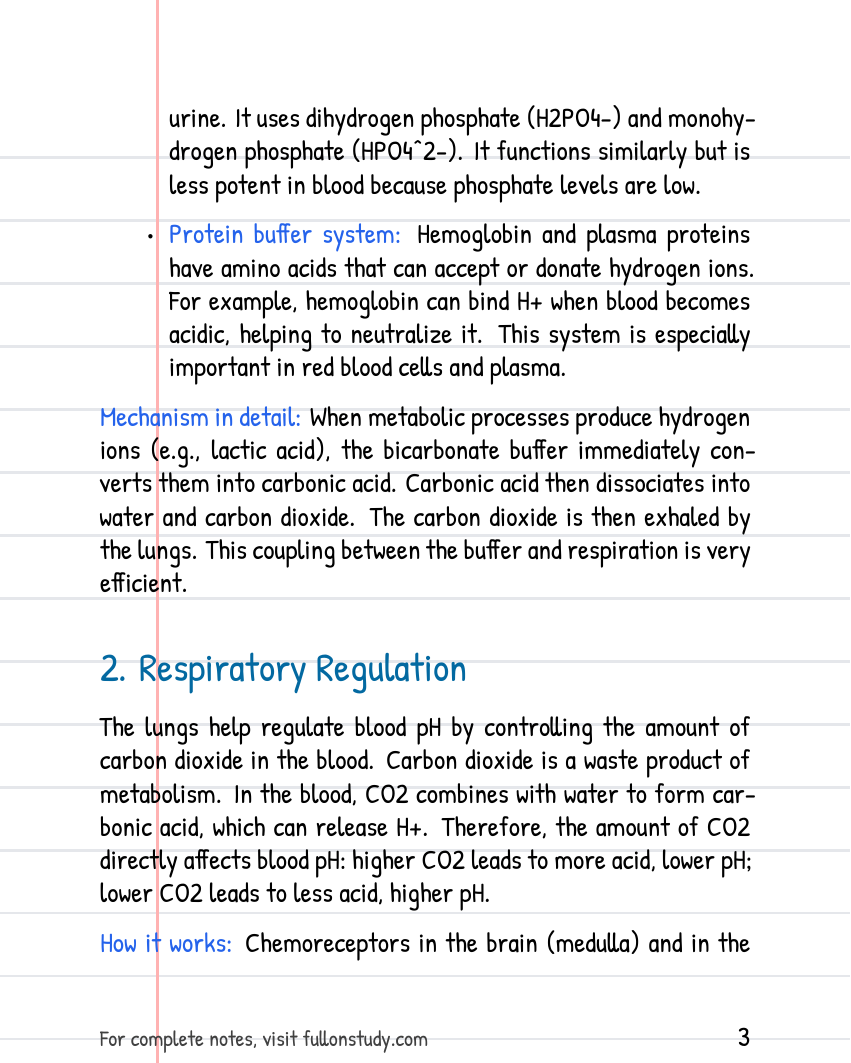
| Blood Buffer Systems | Details on bicarbonate buffer system and phosphate buffer system. |
Features
- Easy to understand language with simple explanations
- Complete syllabus covered for B.Sc. Applied Biochemistry
- Free to download in pdf format
- Questions and answers at the end of each topic for self-assessment
FAQs
What is the normal blood pH range? The normal blood pH is between 7.35 and 7.45.
How does the bicarbonate buffer system work? It uses carbonic acid and bicarbonate to quickly neutralize added acid or base, minimizing pH changes.
What happens if blood pH goes below 7.35? It causes acidosis, which can be life-threatening if not corrected.
Download your Acid base maintenance notes for free and improve your understanding of this important topic in biochemistry.
- 📄 Format PDF Document
- 🔓 Access Free
- 💾 File Size 0.05 MB
- 📖 Pages 8
- ✅ Reviewed By Team Fullonstudy
- 🗓️ Last Updated July 25, 2026
×
![Preview enlarged]()