
Looking for comprehensive Fats notes for your Applied Nutrition & Dietetics course? Here you get a clear overview of fats, their classification, functions, and dietary sources, all explained in simple language.
What’s covered?
| Topic | Description |
|---|---|
| Introduction to Fats | Role of fats as energy source and essential nutrients |
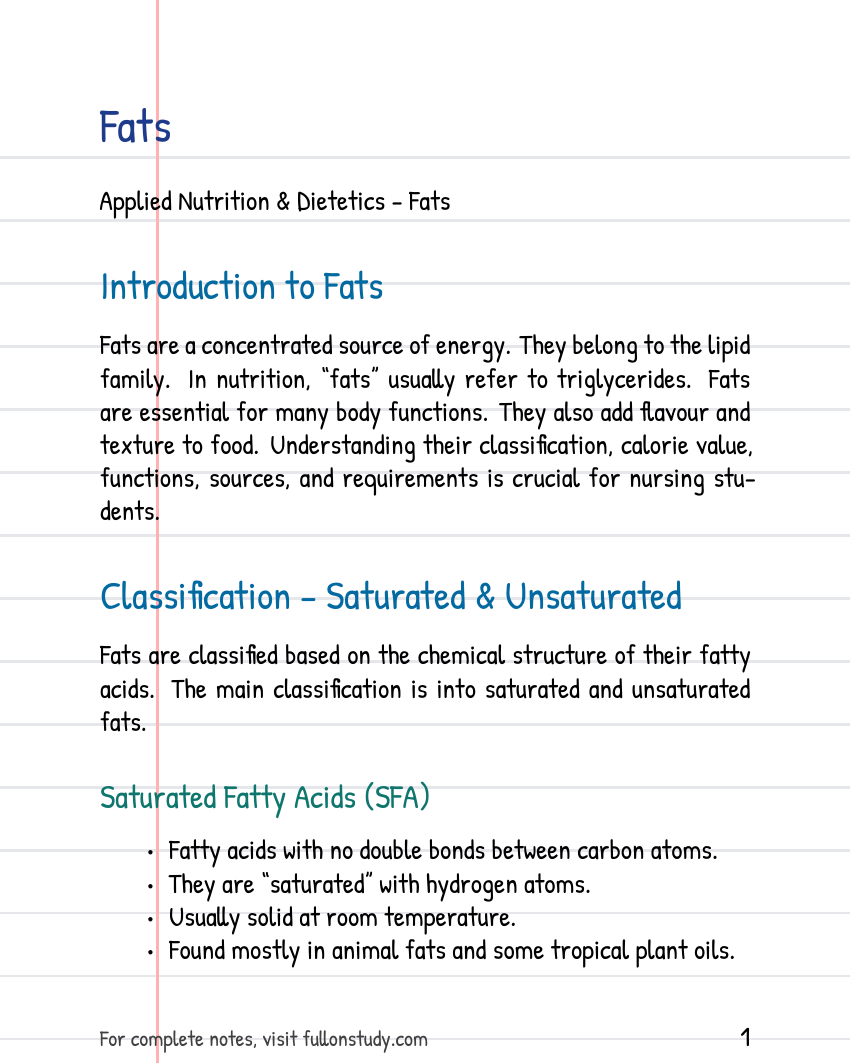
| Classification | Saturated, unsaturated (MUFA, PUFA), and trans fats |
| Saturated Fatty Acids | Sources, properties, and health risks |
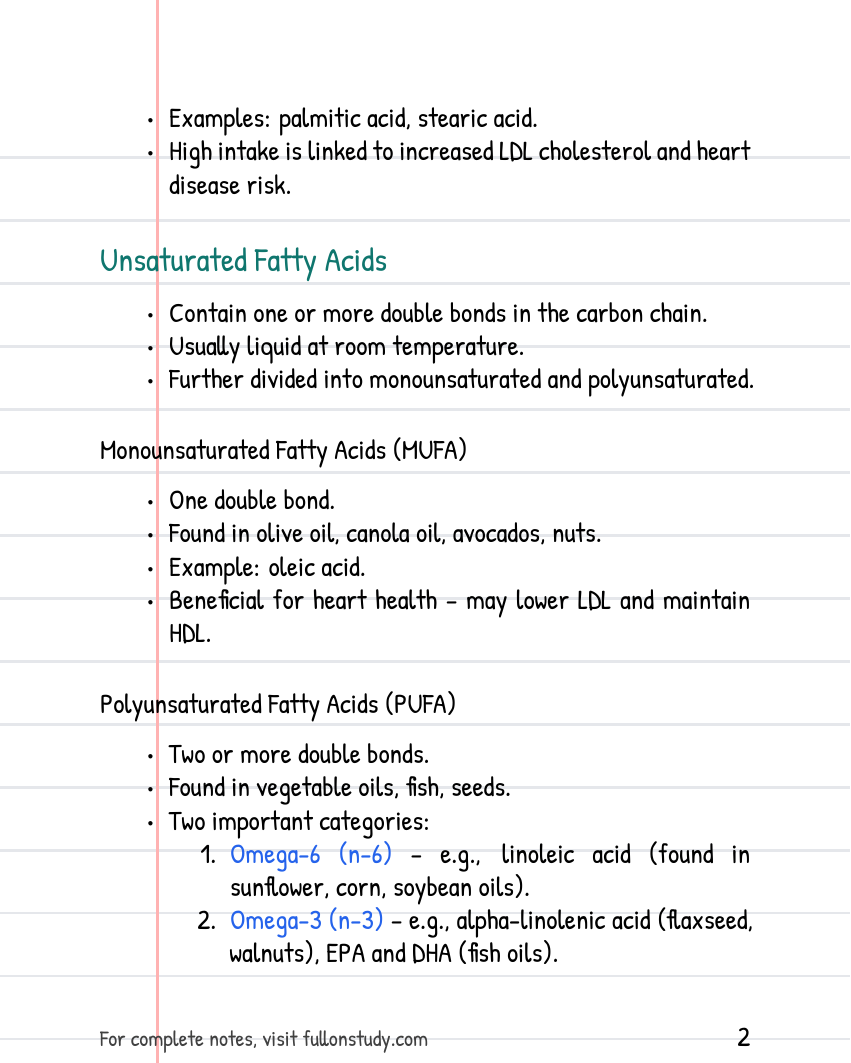
| Unsaturated Fatty Acids | Types, sources, and benefits for heart health |
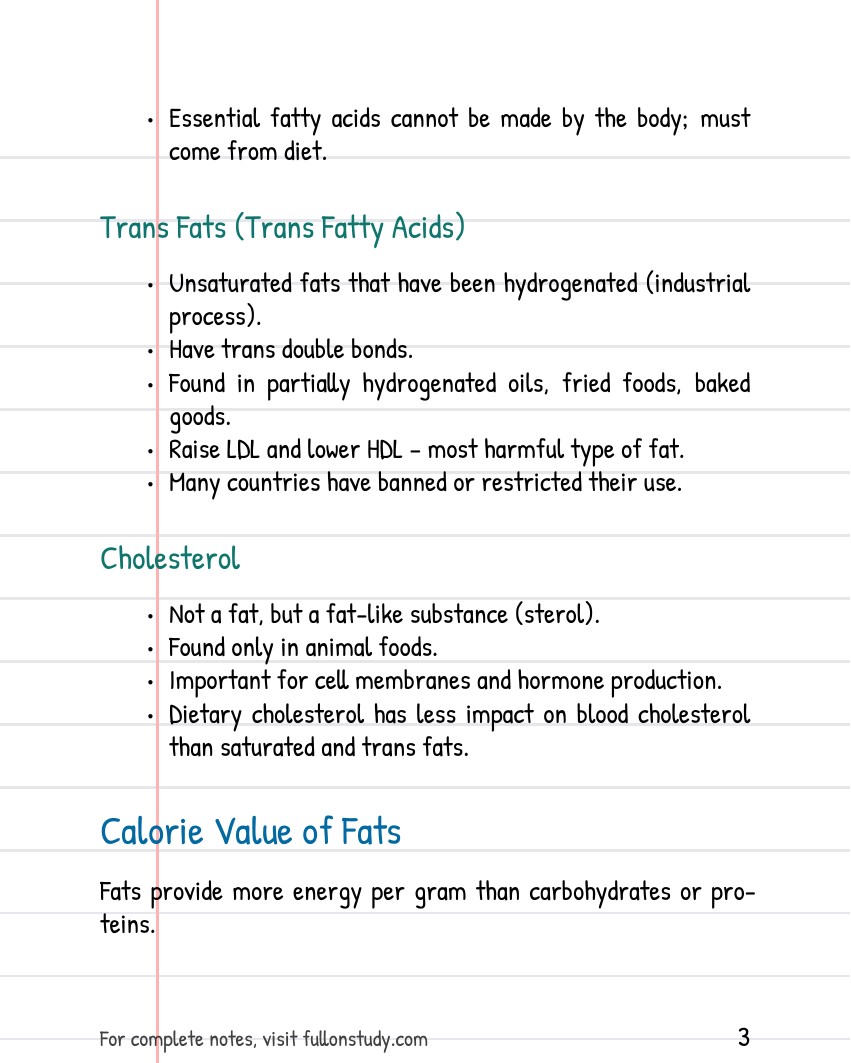
| Trans Fats | Industrial hydrogenation and harmful effects |
| Functions & Requirements | Bodily functions and daily intake recommendations |
Features
- Easy to understand language with clear examples
- Complete syllabus covered for B.Sc. Nursing or related health science courses
- Free to download in pdf format
- Questions and answers at end of each topic (in the full note)
FAQs
What are the main types of dietary fats? The main types are saturated fats, unsaturated fats (monounsaturated and polyunsaturated), and trans fats.
Why are unsaturated fats considered healthier? Unsaturated fats can help lower LDL cholesterol and reduce heart disease risk, while saturated and trans fats raise LDL.
Where can I get omega-3 fatty acids? Omega-3s are found in flaxseeds, walnuts, and fatty fish like salmon; they are essential and must come from diet.
Are all saturated fats bad? Some plant-based saturated fats (e.g., coconut oil) may not be as harmful, but high intake of animal-based saturated fats is linked to heart disease.
- Format PDF Document
- Access Free
- File Size 0.03 MB
- Pages 4
- Reviewed By Team Fullonstudy
- Last Updated July 14, 2026