
Looking for General characteristics of Microbes notes? This guide provides clear and simple explanations tailored for B.Sc. Nursing Applied Microbiology. Download the complete notes in PDF format for free.
What’s covered?
| Topic | Coverage |
|---|---|
| Introduction to Microbes | Definition, occurrence, and importance in nursing |
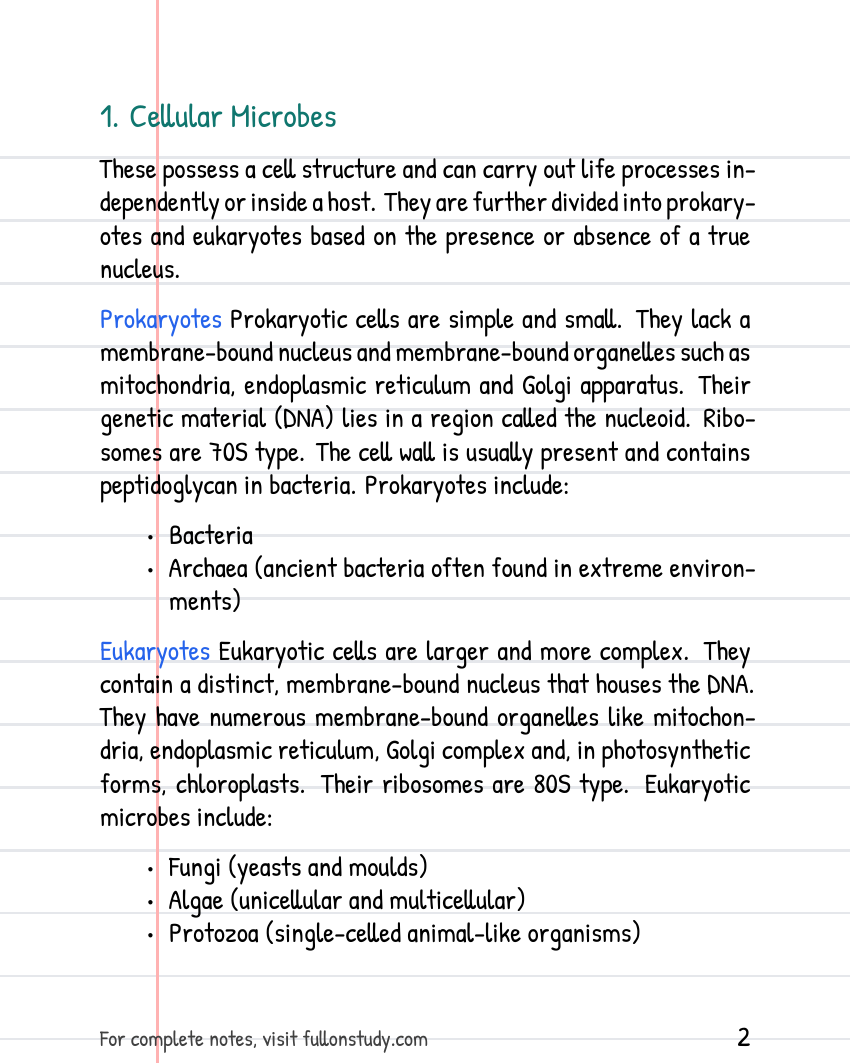
| Cellular Microbes: Prokaryotes | Bacteria and Archaea – simple structure without a nucleus |
| Cellular Microbes: Eukaryotes | Fungi, Algae, Protozoa, Helminths – complex cells with a nucleus |
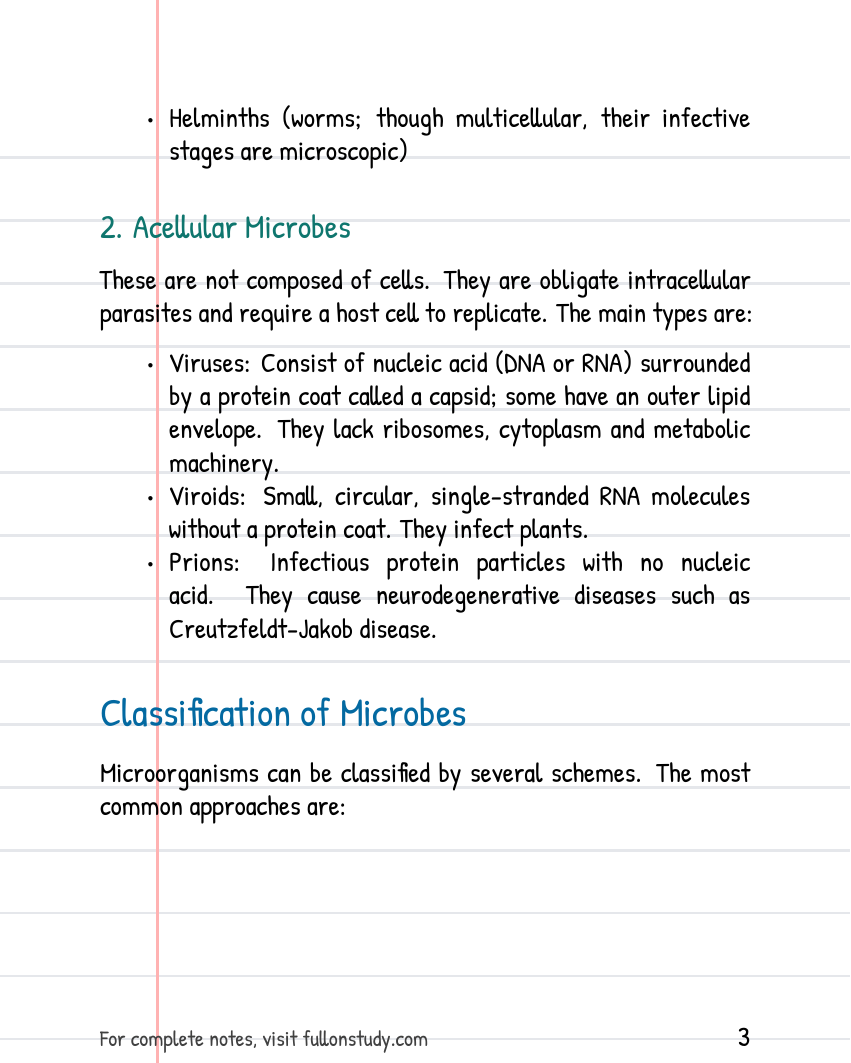
| Acellular Microbes | Viruses, viroids, and prions (non-living infectious agents) |
Features
- Easy to understand language with helpful examples.
- Covers the complete syllabus as per nursing curriculum.
- Free to download in PDF format for offline study.
- Includes questions and answers at the end of each topic for practice.
FAQs
Q: What are microbes?
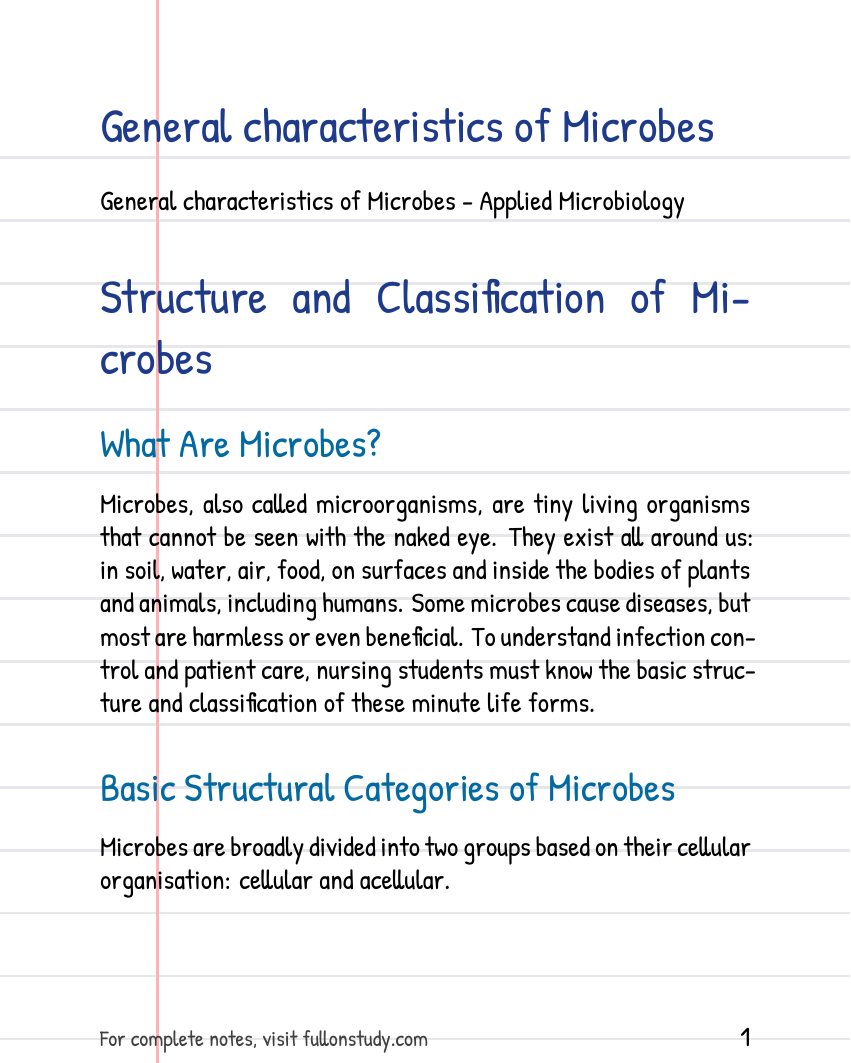
A: Microbes, also called microorganisms, are tiny living organisms invisible to the naked eye. They exist everywhere—in soil, water, air, and inside our bodies.
Q: What is the difference between prokaryotes and eukaryotes?
A: Prokaryotes, like bacteria, lack a true nucleus and membrane-bound organelles. Eukaryotes, such as fungi and protozoa, have a well-defined nucleus and complex cell structures.
Q: Are all microbes dangerous?
A: No, most microbes are harmless or even beneficial. Only a small number cause diseases; many help in digestion, decomposition, and food production.
- 📄 Format PDF Document
- 🔓 Access Free
- 💾 File Size 0.24 MB
- 📖 Pages 45
- ✅ Reviewed By Team Fullonstudy
- 🗓️ Last Updated August 5, 2026