
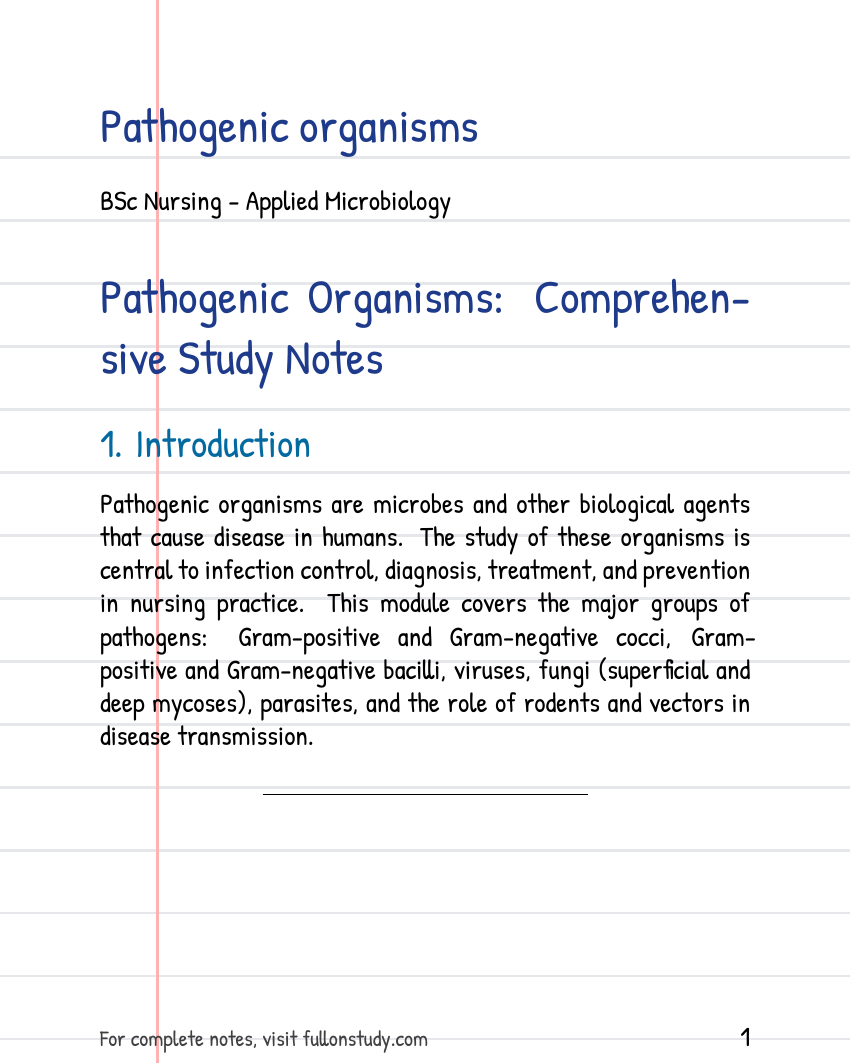
Complete Pathogenic organisms notes for BSc Nursing Applied Microbiology students. These free notes cover all major pathogen groups with clear explanations, perfect for exam preparation.
What’s covered?
| Topic | Description |
|---|---|
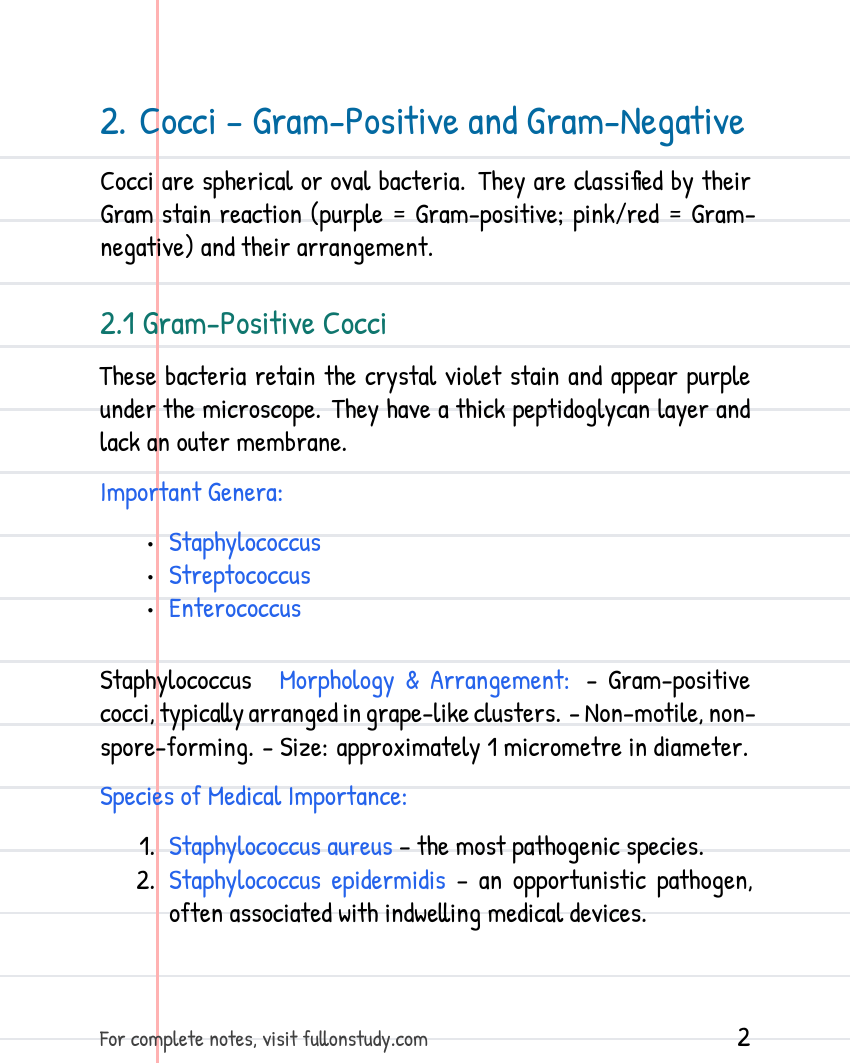
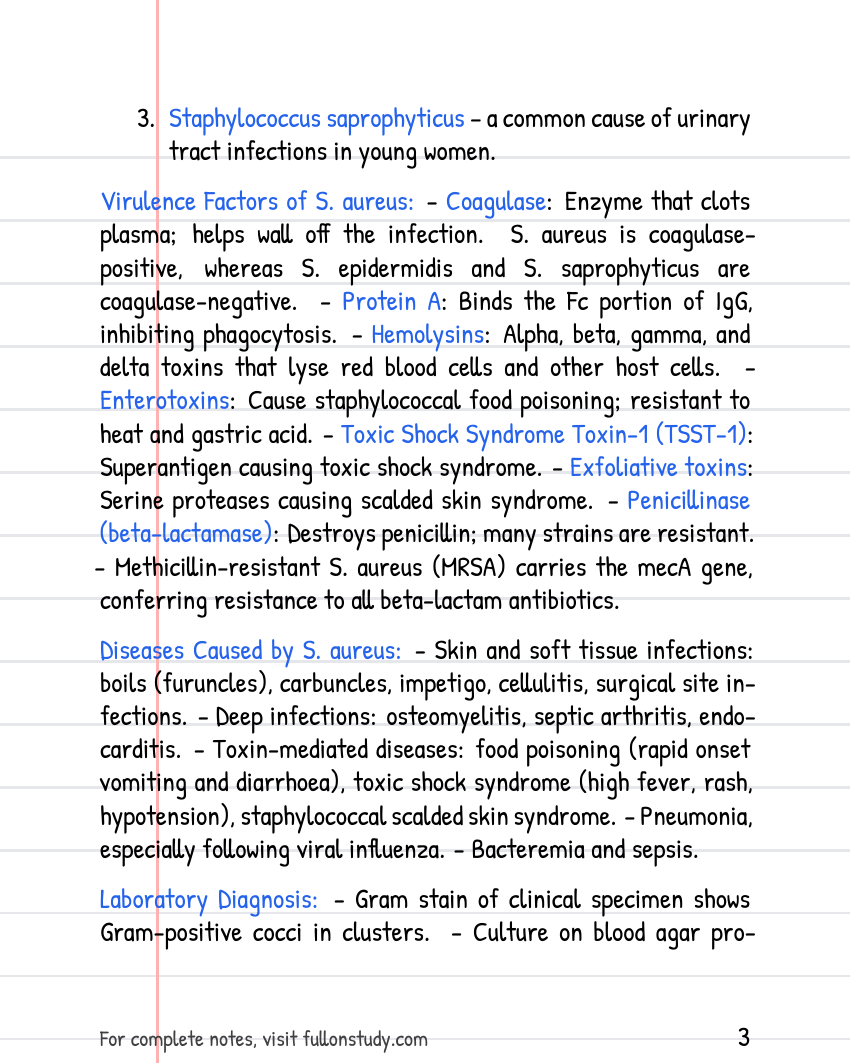
| Gram-positive cocci | Staphylococcus, Streptococcus, Enterococcus and their diseases |
| Gram-negative cocci | Neisseria species causing meningitis and gonorrhea |
| Gram-positive bacilli | Clostridium, Bacillus, Corynebacterium and their toxins |
| Gram-negative bacilli | E. coli, Salmonella, Pseudomonas and other enteric pathogens |
| Viruses | DNA and RNA viruses, replication, and common viral diseases |
| Fungi | Superficial and deep mycoses, including Candida and Aspergillus |
| Parasites | Protozoa and helminths causing malaria, amoebiasis, and worm infections |
| Rodents and vectors | Role in transmission of plague, typhus, and other zoonotic diseases |
Features
- Easy to understand language with simple diagrams.
- Covers the complete BSc Nursing syllabus for microbiology.
- Free to download in PDF format for offline study.
- Questions and answers at the end of each topic for self-assessment.
FAQs
What are pathogenic organisms?
Pathogenic organisms are microbes like bacteria, viruses, fungi, and parasites that can cause disease in humans.
How are bacteria classified?
Bacteria are mainly classified by their Gram stain (Gram-positive or Gram-negative) and their shape (cocci or bacilli).
Why is this topic important for nursing students?
Understanding pathogens helps nurses in infection control, diagnosis, and providing safe patient care.
- 📄 Format PDF Document
- 🔓 Access Free
- 💾 File Size 0.11 MB
- 📖 Pages 23
- ✅ Reviewed By Team Fullonstudy
- 🗓️ Last Updated August 5, 2026
×
![Preview enlarged]()