
Get a complete overview of personality as part of your BSc Applied Psychology syllabus. This guide covers the meaning, definitions by key psychologists, and characteristics of personality with easy-to-understand explanations.
What’s covered?
| Topic | Description |
|---|---|
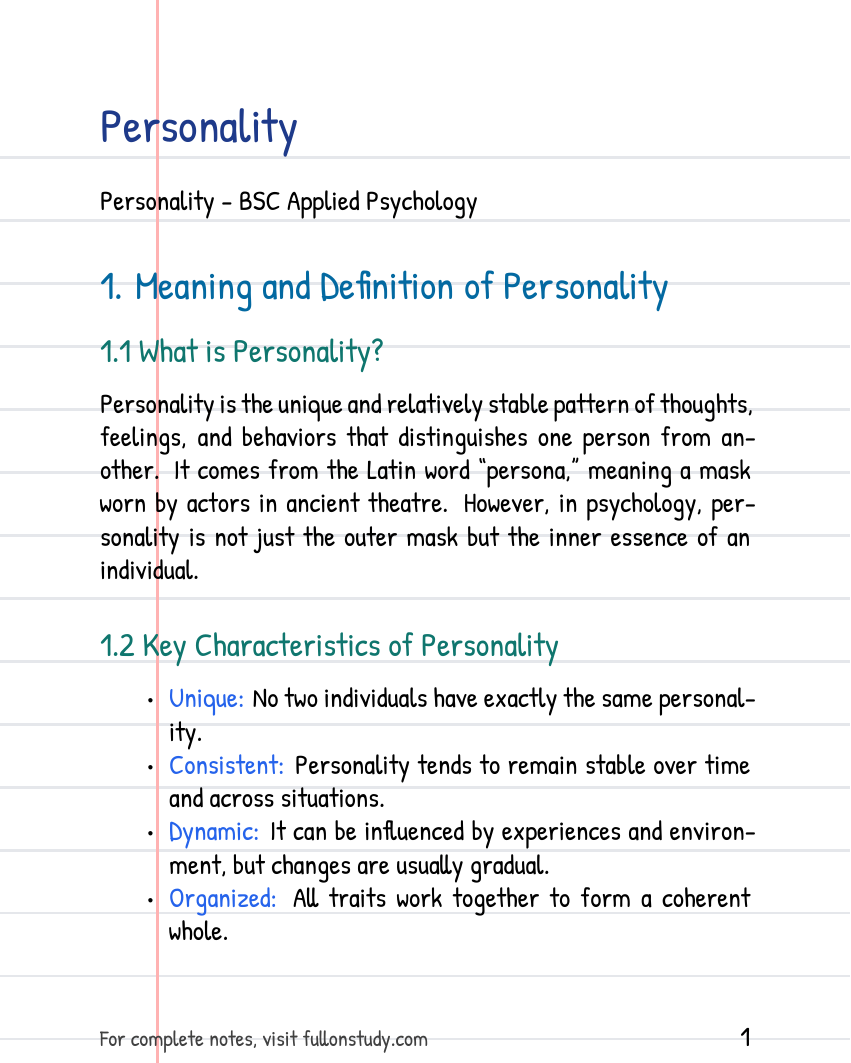
| Meaning and Definition | Understanding personality derived from ‘persona’ and its psychological essence |
| Key Characteristics | Unique, consistent, dynamic, organized, influences behavior |
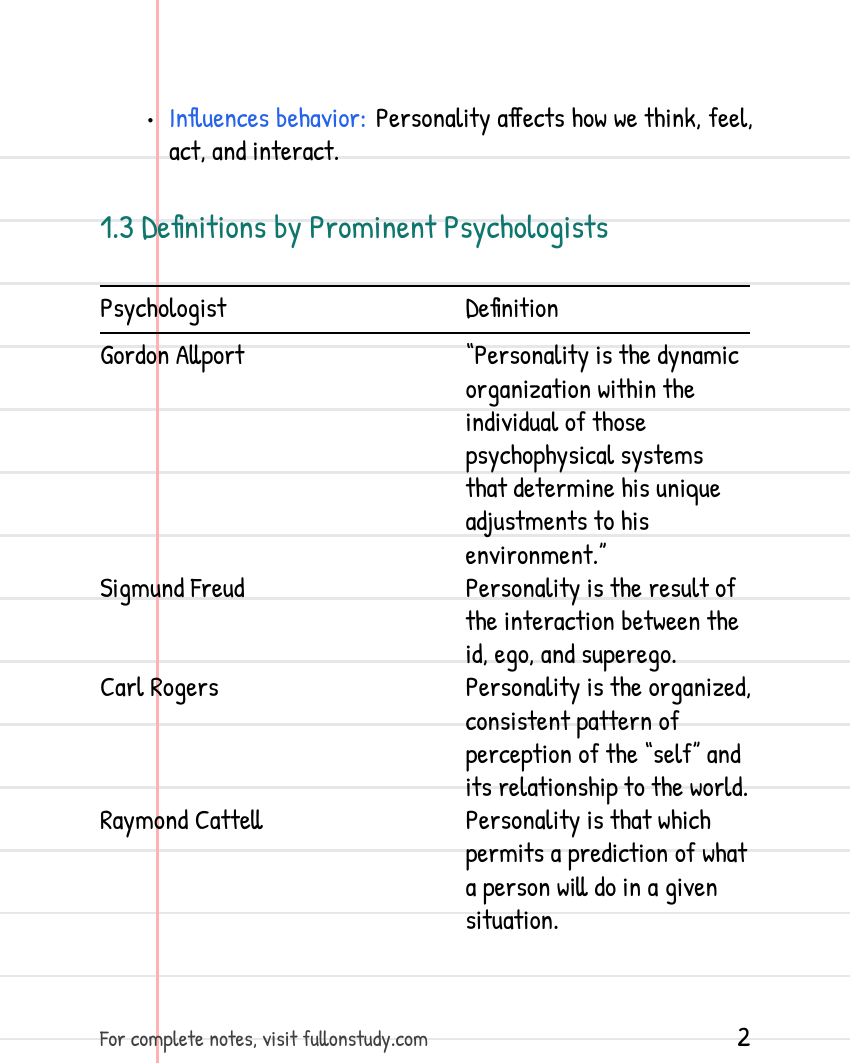
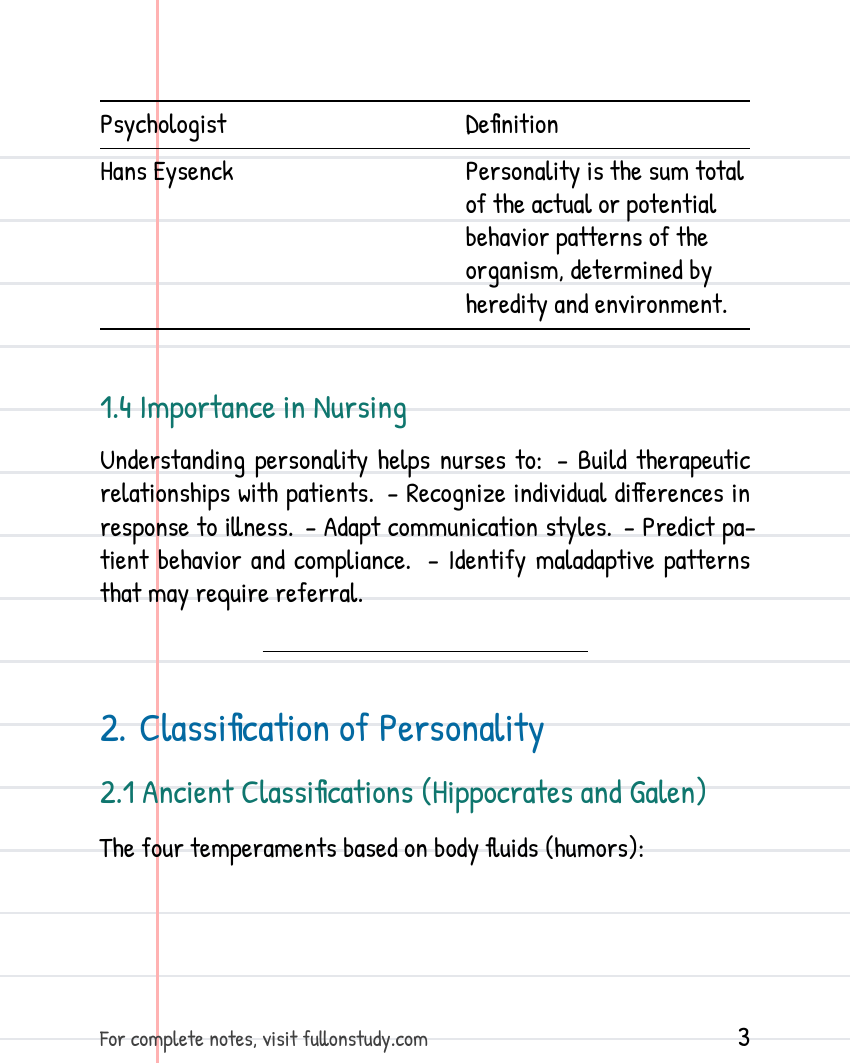
| Definitions by Psychologists | Allport, Freud, Rogers, Cattell, Eysenck |
| Importance in Nursing | Building relationships, adapting communication, predicting behavior |
Features
- Easy to understand language for quick learning
- Complete BSc Applied Psychology syllabus coverage
- Free to download in pdf format
- Questions and answers at the end of each topic for self-assessment
FAQs
What is the origin of the word personality? It comes from the Latin word ‘persona,’ which meant a mask worn by actors. In psychology, it refers to the inner essence of a person.
List the key characteristics of personality. Personality is unique, consistent, dynamic, organized, and influences behavior.
Why is understanding personality important in nursing? It helps build therapeutic relationships, recognize individual differences, adapt communication, and predict patient behavior.
- 📄 Format PDF Document
- 🔓 Access Free
- 💾 File Size 0.06 MB
- 📖 Pages 12
- ✅ Reviewed By Team Fullonstudy
- 🗓️ Last Updated May 29, 2026
×
![Preview enlarged]()