
Looking for Family and Marriage notes for your Applied Sociology course? This guide covers the key concepts you need for your exams. You can easily understand the characteristics, types, and functions of family and marriage with these BS Nursing Sociology notes, available for free download in pdf format.
What’s covered?
| Topic | Description |
|---|---|
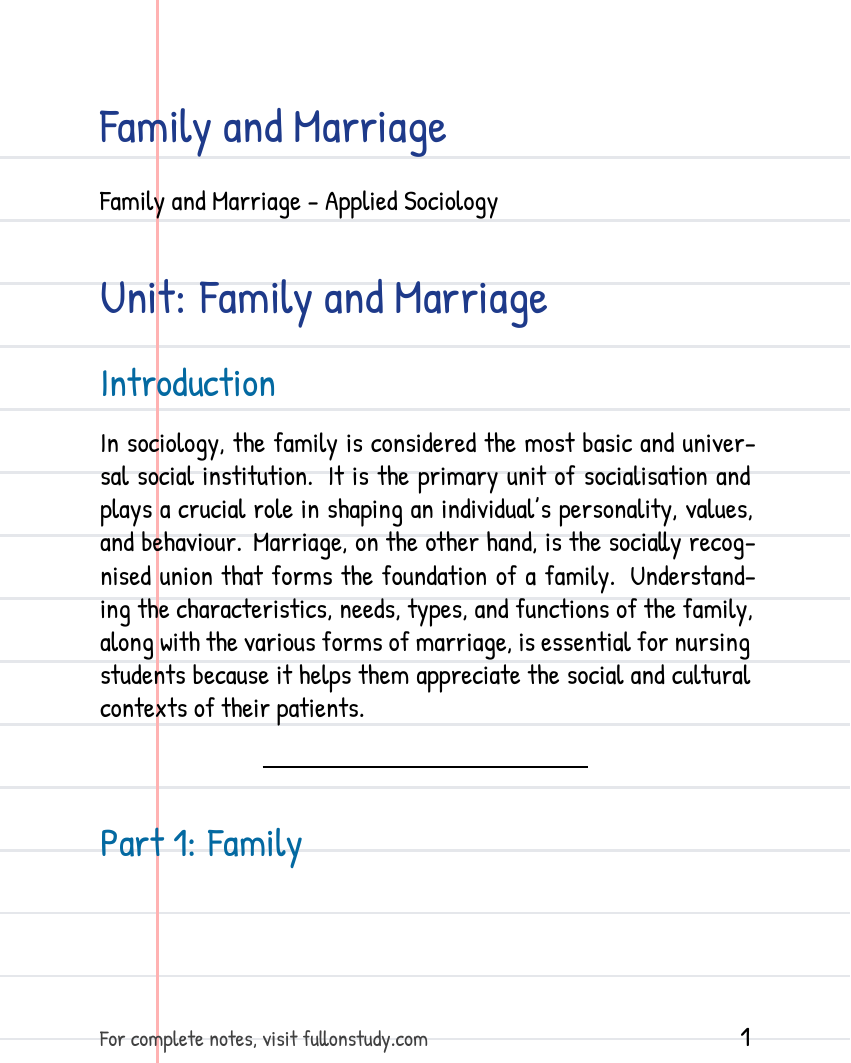
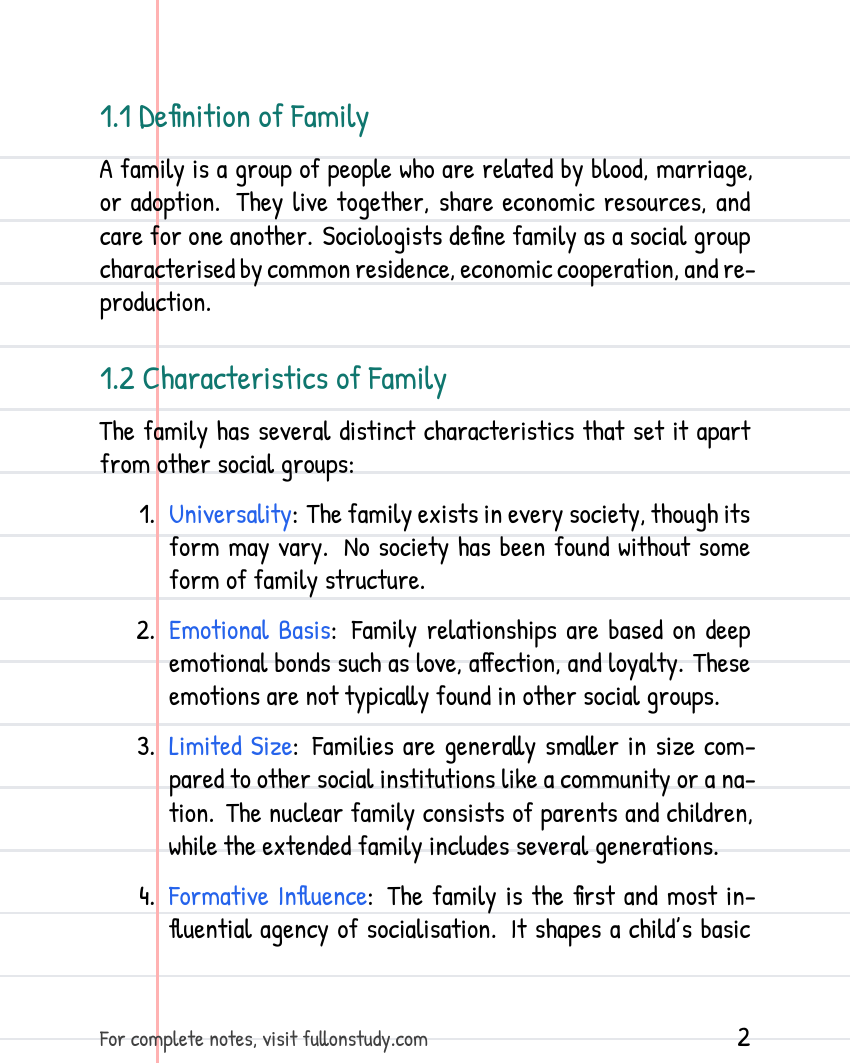
| Definition of Family | A social group related by blood, marriage, or adoption, sharing residence and economic resources. |
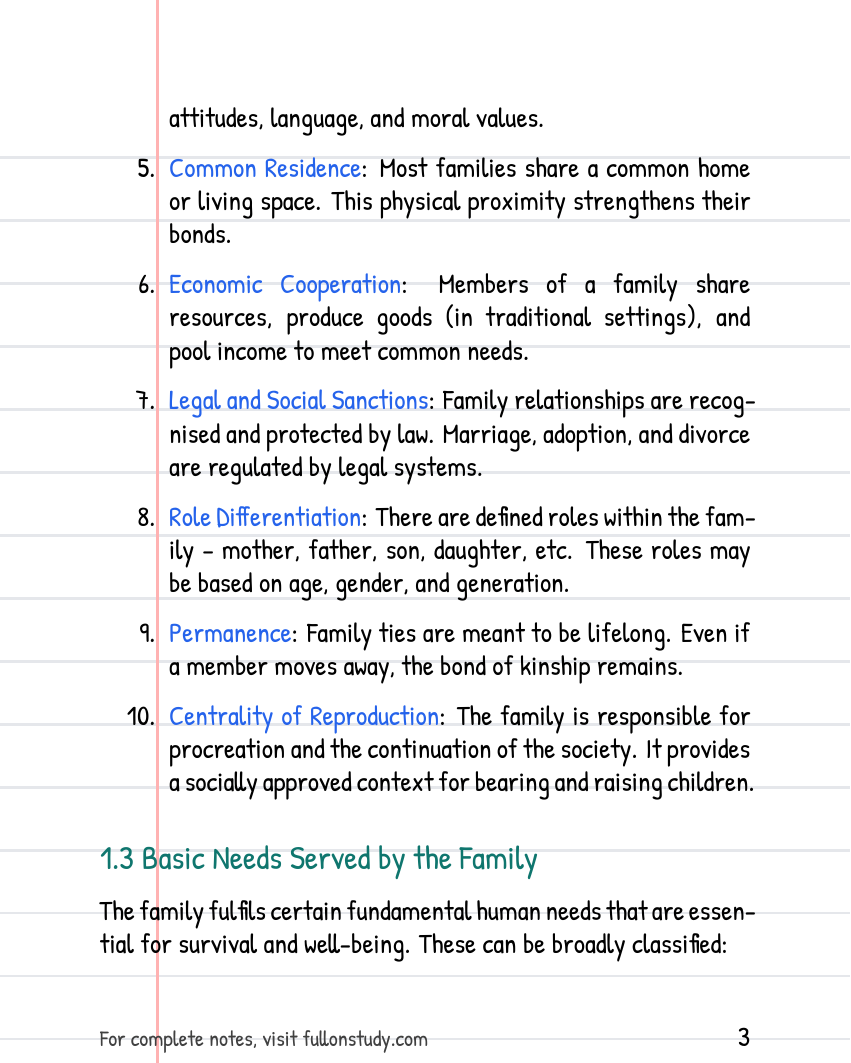
| Characteristics of Family | Universality, emotional basis, limited size, formative influence, common residence, and economic cooperation. |
| Types of Family | Nuclear, extended, matrilocal, patrilocal, etc. |
| Functions of Family | Socialization, economic support, emotional care, and reproduction. |
| Marriage | Socially recognized union that forms the basis of family; types include monogamy, polygamy, etc. |
Features
- Easy to understand language
- Complete syllabus covered for nursing students
- Free to download in pdf format
- Questions and answers at the end of each topic
FAQs
Q: What is the difference between a nuclear family and an extended family? A: A nuclear family consists of parents and their children, while an extended family includes additional relatives like grandparents, aunts, uncles, and cousins living together or nearby.
Q: Why is family considered a universal institution? A: The family exists in every known society, though its form varies. No society has been found without some form of family structure.
Q: How does marriage relate to family formation? A: Marriage is the socially recognized union that typically forms the foundation of a family, providing a stable framework for reproduction and child-rearing.
- 📄 Format PDF Document
- 🔓 Access Free
- 💾 File Size 0.08 MB
- 📖 Pages 16
- ✅ Reviewed By Team Fullonstudy
- 🗓️ Last Updated May 29, 2026