
Get your Social stratification notes for BSC Applied Sociology in easy-to-understand language. This guide covers the key concepts from your syllabus, perfect for exam prep and free to download in pdf format.
What’s covered?
| Topic | Description |
|---|---|
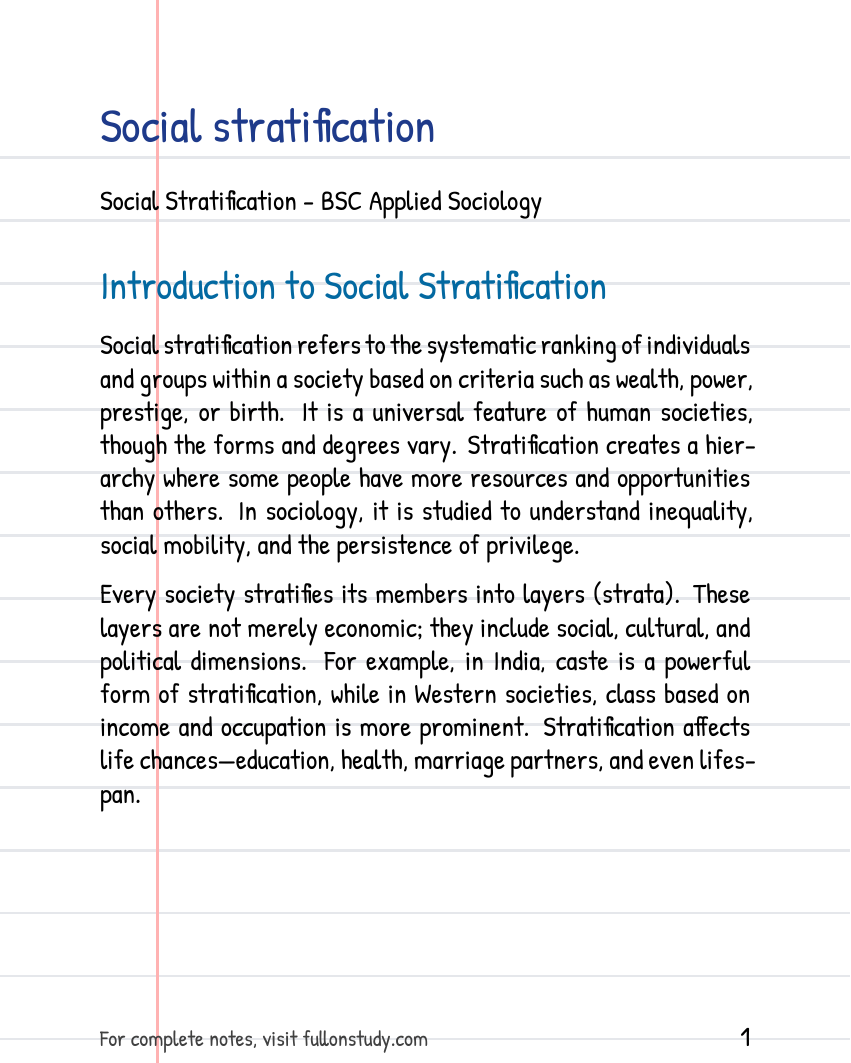
| Introduction to Social Stratification | Definition, universal feature, hierarchy, inequality |
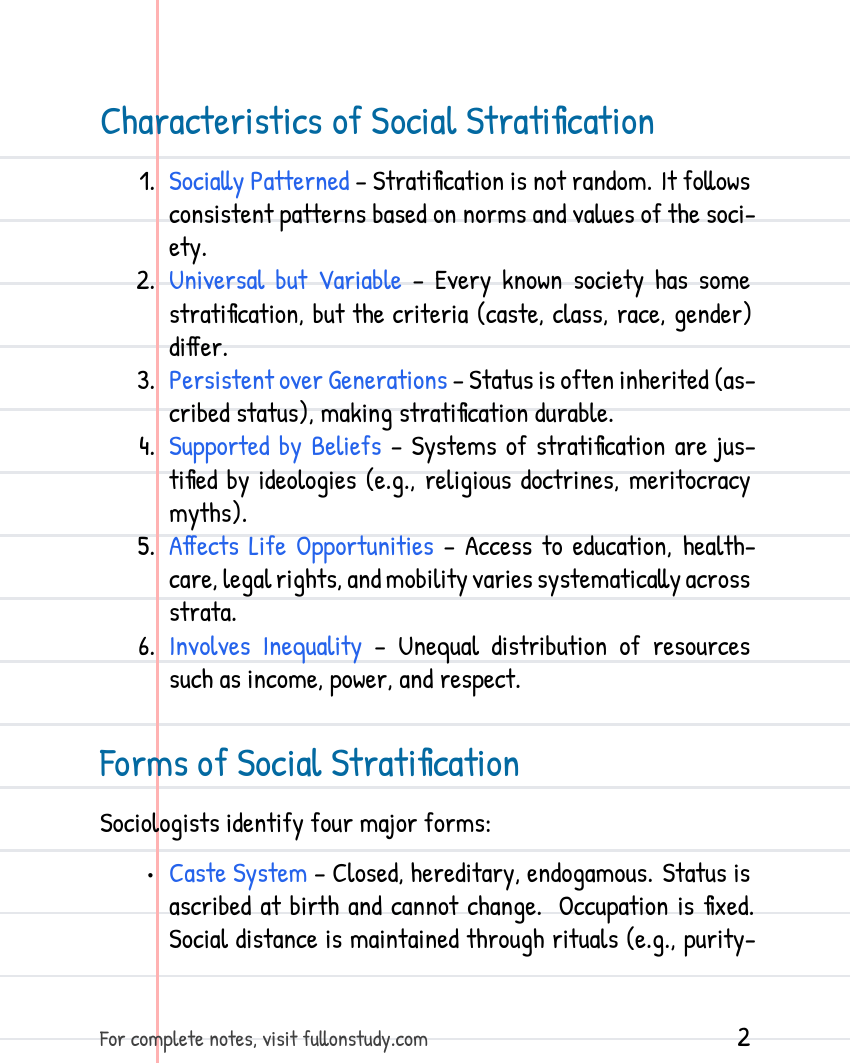
| Characteristics of Social Stratification | Socially patterned, universal but variable, persistent, supported by beliefs, affects life opportunities, involves inequality |
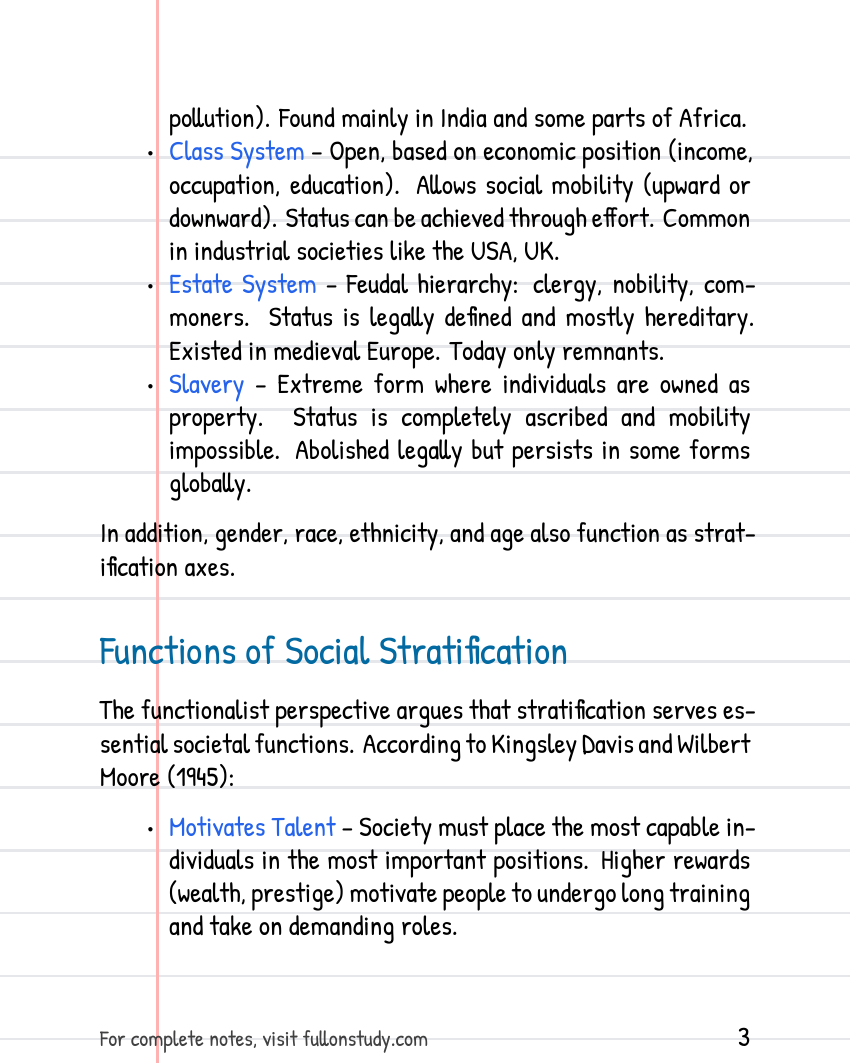
| Forms of Social Stratification | Caste system, class system, estate system, status hierarchy |
Features
- Easy to understand language for quick learning
- Complete syllabus covered for BSC Applied Sociology
- Free to download in pdf format
- Questions and answers at end of each topic for self-assessment
FAQs
What is social stratification? Social stratification is the systematic ranking of people in a society based on wealth, power, prestige, or birth, creating layers of inequality.
How is caste different from class? Caste is a closed, hereditary system where status is ascribed at birth and cannot change, while class is more open and based on factors like income and occupation.
Why is stratification important in sociology? It helps understand inequality, social mobility, and how privilege persists across generations.
- 📄 Format PDF Document
- 🔓 Access Free
- 💾 File Size 0.05 MB
- 📖 Pages 9
- ✅ Reviewed By Team Fullonstudy
- 🗓️ Last Updated May 29, 2026
×
![Preview enlarged]()