
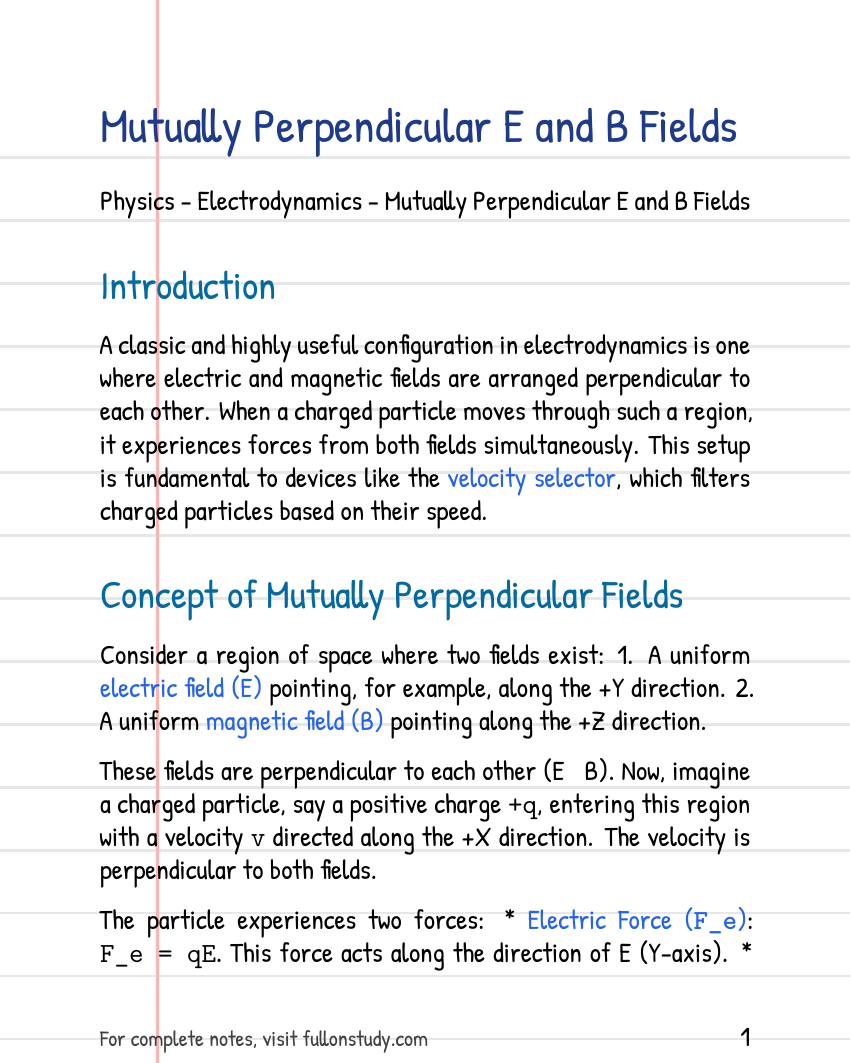
This note explains the concept of mutually perpendicular electric and magnetic fields, a key topic in electrodynamics. It covers how charged particles behave in such fields and the practical application in velocity selectors.
What’s covered?
| Topic | Description |
|---|---|
| Introduction to Mutually Perpendicular Fields | Overview of the classic electrodynamics configuration where E and B fields are perpendicular |
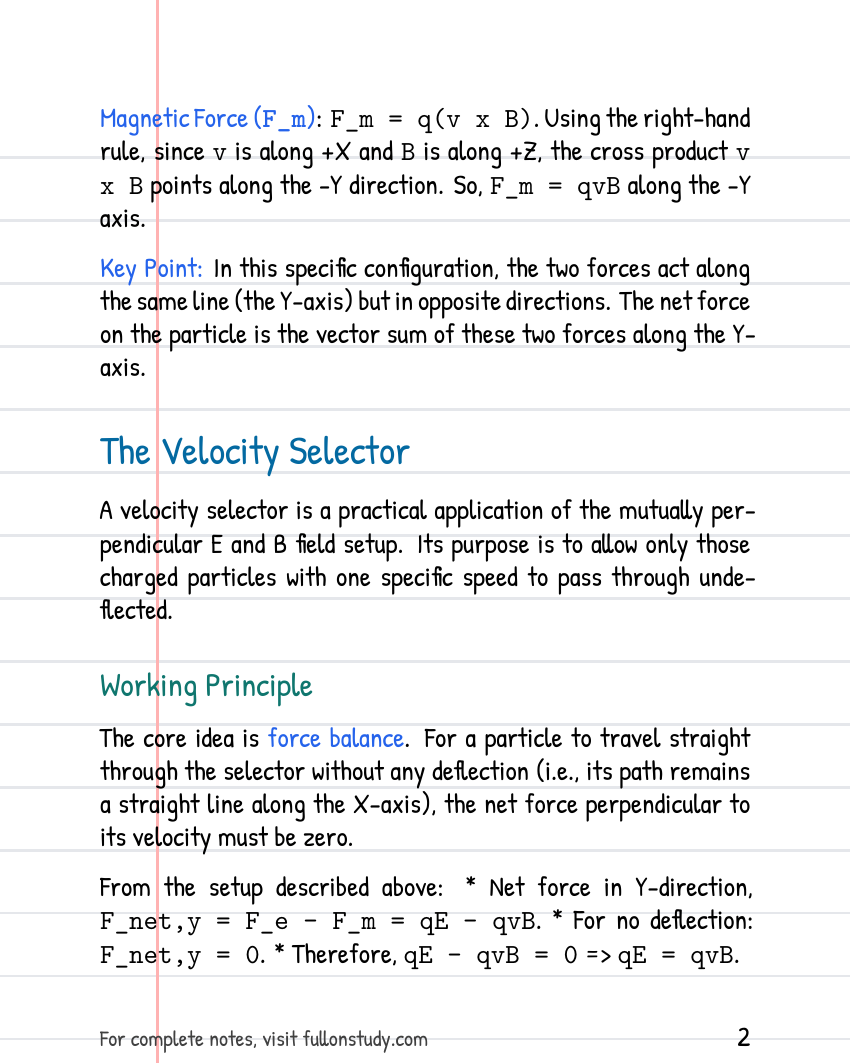
| Concept and Force Analysis | How forces act on a charged particle moving through perpendicular E and B fields |
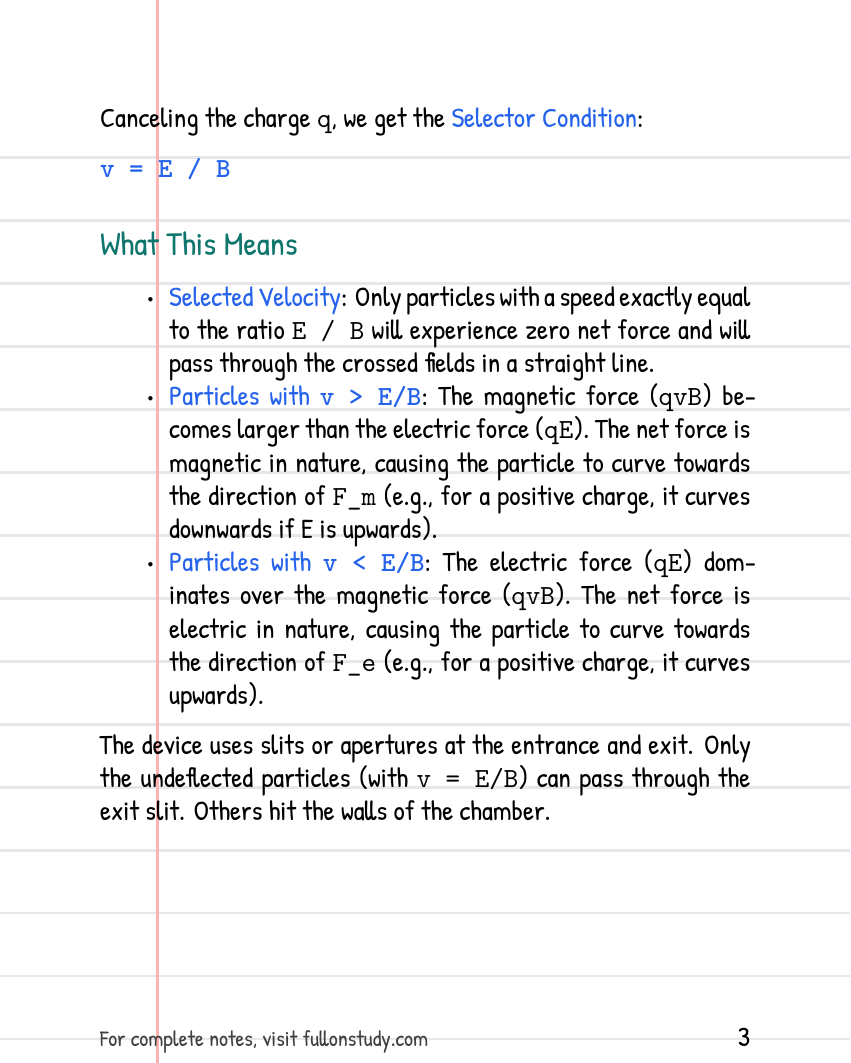
| The Velocity Selector | Practical application using force balance to filter particles by speed |
Features
- Easy to understand explanations with clear examples
- Complete syllabus coverage for university electrodynamics courses
- Free to download in pdf format for offline study
- Includes questions and answers at the end of each topic for practice
FAQs
What is a velocity selector? A device that uses perpendicular electric and magnetic fields to allow only charged particles with a specific speed to pass through undeflected.
Why are the forces opposite in this setup? When velocity is perpendicular to both fields, the electric and magnetic forces act along the same line but in opposite directions, allowing for force balance at specific speeds.
What degree is this for? These notes are perfect for Bachelor of Science (B.Sc) Physics students studying electrodynamics.
Download PDF
- Format PDF Document
- Access Free
- File Size 0.04 MB
- Pages 3
- Reviewed By Manisha Joshi, M.Sc, Physics
- Last Updated April 9, 2026
×
![]()