
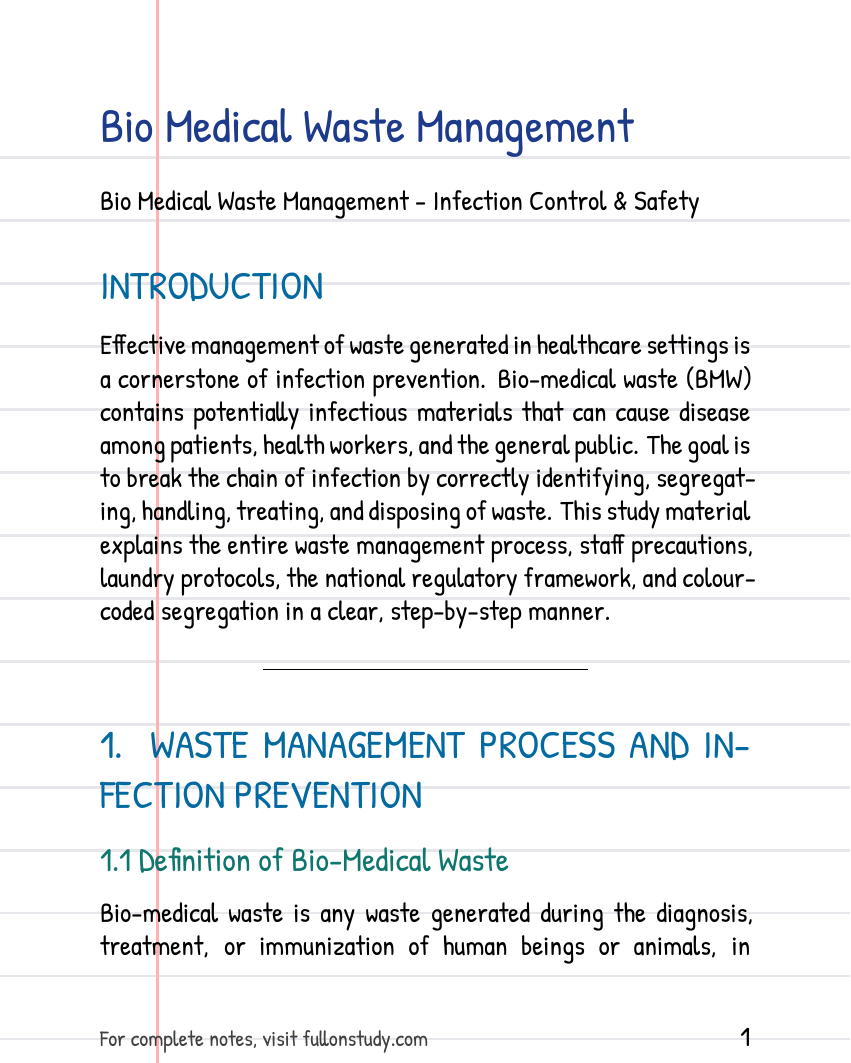
Struggling to understand how hospitals manage infectious waste? These Bio Medical Waste Management notes break down the entire process in a simple, student-friendly way. Perfect for BSc Nursing, Infection Control & Safety students who need clear, exam-focused material.
What’s covered?
| Topic | Key Points |
|---|---|
| Definition of BMW | What counts as bio-medical waste under Indian rules |
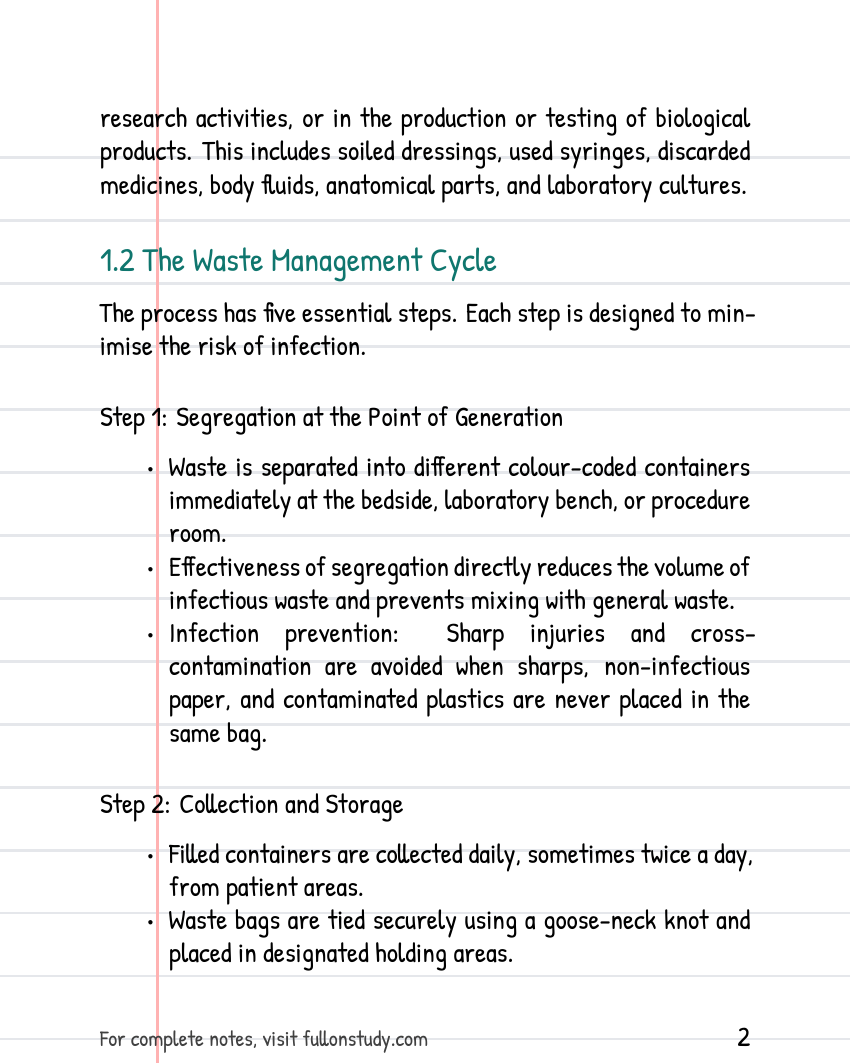
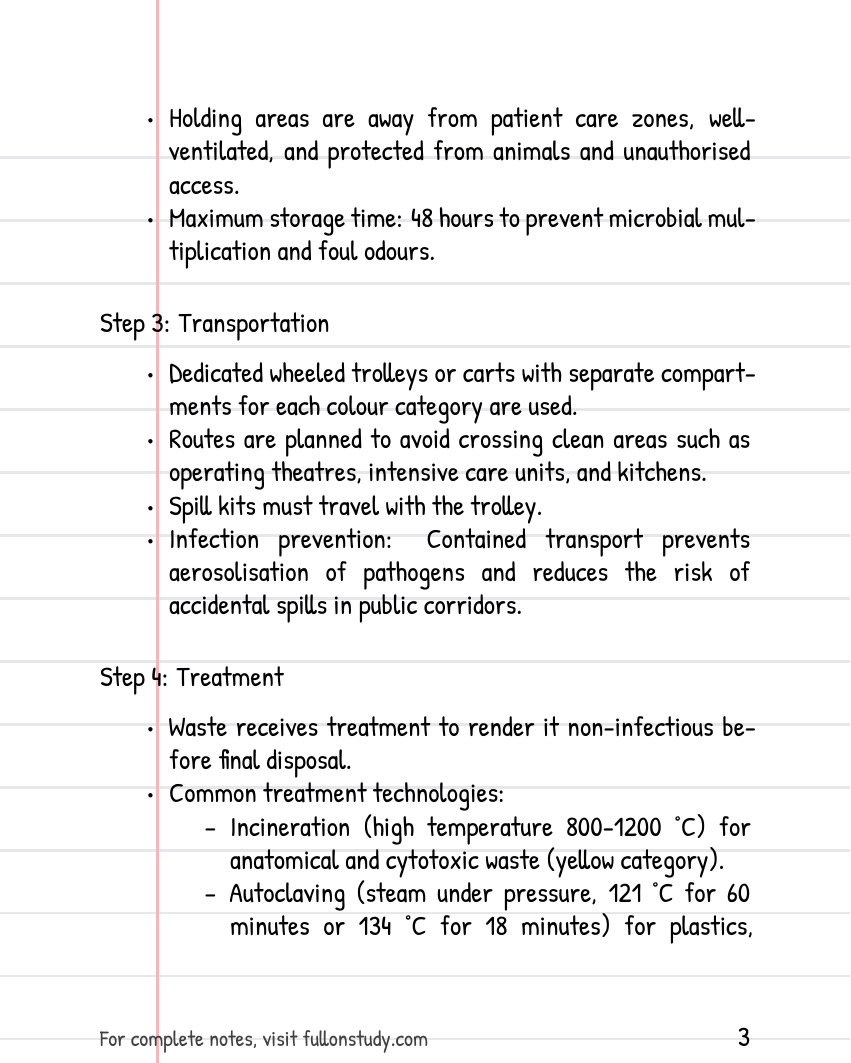
| Waste management cycle | Five essential steps from generation to final disposal |
| Segregation methods | Colour-coded containers, point-of-generation separation |
| Collection & storage | Safe handling, goose-neck knot tying, holding area norms |
| Staff precautions | Protective gear, hand hygiene, immunization requirements |
| Laundry protocols | Handling contaminated linen and uniform cleaning |
| National regulations | Biomedical Waste Management Rules, 2016 overview |
| Infection prevention | Breaking the chain of infection in healthcare settings |
Features
- Easy to understand language with step-by-step explanations
- Covers the complete syllabus as per Indian university guidelines
- Free to download in pdf format for offline studying
- Questions and answers at the end of each topic for quick revision and self-assessment
FAQs
Q: What is the most important step in bio-medical waste management?
Segregation at the source is the single most critical step. When waste is correctly separated into colour-coded bins right where it is generated, the risk of infection drops sharply and treatment becomes much easier.
Q: How does proper waste management prevent infections?
It breaks the chain of infection by ensuring pathogens in used materials, sharps, or body fluids never reach a new host. Safe handling, treatment, and disposal kill the germs before they can spread.
Q: Are these notes enough for university exams?
Yes, they are designed around the latest syllabus and include all essential topics like rules, procedures, and safety protocols. Many students use them as their primary revision material.
- 📄 Format PDF Document
- 🔓 Access Free
- 💾 File Size 0.1 MB
- 📖 Pages 16
- ✅ Reviewed By Team Fullonstudy
- 🗓️ Last Updated August 9, 2026