
These Isolation Precautions notes are perfect for Nursing students studying Infection Control & Safety. They break down complex infection control measures into simple, easy-to-follow points.
What’s covered?
| Topic | What You’ll Learn |
|---|---|
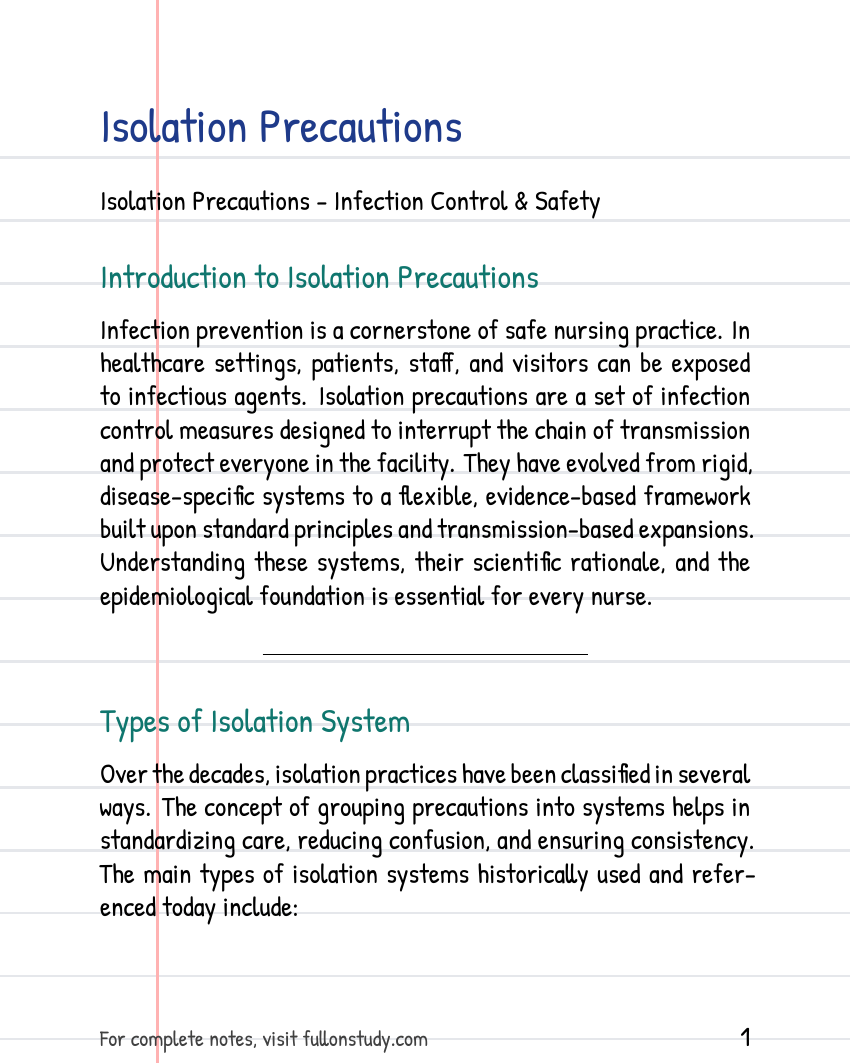
| Introduction to Isolation Precautions | Purpose and importance of isolation in infection control. |
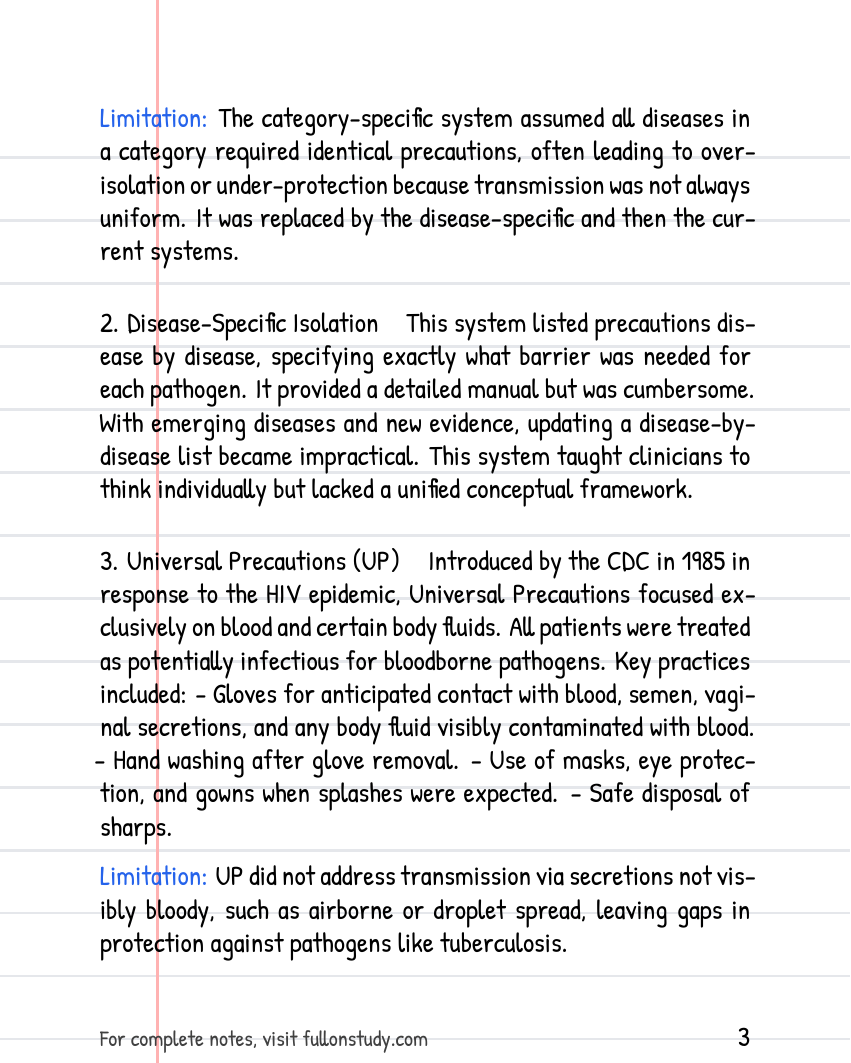
| Types of Isolation Systems | Category-specific, disease-specific, and transmission-based systems. |
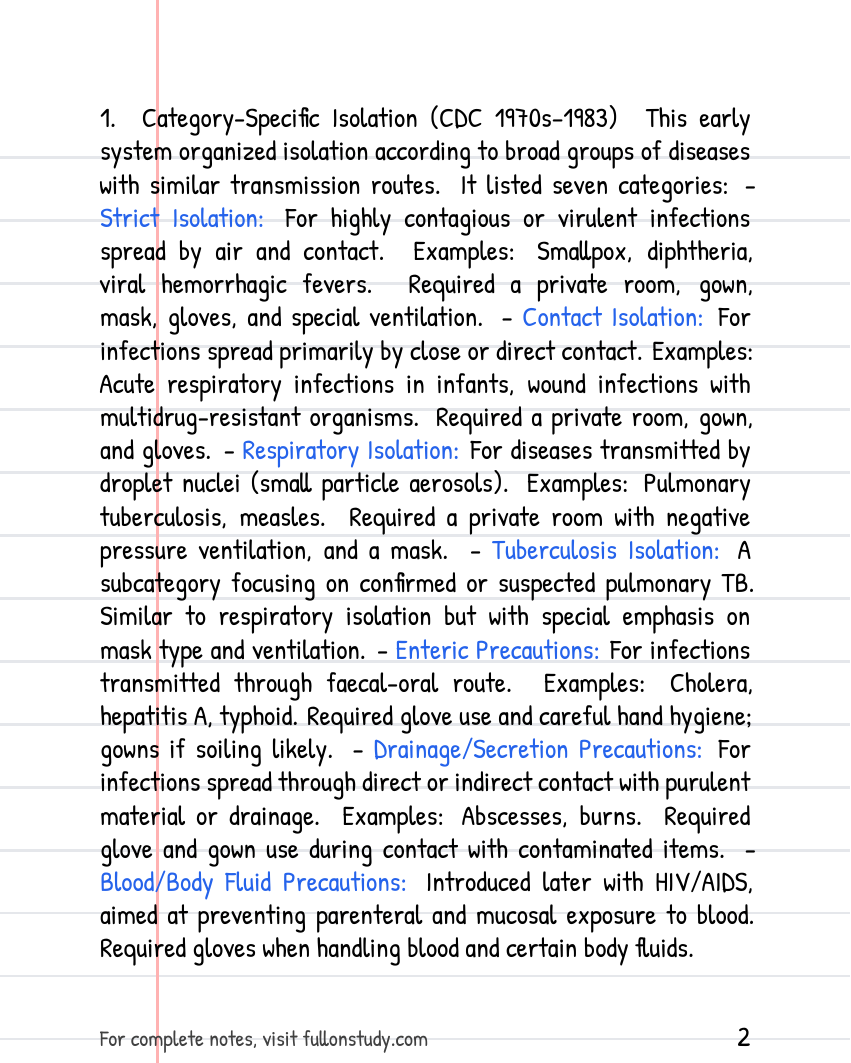
| Category-Specific Isolation | Detailed breakdown of strict, contact, respiratory, and TB isolation. |
| Transmission-Based Precautions | Modern guidelines for airborne, droplet, and contact transmission. |
Features
- Written in simple, easy-to-understand language tailored for nursing students.
- Covers the entire Infection Control & Safety syllabus as per nursing curriculum.
- Free to download in PDF format for offline study.
- Every topic ends with questions and answers to test your knowledge.
FAQs
What are isolation precautions?
Isolation precautions are infection control methods used in healthcare to prevent the spread of germs. They include wearing gloves, gowns, masks, and using private rooms when needed.
Why are isolation precautions important in nursing?
They keep patients, nurses, and visitors safe from infections. Without them, diseases could spread quickly in a hospital, harming vulnerable people.
How do category-specific and transmission-based precautions differ?
Category-specific precautions grouped diseases into fixed categories like strict or contact isolation. Transmission-based precautions are more flexible and based on how a disease spreads through air, droplets, or contact.
- 📄 Format PDF Document
- 🔓 Access Free
- 💾 File Size 0.09 MB
- 📖 Pages 15
- ✅ Reviewed By Team Fullonstudy
- 🗓️ Last Updated August 7, 2026
×
![Preview enlarged]()