
If you need clear, well-organized notes on specimen collection, you are in the right place. These Specimen Collection notes are specially created for B.Sc. Nursing students studying Infection Control & Safety.
What’s covered?
Here is a quick overview of the main topics in these notes.
| Topic | Description |
|---|---|
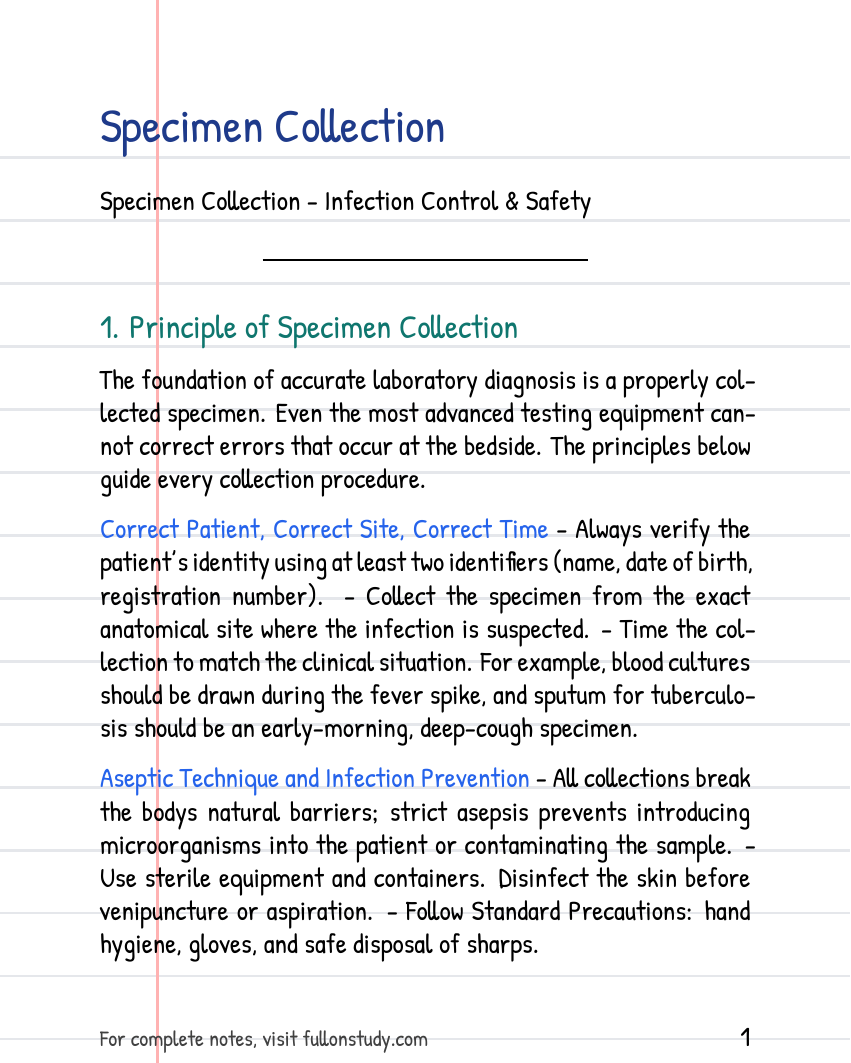
| Principle of Specimen Collection | The foundation of accurate lab diagnosis with correct patient, site, and time. |
| Aseptic Technique and Infection Prevention | Steps to prevent introducing microorganisms into the patient or contaminating the sample. |
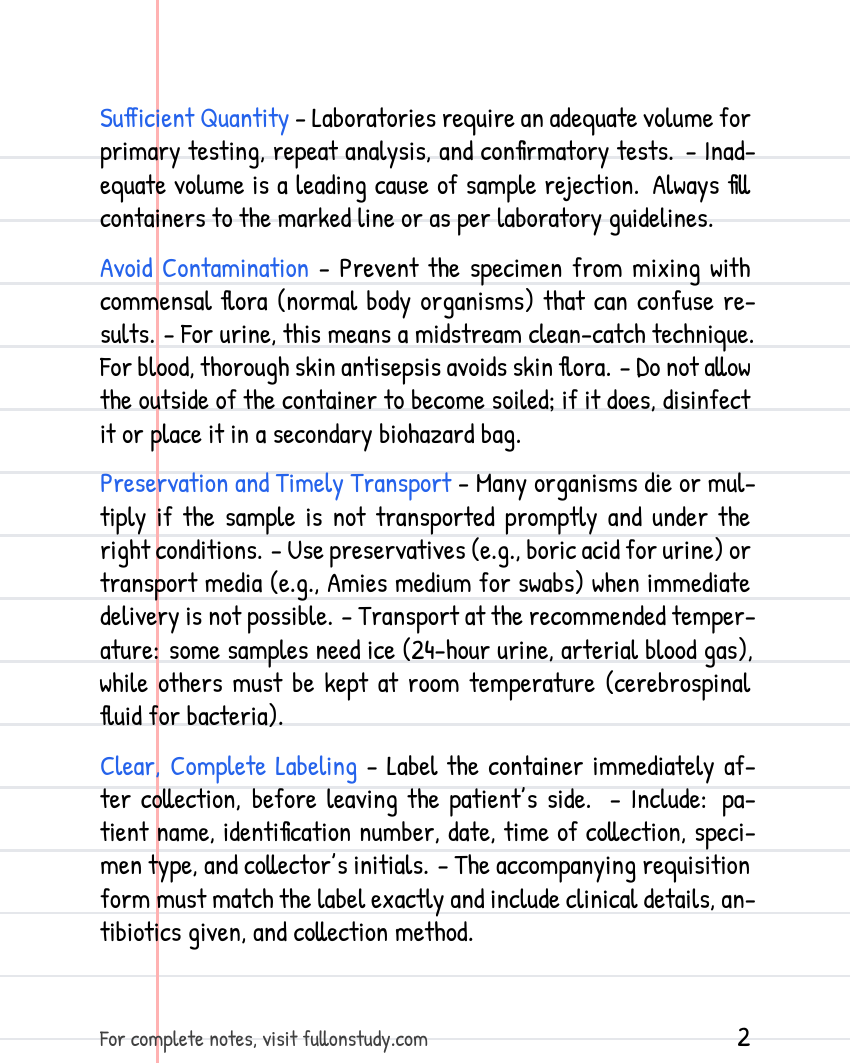
| Sufficient Quantity | Importance of collecting enough volume for testing, repeat analysis, and confirmatory tests. |
| Avoid Contamination | Methods to keep the specimen free from normal body flora and outside soiling. |
| Preservation and Timely Transport | Using preservatives and prompt transport to keep organisms viable. |
Features
- The language is easy to understand, even if you are new to the topic.
- The notes cover the complete syllabus as per Indian university guidelines.
- You can free download in pdf format and study offline anytime.
- Each section ends with questions and answers to help you prepare for exams.
FAQs
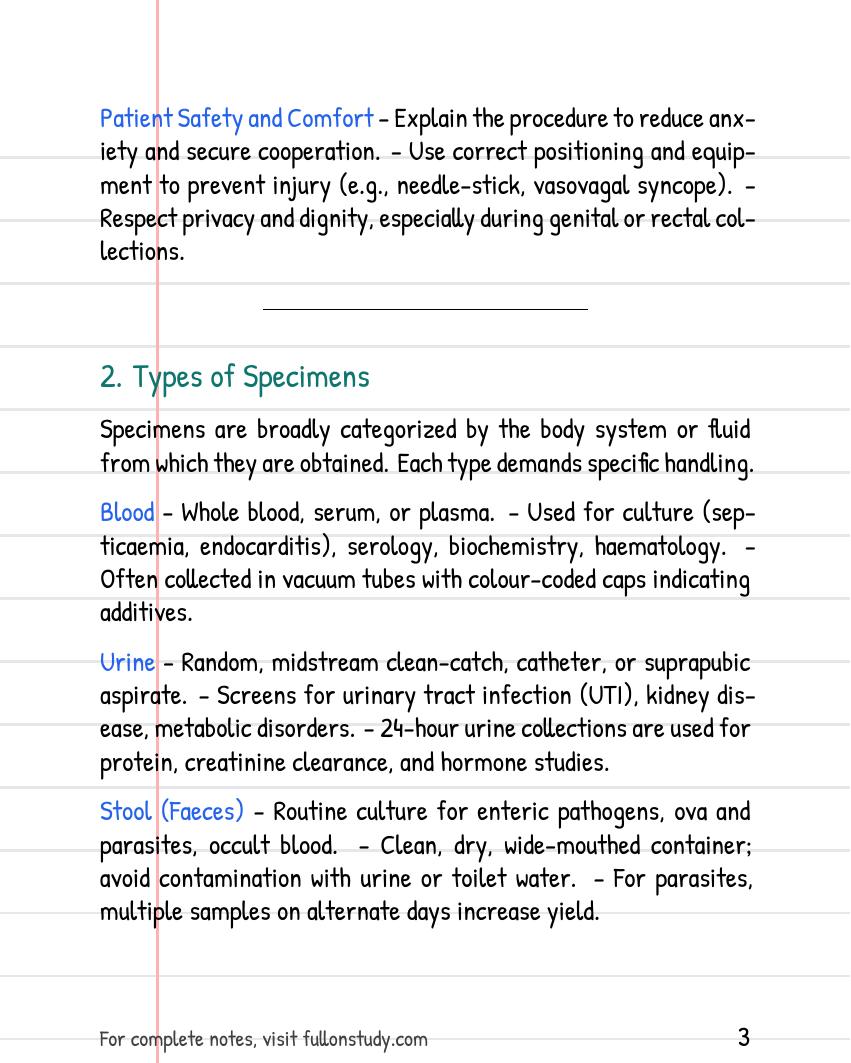
Why is the midstream clean-catch technique used for urine collection?
It helps avoid contamination by flushing away bacteria normally present near the opening, so the sample shows only what is inside the bladder.
What happens if a blood specimen is not transported to the lab on time?
Delays can cause cells to break down or bacteria to multiply, leading to wrong test results and possibly incorrect treatment.
Do I need sterile containers for every specimen?
Yes, most specimens require sterile containers to prevent outside germs from mixing in. Always check the lab guidelines for the exact container type.
- 📄 Format PDF Document
- 🔓 Access Free
- 💾 File Size 0.07 MB
- 📖 Pages 11
- ✅ Reviewed By Team Fullonstudy
- 🗓️ Last Updated August 8, 2026