
This page provides Liquefaction of Gases notes for B.Sc. Physics students. You can understand the concepts easily and download the material for free in PDF format.
What’s covered?
| Topic | Description |
|---|---|
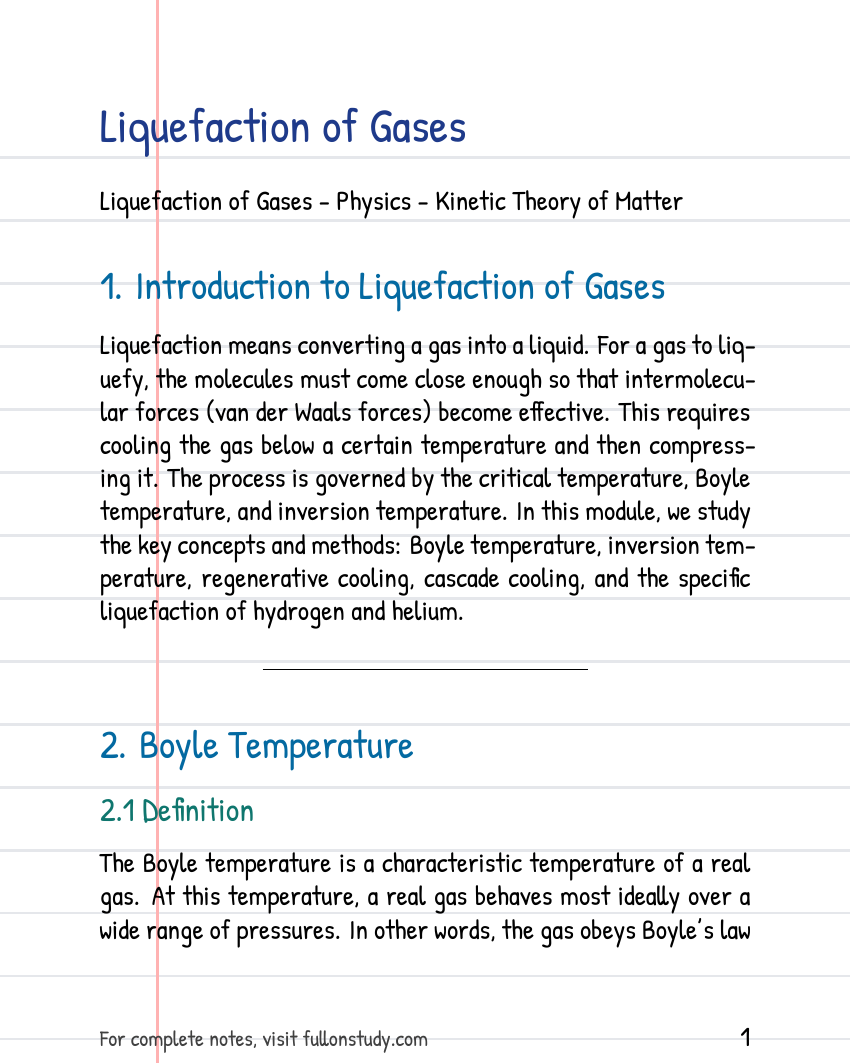
| Introduction to Liquefaction of Gases | Basic principles and conditions for liquefaction |
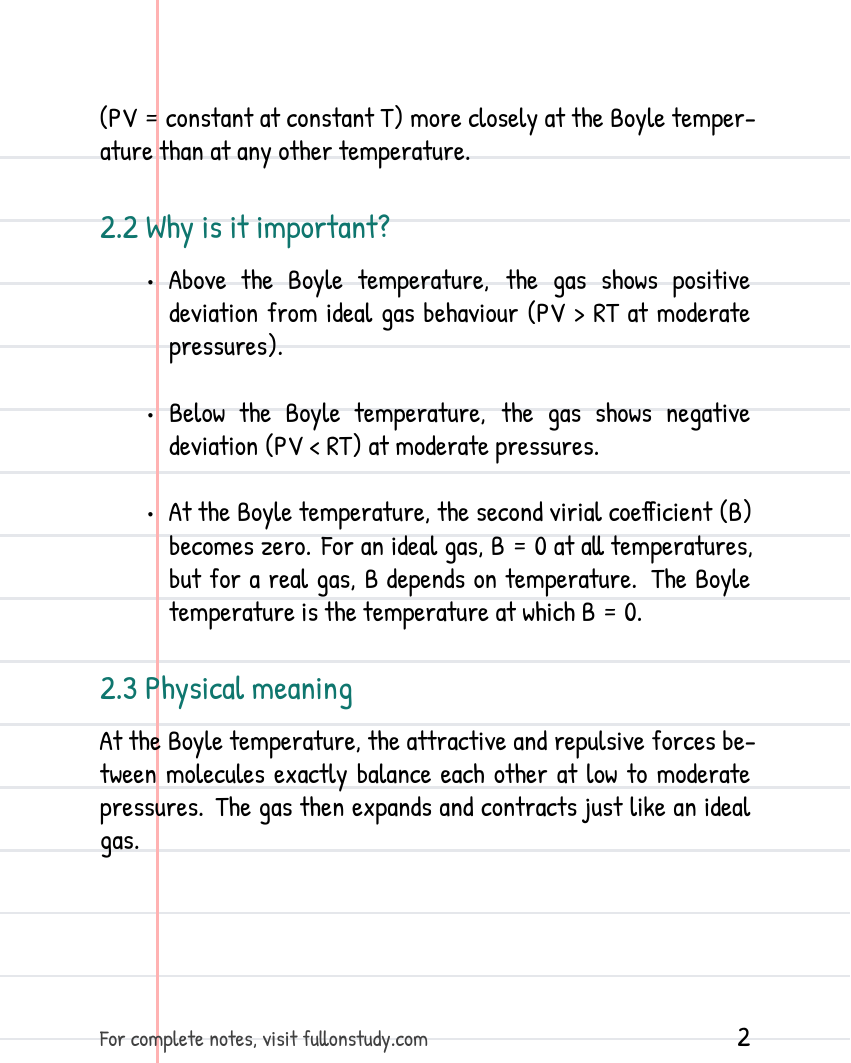
| Boyle Temperature | Definition, importance, and physical meaning |
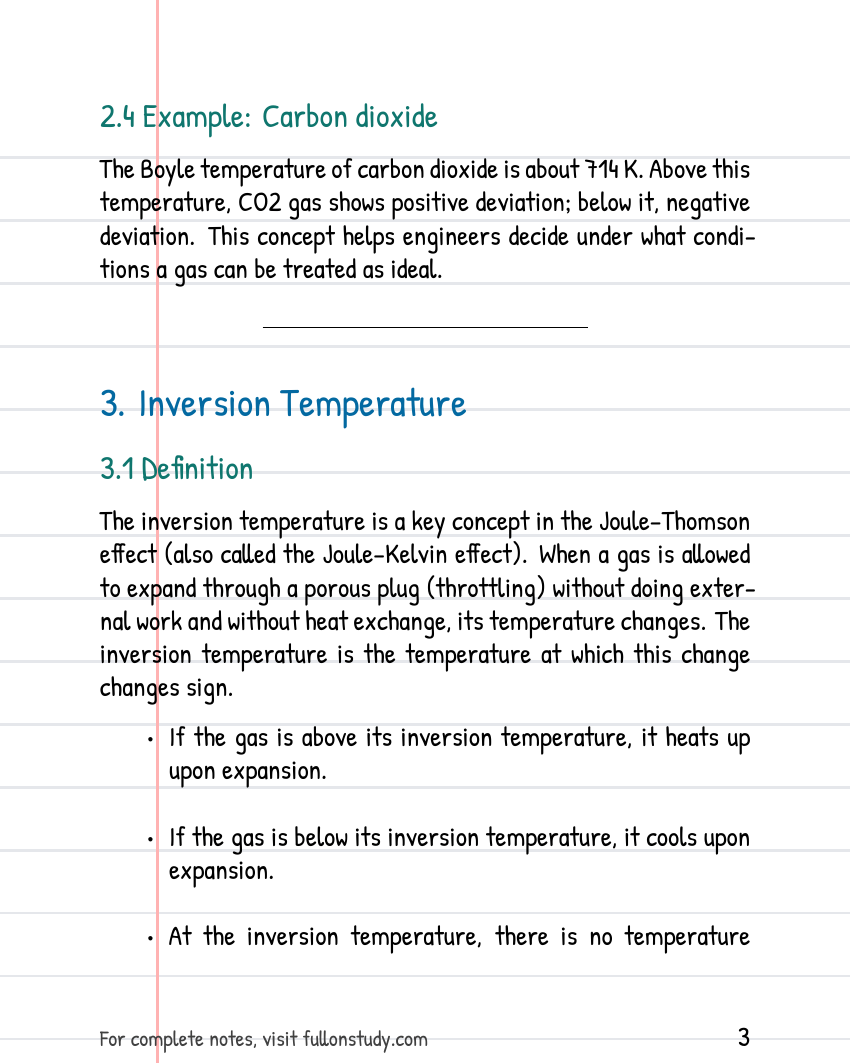
| Inversion Temperature | Temperature where Joule-Thomson effect changes sign |
| Regenerative Cooling | Method using counter-current heat exchangers |
| Cascade Cooling | Using multiple refrigerants in stages |
| Liquefaction of Hydrogen and Helium | Specific techniques for these gases |
Features
- Easy to understand explanations with diagrams
- Complete syllabus covered for B.Sc. Physics
- Free to download in PDF format
- Questions and answers at the end of each topic for practice
FAQs
What is the Boyle temperature? It is the temperature at which a real gas behaves most ideally, and the second virial coefficient becomes zero.
Why is liquefaction of gases important? Liquefied gases have applications in cryogenics, medicine, and industry, such as liquid oxygen for rockets and liquid nitrogen for storage.
What is the inversion temperature? It is the temperature above which the Joule-Thomson effect causes heating instead of cooling, important for liquefaction processes.
- 📄 Format PDF Document
- 🔓 Access Free
- 💾 File Size 0.08 MB
- 📖 Pages 14
- ✅ Reviewed By Manisha Joshi, M.Sc, Physics
- 🗓️ Last Updated April 26, 2026
×
![Preview enlarged]()