
Looking for comprehensive Fluid, Electrolyte, and Acid – Base Balances notes? These B.Sc. Nursing Nursing Foundations notes are designed to help you master this crucial topic with ease.
What’s covered?
| Topic | Description |
|---|---|
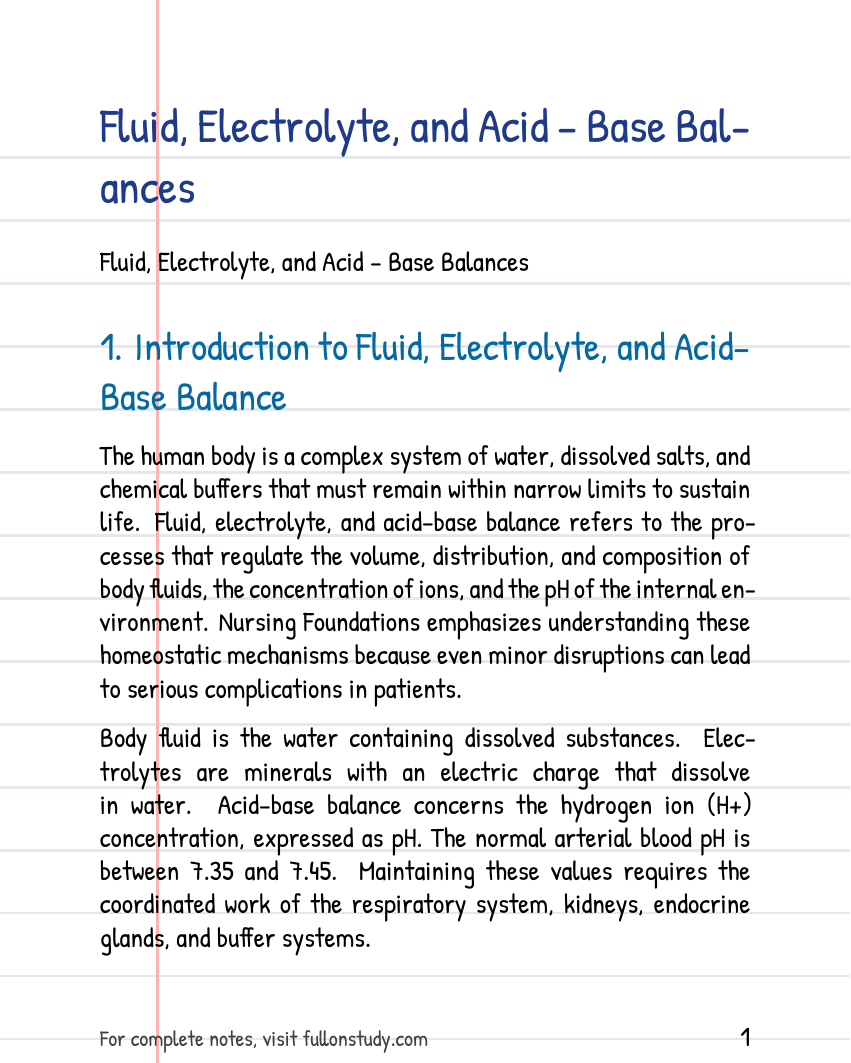
| Introduction to Fluid, Electrolyte, and Acid–Base Balance | Overview of homeostatic mechanisms and body fluid regulation. |
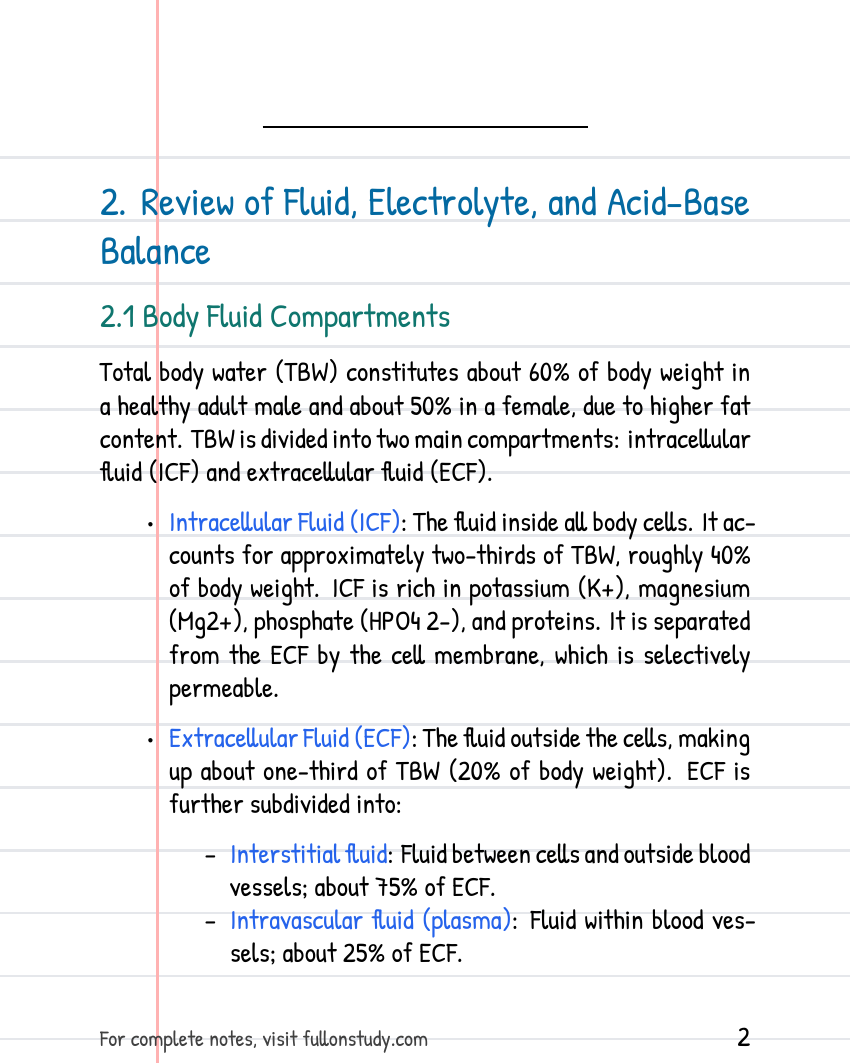
| Body Fluid Compartments | Detailed breakdown of intracellular and extracellular fluids. |
| Intracellular Fluid (ICF) | Composition and function of fluid inside cells. |
| Extracellular Fluid (ECF) | Subdivisions including interstitial and intravascular fluids. |
Features
- Easy to understand language, perfect for quick revision.
- Covers the complete syllabus as per university guidelines.
- Free to download in PDF format for offline study.
- Includes questions and answers at the end of each topic for self-assessment.
FAQs
What is the normal pH of human blood?
The normal arterial blood pH ranges from 7.35 to 7.45, maintained by buffer systems, lungs, and kidneys.
Why is learning about fluid compartments important for nursing?
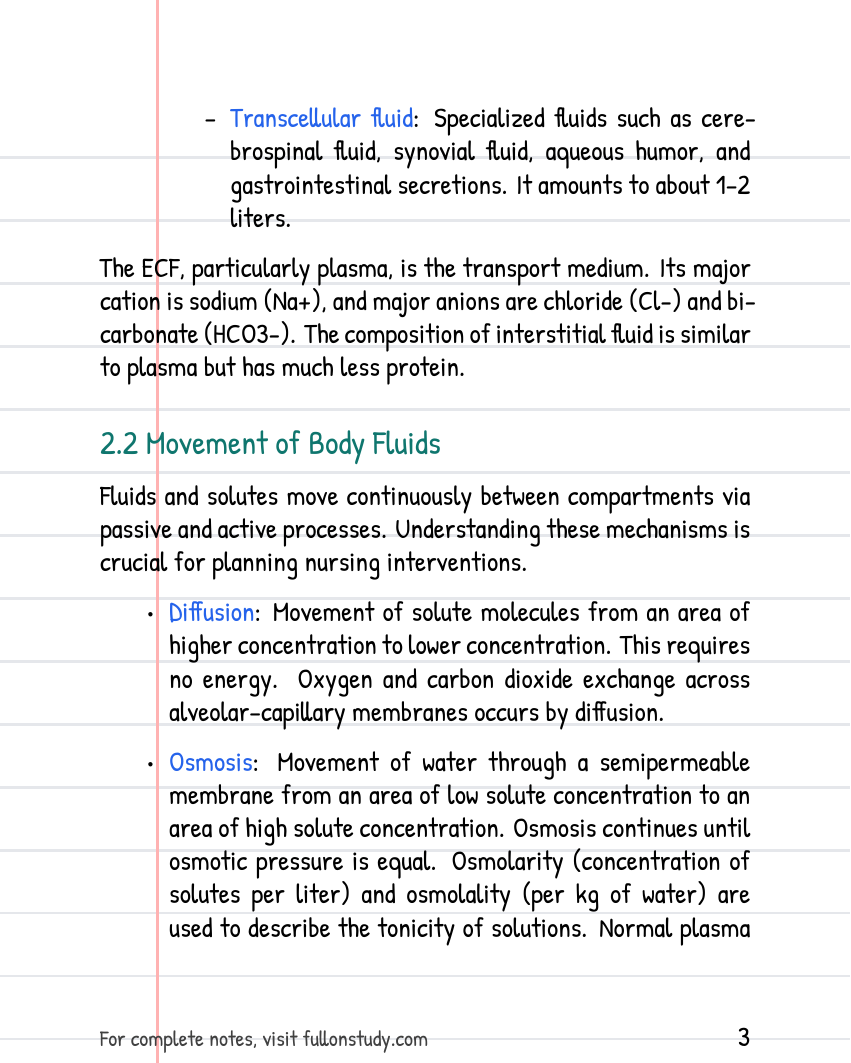
Understanding fluid compartments helps nurses assess dehydration, edema, and administer intravenous fluids correctly.
What are the main electrolytes in ICF and ECF?
ICF is rich in potassium and phosphate, while ECF contains more sodium and chloride.
- 📄 Format PDF Document
- 🔓 Access Free
- 💾 File Size 0.19 MB
- 📖 Pages 39
- ✅ Reviewed By Team Fullonstudy
- 🗓️ Last Updated July 28, 2026
×
![Preview enlarged]()