
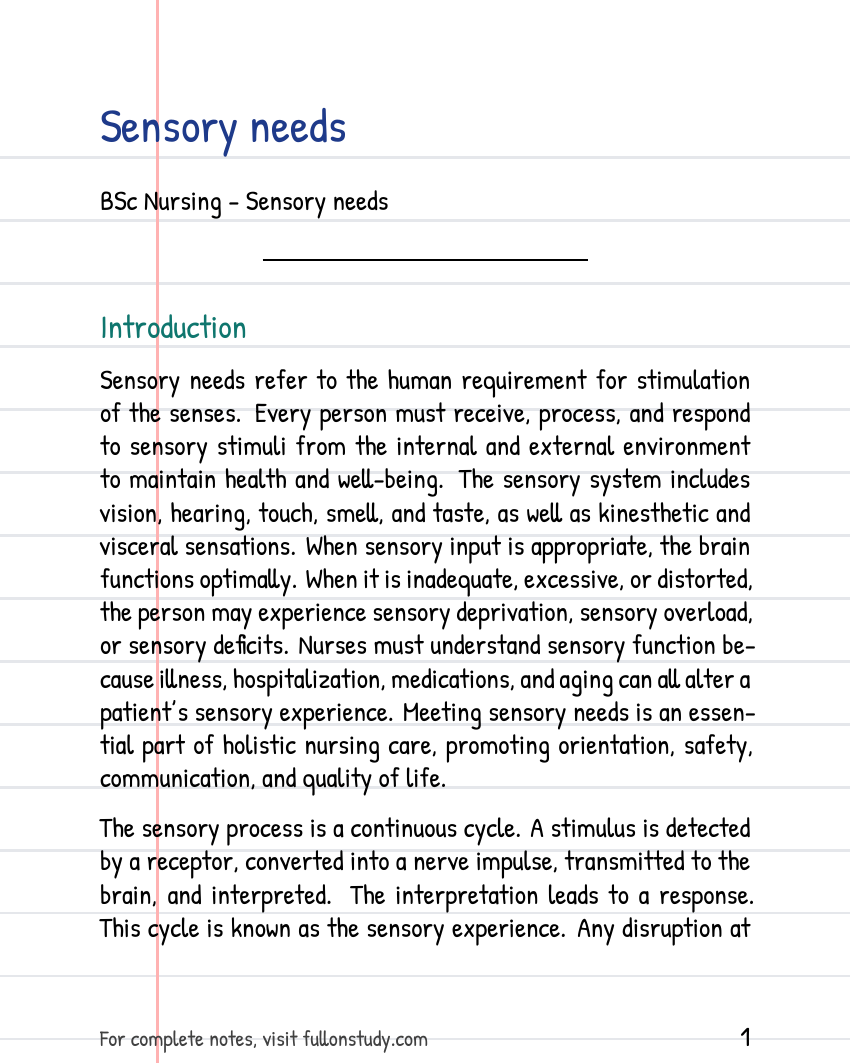
Sensory needs are a key topic in nursing, especially for students pursuing BSc Nursing. These Sensory needs notes help you understand how sensory stimulation affects patient health and how nurses can provide better care.
What’s covered?
| Topic | Details |
|---|---|
| Introduction to Sensory Needs | Definition, importance of sensory stimulation, and the sensory experience cycle. |
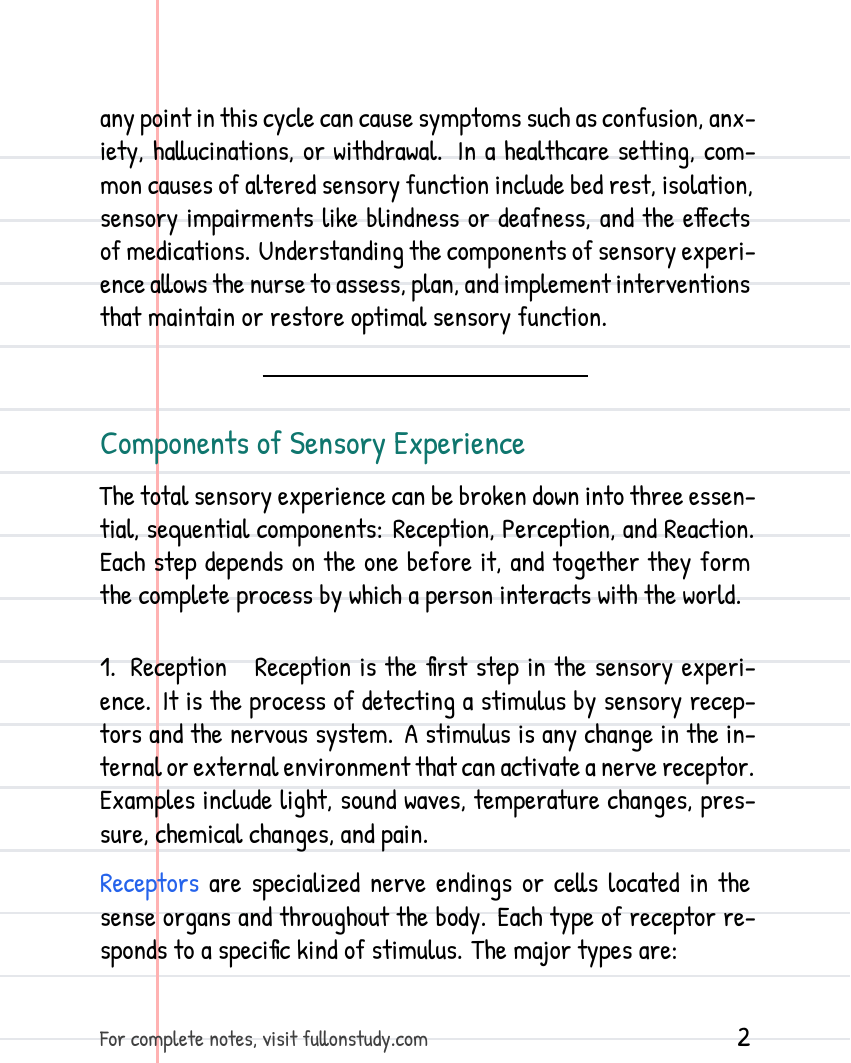
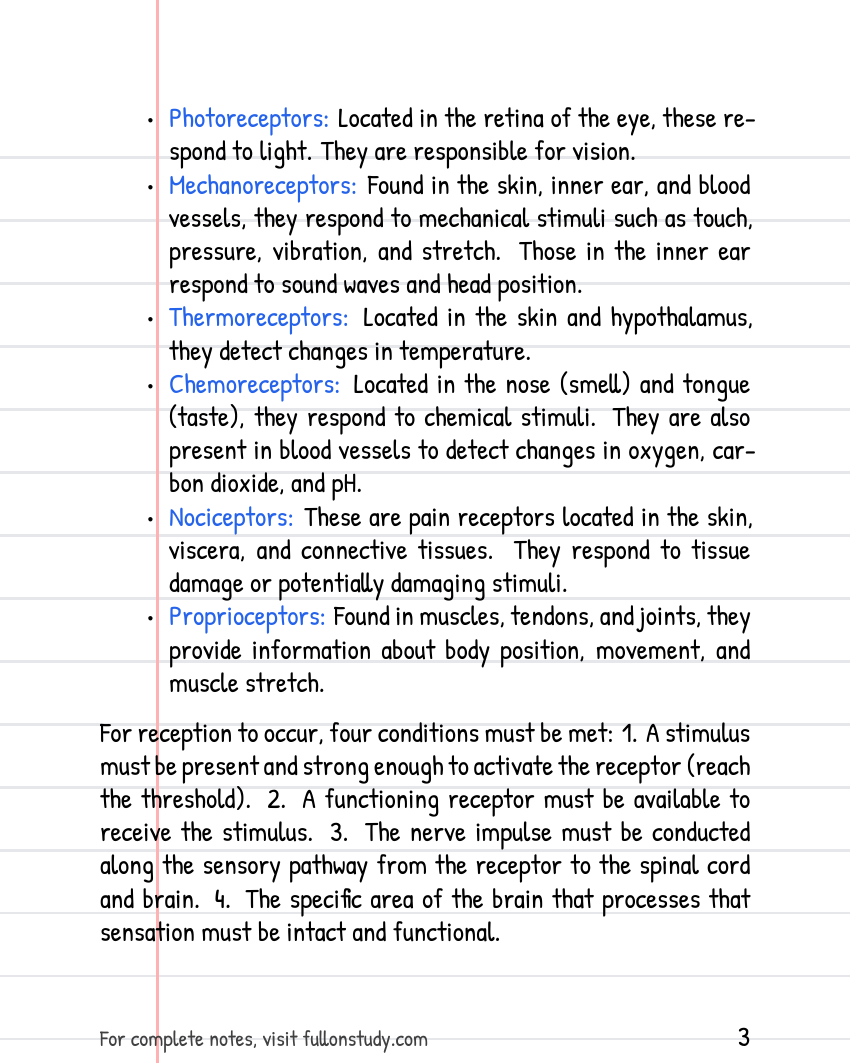
| Components of Sensory Experience | Reception, perception, and reaction – the three steps of processing sensory input. |
| Altered Sensory Function | Sensory deprivation, overload, and deficits caused by illness, hospitalization, or aging. |
| Nursing Care for Sensory Needs | Assessment, planning, and interventions to maintain or restore sensory function. |
Features
- Written in easy to understand language, perfect for quick revision.
- Complete syllabus covered as per BSc Nursing curriculum.
- Free to download in PDF format for offline study.
- Includes questions and answers at the end of each topic to test your learning.
FAQs
What are sensory needs in nursing?
Sensory needs refer to the human requirement for stimulation of senses like sight, hearing, touch, taste, and smell. In nursing, understanding these needs helps prevent confusion, anxiety, and other issues in patients.
How can nurses help patients with sensory deprivation?
Nurses can provide appropriate stimulation—like talking to the patient, offering textured objects to touch, or ensuring adequate lighting. They also minimize unnecessary isolation and encourage family visits.
What causes sensory overload in hospitalized patients?
Too much noise, bright lights, frequent interruptions, and multiple medical procedures can overwhelm a patient’s senses. Nurses manage this by creating a calm, quiet environment and spacing out care activities.
- 📄 Format PDF Document
- 🔓 Access Free
- 💾 File Size 0.23 MB
- 📖 Pages 50
- ✅ Reviewed By Team Fullonstudy
- 🗓️ Last Updated July 29, 2026