
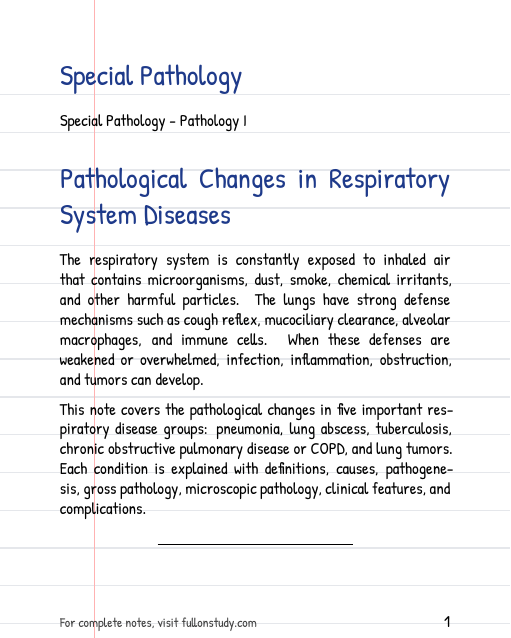
Hey BSc Nursing students, if Pathology I feels like a mountain, especially the respiratory disease part, you have landed in the right place. These Special Pathology notes cut through the confusion and focus on exactly what your university exams expect. You will finally understand pneumonia, tuberculosis, COPD, and lung tumors without getting lost.
What’s covered?
| Disease Group | Core Pathological Focus |
|---|---|
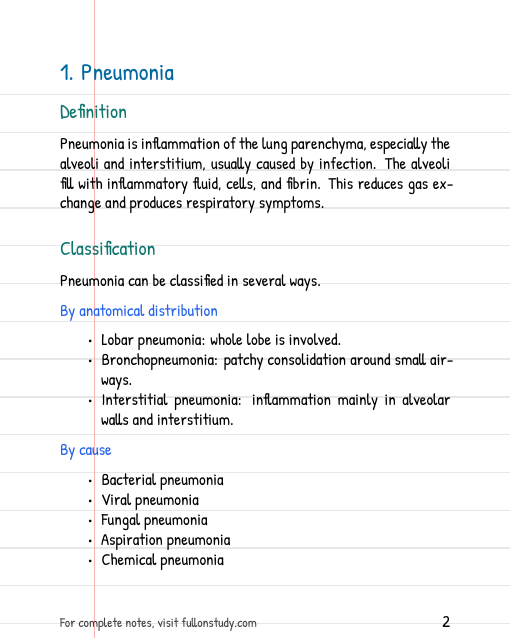
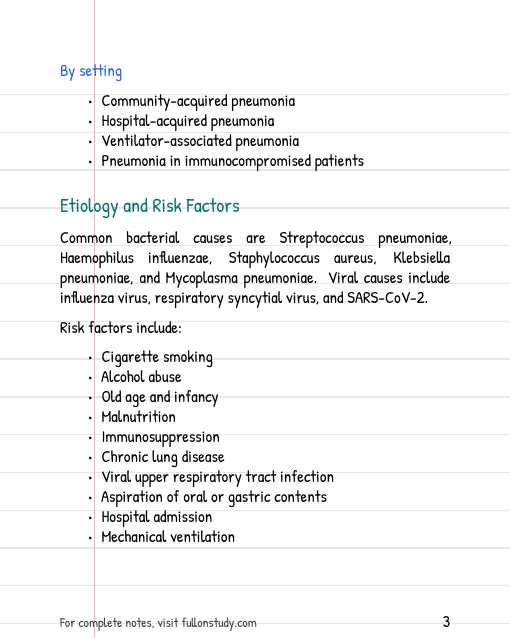
| Pneumonia | Alveolar inflammation, exudate, and classification by anatomy, cause, and setting |
| Lung Abscess | Localized suppurative necrosis and cavity formation |
| Tuberculosis | Chronic granulomatous inflammation with caseation |
| COPD | Chronic bronchitis and emphysema leading to airflow obstruction |
| Lung Tumors | Benign and malignant neoplasms with gross and microscopic features |
Features
- Simple explanation of each condition with no unnecessary jargon.
- Full syllabus alignment for BSc Nursing Pathology I.
- Free PDF download for offline revision before exams.
- Step-by-step breakdowns from definition to complications and clinical features.
FAQs
What exactly is covered under Special Pathology for BSc Nursing? These notes cover systemic pathology with a strong focus on respiratory diseases like pneumonia, lung abscess, tuberculosis, COPD, and lung tumors, along with their pathogenesis and clinical features.
How do I get the Special Pathology PDF for free? The Special Pathology PDF is available as a free download right on this page, so you can save it and study offline.
What is the difference between lobar pneumonia and bronchopneumonia? Lobar pneumonia involves an entire lobe with uniform consolidation, while bronchopneumonia shows patchy areas of consolidation centered around small airways.
Why is tuberculosis considered an important topic in Special Pathology? Tuberculosis is highly relevant in India due to its prevalence, and nursing students need to know its gross and microscopic pathology for infection control and patient care.
Are these notes sufficient for BSc Nursing Pathology I exams? Yes, they are designed as a complete revision resource covering definitions, causes, pathogenesis, gross and microscopic pathology, and complications, aligned with the BSc Nursing Pathology I syllabus.
- 📄 Format PDF Document
- 🔓 Access Free
- 💾 File Size 0.41 MB
- 📖 Pages 122
- ✅ Reviewed By Team Fullonstudy
- 🗓️ Last Updated September 1, 2026