
Drugs used for hormonal disorder & supplementation, contraception & medical termination of pregnancy
Hey BSc Nursing students, Pharmacology II can feel like a big challenge, and this unit on hormonal drugs, contraception, and medical termination of pregnancy is a high-yield area for exams. Consider these Drugs used for hormonal disorder & supplementation, contraception & medical termination of pregnancy notes your go-to BSc Nursing Pharmacology II notes, written in plain language. This page breaks down everything from basic hormone actions to safe MTP protocols, so you can revise faster.
What’s covered?
| Subtopic | What you will learn |
|---|---|
| Estrogens and Progesterone | Classification, mechanism of action, and pharmacological effects |
| Hormonal disorders and supplementation | Use of estrogens, progestins, and anti-estrogens in deficiency states |
| Contraception | Combined pills, progestin-only pills, emergency contraception, and long-acting methods |
| Medical termination of pregnancy | Mifepristone, misoprostol, and their dosing protocol |
Features
- Simple explanation of every drug class in easy language.
- Full syllabus alignment for BSc Nursing Pharmacology II, so nothing is off-topic.
- Free PDF download of these Drugs used for hormonal disorder & supplementation, contraception & medical termination of pregnancy pdf notes.
- Step-by-step breakdowns of mechanisms, classifications, and clinical uses.
FAQs
Q1: Which estrogen preparations are commonly used for hormonal disorders?
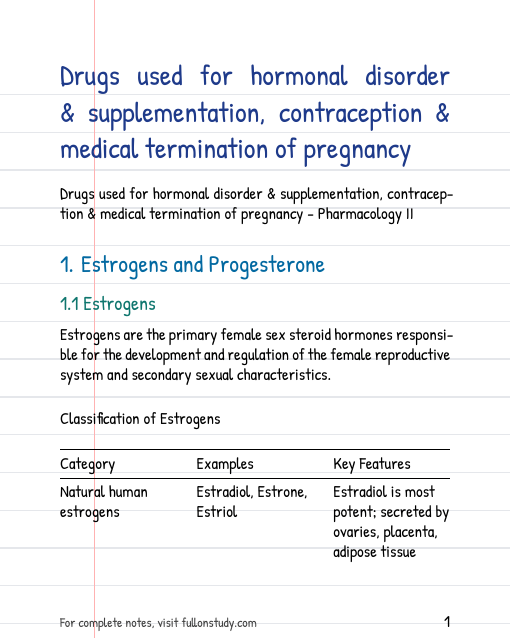
Common estrogens include estradiol, ethinylestradiol, and conjugated equine estrogens. They are used in hormone replacement therapy and for conditions like primary ovarian failure. They are also used in contraceptive formulations.
Q2: How do combined oral contraceptive pills prevent pregnancy?
Combined pills contain estrogen and progestin. They mainly inhibit ovulation by suppressing gonadotropin release, and also thicken cervical mucus and alter the endometrium.
Q3: What drugs are used for medical termination of pregnancy?
The most common regimen is mifepristone followed by misoprostol. Mifepristone blocks progesterone receptors, and misoprostol causes uterine contractions to expel the pregnancy.
Q4: Why is diethylstilbestrol contraindicated during pregnancy?
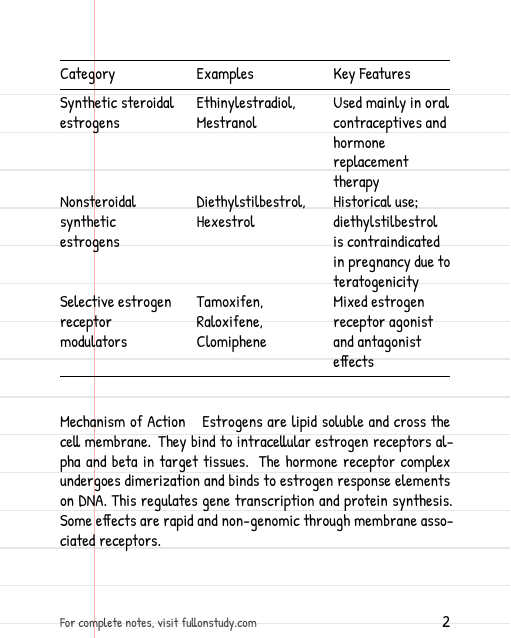
Diethylstilbestrol is a synthetic nonsteroidal estrogen that is teratogenic. It can cause vaginal clear cell adenocarcinoma and reproductive tract abnormalities in offspring exposed in utero.
Q5: What are selective estrogen receptor modulators (SERMs) and give two examples?
SERMs are drugs that act as estrogen agonists in some tissues and antagonists in others. Tamoxifen is used in breast cancer, while raloxifene is used for osteoporosis.
- 📄 Format PDF Document
- 🔓 Access Free
- 💾 File Size 0.15 MB
- 📖 Pages 41
- ✅ Reviewed By Team Fullonstudy
- 🗓️ Last Updated September 14, 2026