
Get clear, concise notes on Surface Tension, a key topic in Physics. This guide explains the concepts in simple terms, perfect for university students.
What’s covered?
| Topic | Description |
|---|---|
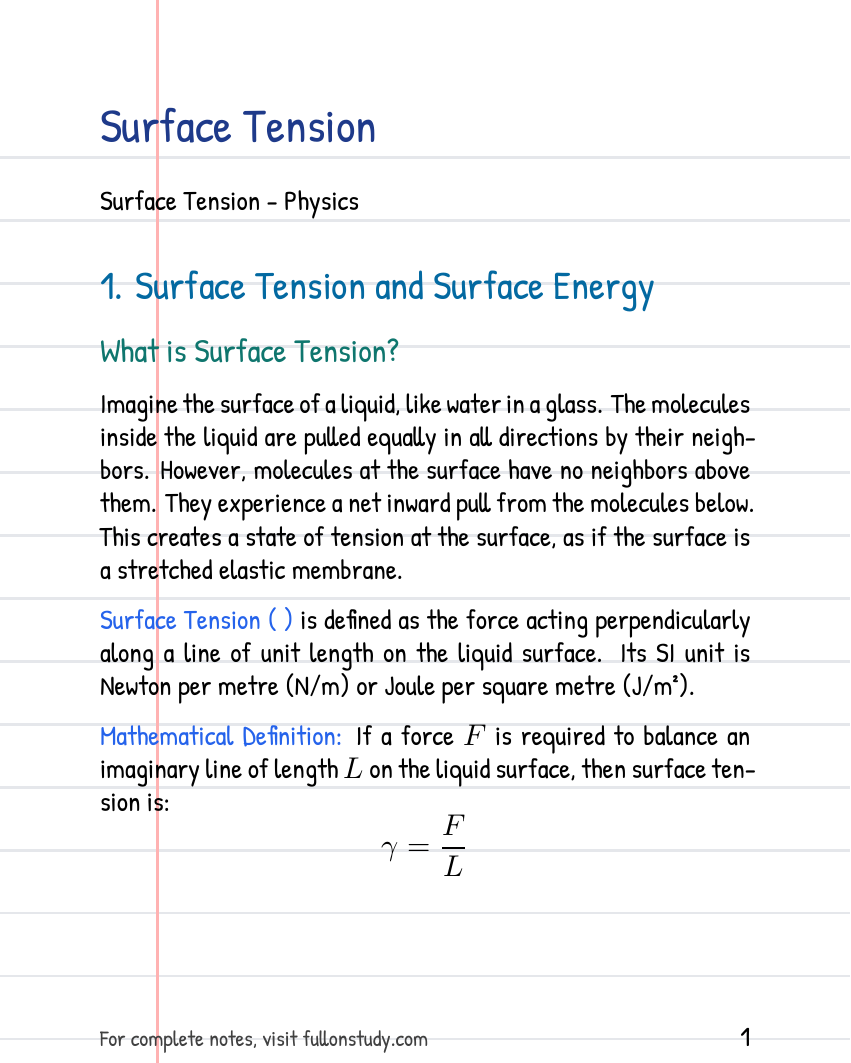
| What is Surface Tension? | Explains the molecular forces at a liquid’s surface and the definition of surface tension (γ). |
| Mathematical Definition | Shows the formula γ = F/L and its SI units (N/m or J/m²). |
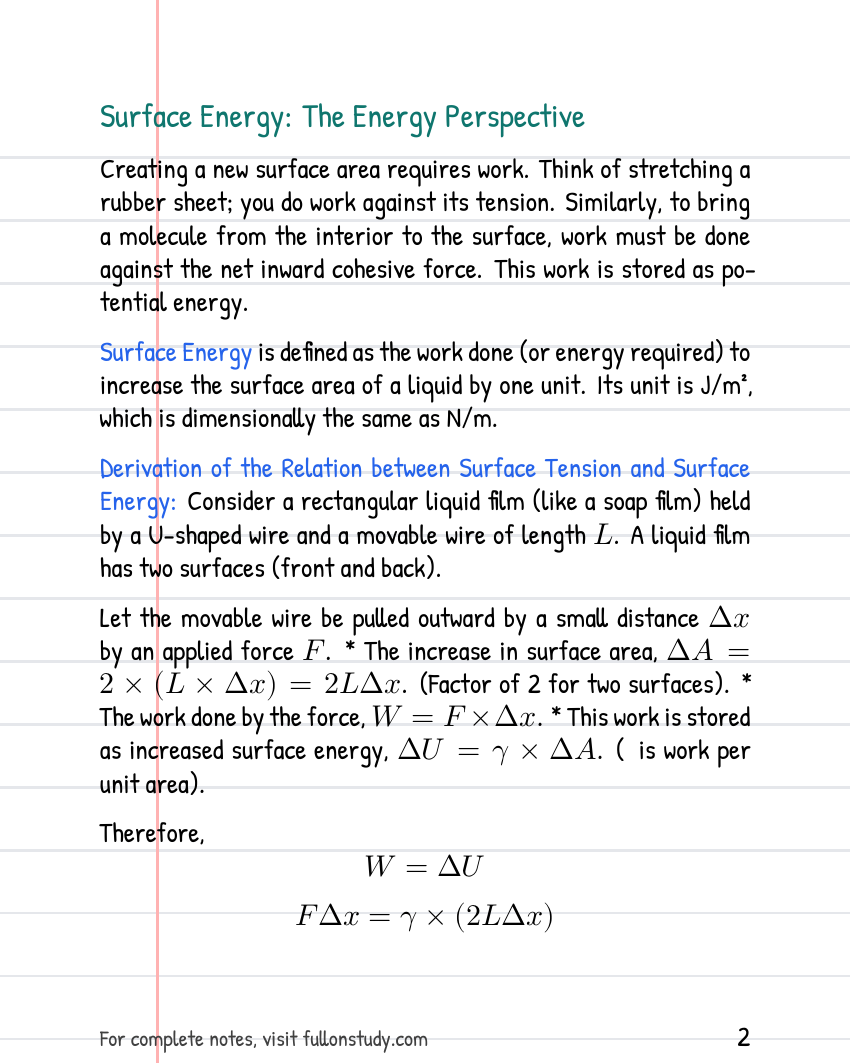
| Surface Energy | Defines surface energy as the work needed to increase surface area and its relation to surface tension. |
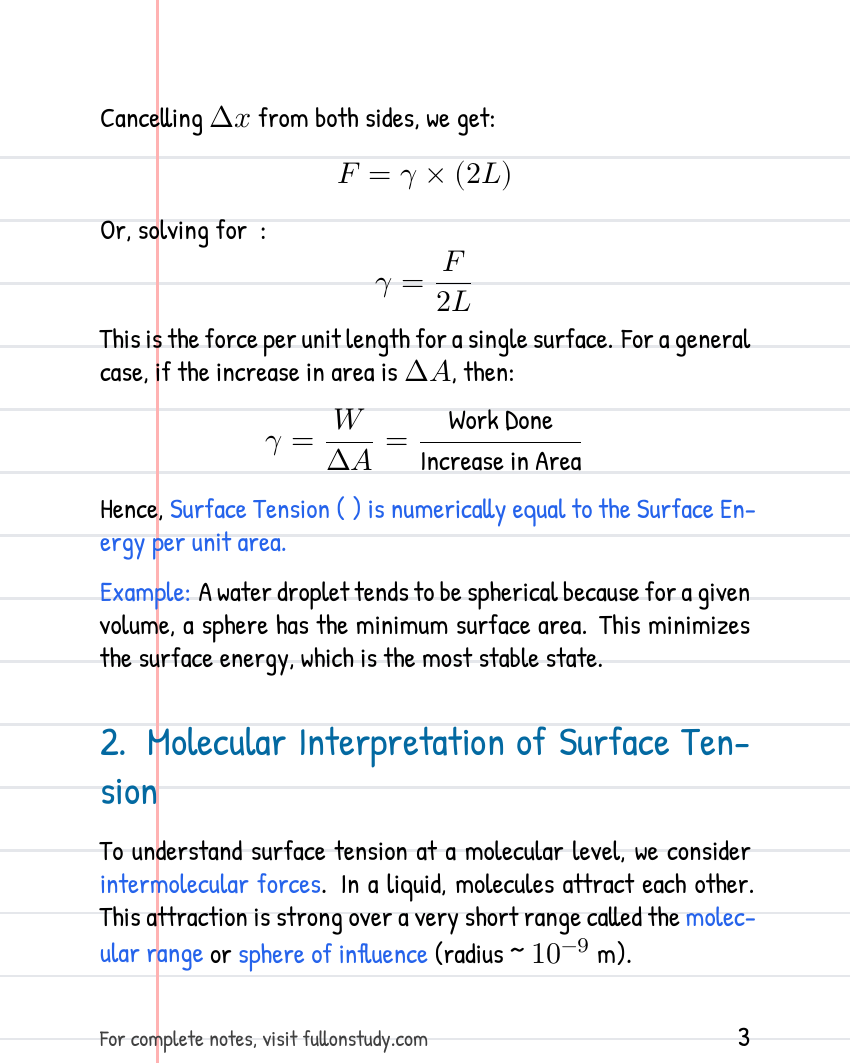
| Derivation of Relation | Outlines the derivation linking surface tension and surface energy using a liquid film example. |
Features
- Easy to understand explanations with everyday examples.
- Complete syllabus covered for core university Physics courses.
- Free to download in pdf format for offline study.
- Includes questions and answers at the end of each topic to test your understanding.
FAQs
What is surface tension in simple words? It is the property of a liquid’s surface that makes it behave like a stretched elastic sheet due to unbalanced molecular forces.
What are the units of surface tension? The SI units are Newton per metre (N/m) or Joule per square metre (J/m²).
How is surface energy related to surface tension? Surface tension (γ) is numerically equal to the surface energy per unit area. The work done to create new surface area is stored as surface energy.
- 📄 Format PDF Document
- 🔓 Access Free
- 💾 File Size 0.04 MB
- 📖 Pages 4
- ✅ Reviewed By Manisha Joshi, M.Sc, Physics
- 🗓️ Last Updated April 14, 2026
×
![Preview enlarged]()