
Open your third year chemistry syllabus and you will notice something odd: the same topic names keep coming back.
Spectroscopy sits in both Organic and Physical. Organometallic chemistry appears in Inorganic and Organic. Polymers show up twice as well.
These BSc 3rd year chemistry notes cover all three papers chapter by chapter, and this guide shows you which chapters to read together.
Ready to download? Go to Inorganic, Organic or Physical Chemistry.
BSc 3rd Year Chemistry Notes
BSc 3rd year chemistry notes are chapter-wise study material for the final year of a three year BSc.
They cover advanced Inorganic, Organic and Physical Chemistry topics, such as metal-ligand bonding, heterocyclic compounds and quantum mechanics, in short pages built for quick revision.
Check the chapter names against your university’s BSc Chemistry syllabus before you start. Order and topics can differ.
Inorganic Chemistry Notes
The eight Inorganic chapters split neatly into two halves. One half explains how metal compounds are built. The other shows what they do.
| Unit | Book / PDF Name | Download Link |
|---|---|---|
| Unit 1 | HSAB | Download |
| Unit 2 | Metal-Ligand Bonding | Download |
| Unit 3 | Magnetic Properties | Download |
| Unit 4 | Electron Spectra | Download |
| Unit 5 | Thermodynamic & Kinetic Aspects | Download |
| Unit 6 | Organometallic Chemistry | Download |
| Unit 7 | Bioinorganic Chemistry | Download |
| Unit 8 | Inorganic Polymers | Download |
Half one: bonding and structure
- Chapter 1: HSAB
- Chapter 2: Metal Ligand Bonding
- Chapter 3: Magnetic Properties
- Chapter 4: Electron Spectra
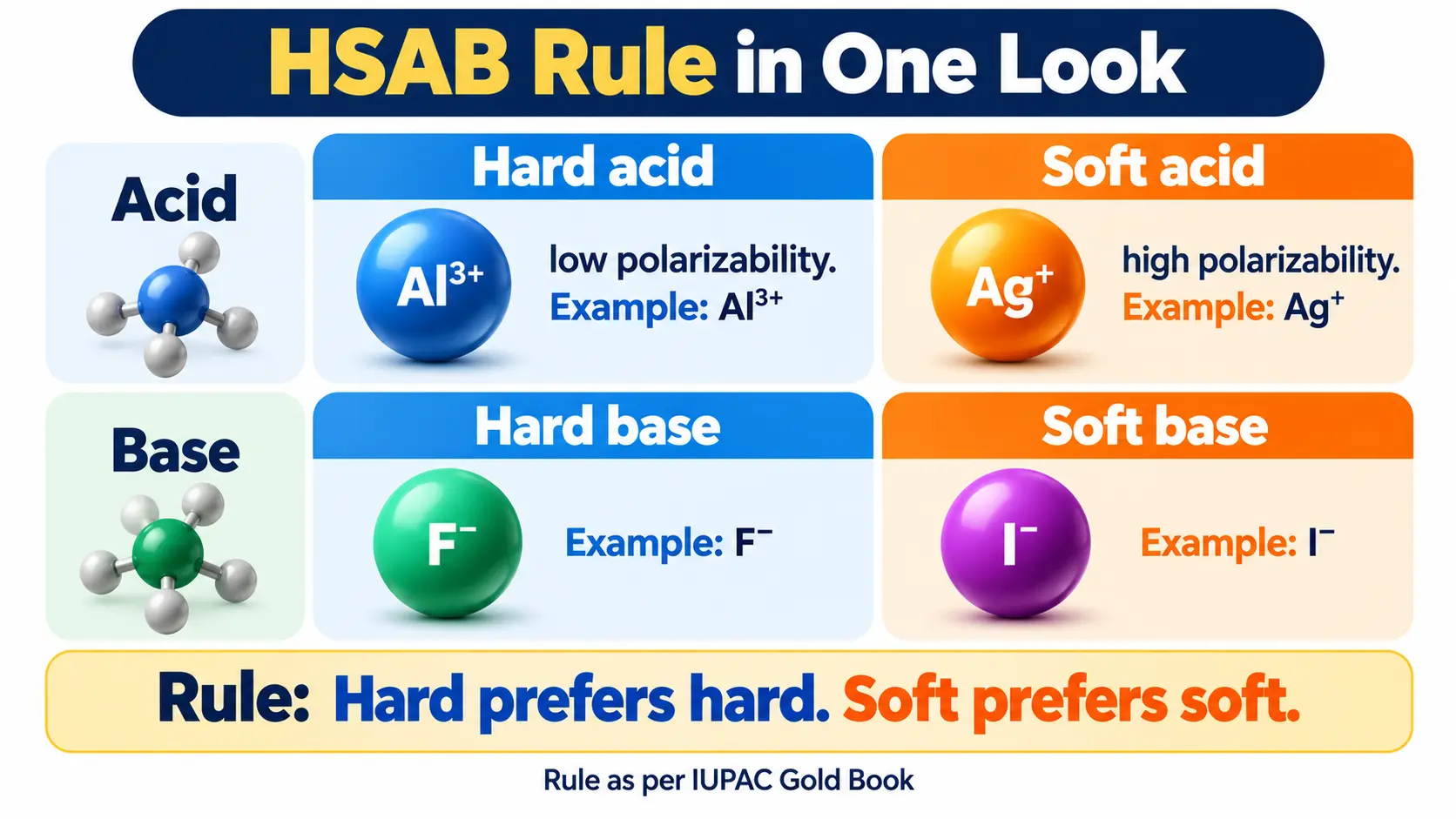
Start with HSAB. IUPAC defines a hard acid as a Lewis acid with an acceptor centre of low polarizability.
The same source notes that hard-hard and soft-soft pairings gain extra stabilization, which is the HSAB rule. Write it on one line and you will use it in later chapters too.
Half two: reactions and applications
- Chapter 5: Thermodynamic and Kinetic Aspects
- Chapter 6: Organometallic Chemistry
- Chapter 7: Bioinorganic Chemistry
- Chapter 8: Inorganic Polymers
Chapter 6 deserves a second look. IUPAC describes organometallic compounds as compounds with bonds between metal atoms and carbon atoms of an organyl group.
Read it alongside Organic Chapter II. The ideas will lock together.
Organic Chemistry Notes
Ten chapters can feel like a wall. Group them into four themes and the paper becomes much easier to plan.
| Unit | Book / PDF Name | Download Link |
|---|---|---|
| Unit I | Spectroscopy | Download |
| Unit II | Organometallic Compounds | Download |
| Unit III | Organosulphur Compounds | Download |
| Unit IV | Heterocyclic Compounds | Download |
| Unit V | Organic Synthesis via Enolates | Download |
| Unit VI | Carbohydrates | Download |
| Unit VII | Amino Acids, Peptides, Proteins and Nucleic Acids | Download |
| Unit VIII | Fats, Oils and Detergents | Download |
| Unit IX | Synthetic Polymers | Download |
| Unit X | Synthetic Dyes | Download |
Theme 1: Finding structures
Chapter I covers Spectroscopy. Treat it as your toolkit, because you will use it to confirm structures in almost every later chapter.
Theme 2: Reactive building blocks
- Chapter II: Organometallic Compounds
- Chapter III: Organosulphur Compounds
- Chapter V: Organic Synthesis via Enolates
These chapters are about making new bonds. Practise writing each reaction as a short flow from reactant to product.
Theme 3: Rings and biomolecules
- Chapter IV: Heterocyclic Compounds
- Chapter VI: Carbohydrates
- Chapter VII: Amino Acids, Peptides, Proteins and Nucleic Acids
- Chapter VIII: Fats, Oils and Detergents
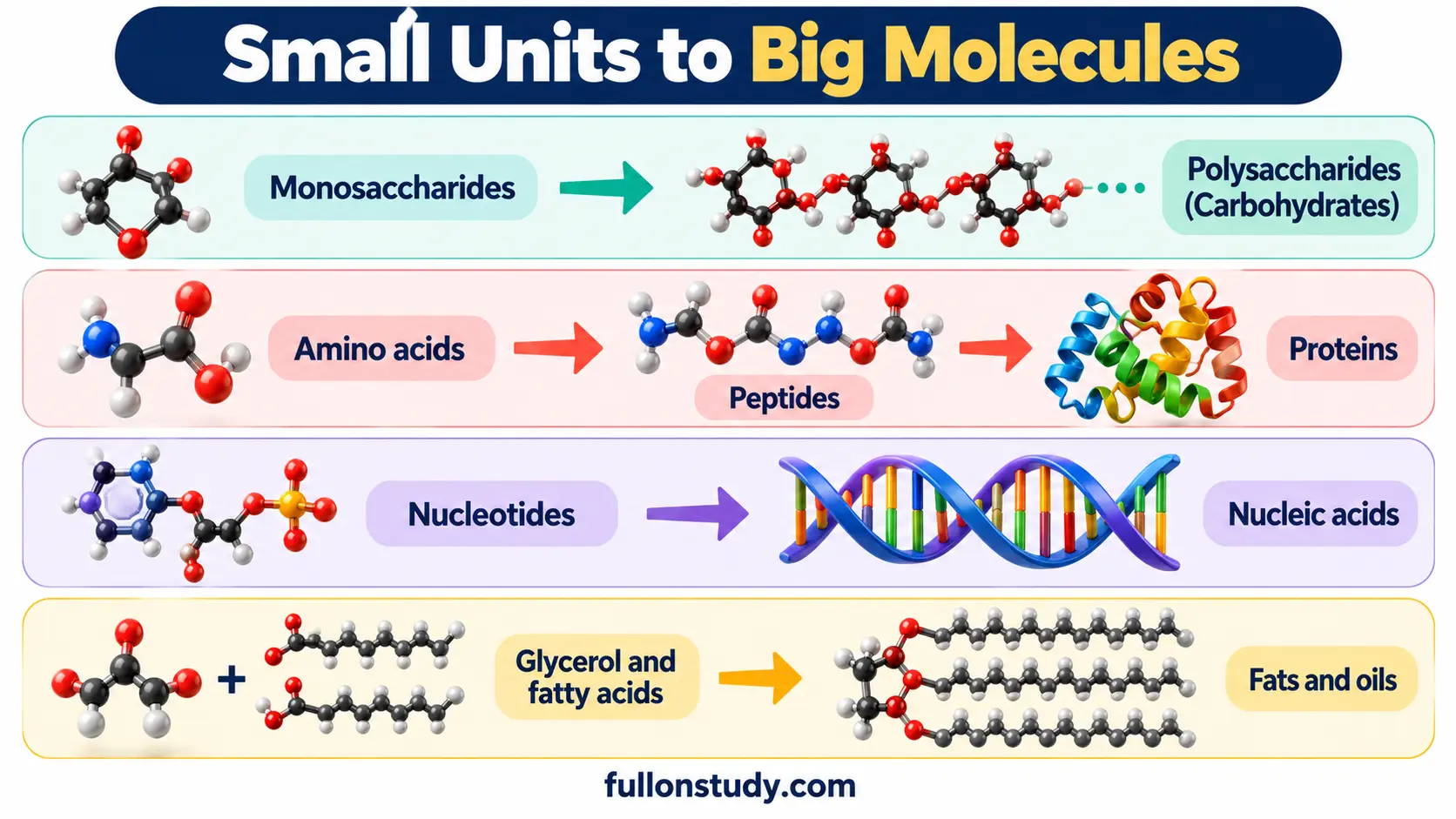
Imagine you have one evening to revise Chapters VI to VIII. Do not read them in order. Instead, ask the same question for each: what is the small unit, and what does it build?
Theme 4: Materials and colour
- Chapter IX: Synthetic Polymers
- Chapter X: Synthetic Dyes
These two chapters are application heavy. They reward students who can connect structure to use, so keep a small table of names, structures and uses.
Physical Chemistry Notes
Physical Chemistry in third year asks you to think in two modes. First you understand the idea. Then you use it to solve a problem.
- Chapter I: Elementary Quantum Mechanics
- Chapter II: Spectroscopy
- Chapter III: Photochemistry
- Chapter IV: Physical Properties and Molecular Structure
- Chapter V: Solutions, Dilute Solutions and Colligative Properties
| Unit | Book / PDF Name | Download Link |
|---|---|---|
| Unit I | Elementary Quantum Mechanics | Download |
| Unit II | Spectroscopy | Download |
| Unit III | Photochemistry | Download |
| Unit IV | Physical Properties and Molecular Structure | Download |
| Unit V | Solutions, Dilute Solutions and Colligative Properties | Download |
Photochemistry: link it to what you already know
IUPAC describes photochemistry as the branch of chemistry concerned with the chemical effects of light.
If Spectroscopy in Chapter II explains how a molecule absorbs light, Chapter III asks what happens next.
Colligative properties: practise the numericals
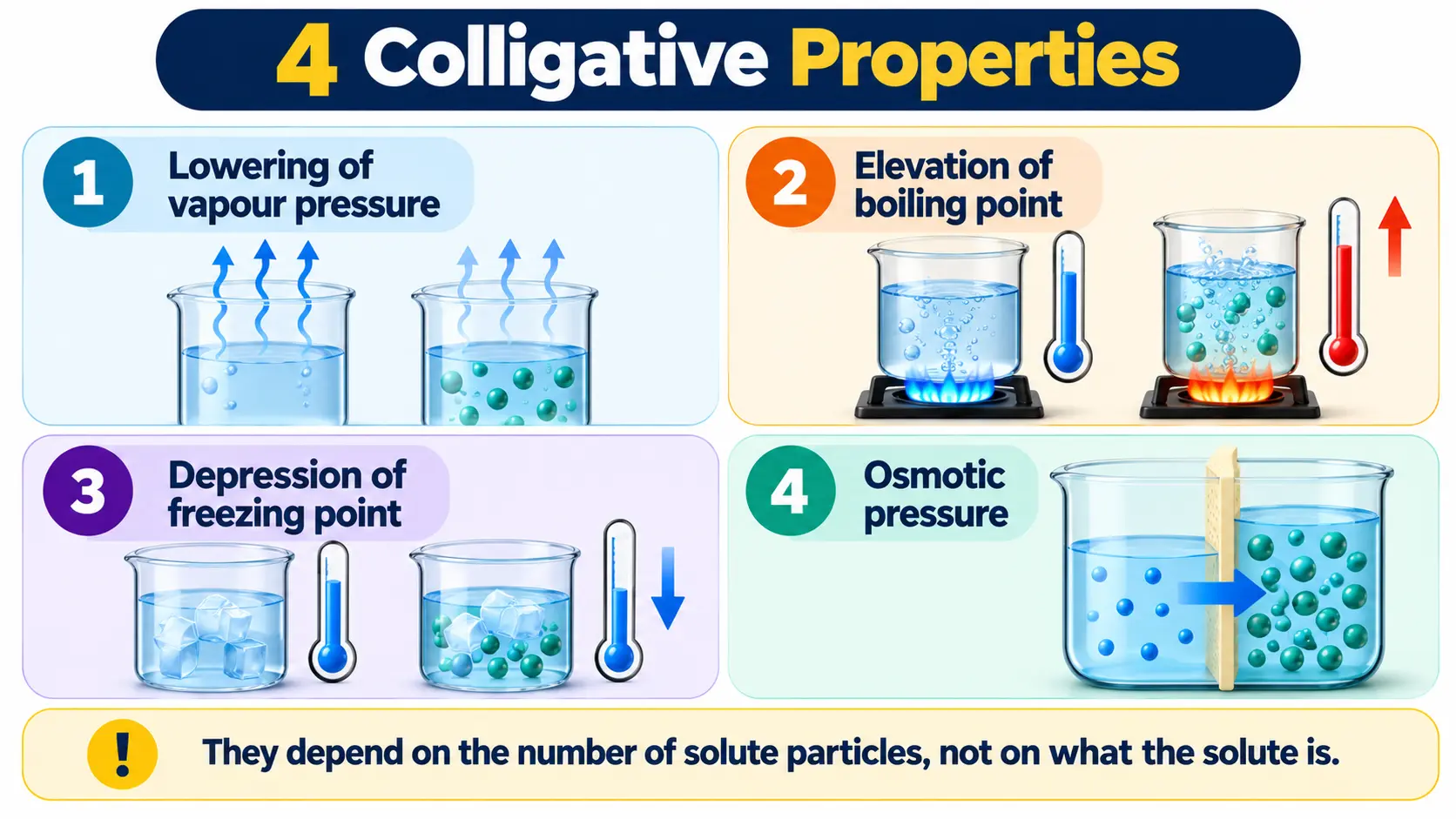
The OpenStax chemistry text explains that colligative properties depend on the total concentration of solute species, not on what the solute is.
Those properties are lowering of vapour pressure, elevation of boiling point, depression of freezing point and osmotic pressure.
Chapter V is where numericals usually decide your marks, so solve problems until the setup feels automatic.
5 Week Plan for BSc 3rd Year Chemistry Notes
Do not finish one paper and then start the next. Rotate by theme instead, so linked chapters sit in the same week.
| Week | Theme | Chapters |
|---|---|---|
| 1 | Bonding and structure | Inorganic Ch 1 to 3, Physical Ch I and IV |
| 2 | Spectroscopy and light | Organic Ch I, Physical Ch II and III, Inorganic Ch 4 |
| 3 | Metals meet carbon | Inorganic Ch 5 and 6, Organic Ch II to IV |
| 4 | Enolates and biomolecules | Organic Ch V to VIII |
| 5 | Materials and finishing | Inorganic Ch 7 and 8, Organic Ch IX and X, Physical Ch V |
Pair the notes with a good textbook from our list of BSc Chemistry books. Notes are for revision, and books give the depth.
In week 5, finish by solving questions from the BSc Sem VI Chemistry question bank. Adjust the weeks to match your exam date.
Why Is Third Year Chemistry Harder Than Second Year?
The topics get more specialised. You move from general reactions to ideas like electron spectra, bioinorganic chemistry and photochemistry.
The three papers also start to overlap. A student who studies each paper in isolation ends up learning the same idea three times.
Reading linked chapters back to back saves time, and it makes each concept easier to remember.
Missing some second year groundwork? Revise from our BSc 2nd year chemistry notes first.
Which Chapters Should You Read Together?
This table shows the links between papers. Use it to pair chapters before you open any PDF.
| Topic | Chapters to pair | Why they belong together |
|---|---|---|
| Spectroscopy | Organic Ch I, Physical Ch II, Inorganic Ch 4 | Organic shows what a spectrum tells you about a structure. Physical explains why molecules absorb energy. Inorganic applies the idea to metal complexes. |
| Organometallic chemistry | Inorganic Ch 6, Organic Ch II | The same type of bond, seen from the metal side and from the carbon side. |
| Polymers | Inorganic Ch 8, Organic Ch IX | Compare what the chains are made of and where each type is used. |
| Light and molecules | Inorganic Ch 4, Physical Ch III | Both begin with a molecule absorbing light. |
| Bonding and structure | Inorganic Ch 2, Physical Ch I and IV | Bonding models rest on quantum ideas. |
FAQ’s
The eight chapters are HSAB, Metal Ligand Bonding, Magnetic Properties, Electron Spectra, Thermodynamic and Kinetic Aspects, Organometallic Chemistry, Bioinorganic Chemistry and Inorganic Polymers.
Yes. It appears as Chapter I in the Organic notes and Chapter II in the Physical notes. Read them back to back for a fuller picture.
There are ten chapters, from Spectroscopy in Chapter I to Synthetic Dyes in Chapter X.
Rotate by theme rather than by paper. The 5 week plan above puts linked chapters in the same week.
Not always. Chapter order and topics vary, so compare the list with your own syllabus before you begin.
Final Words
Pick the chapter that worries you and download its paper today. Read it, close the PDF and write down what you remember.
Once the first chapter is done, the rest feel lighter. For more, browse our BSc study material collection.
Disclaimer: These notes are meant for study and revision. Topics and chapter order can vary by university, so always follow your official syllabus.
About the Author(s):

Fullonstudy Team is a passionate team of educators, content creators, and students, committed to bringing you reliable, up-to-date, and accessible study resources. With a blend of academic knowledge, teaching experience, and a focus on simplifying complex topics, we are here to help guide you through your educational journey.
Other key team members who influence the content you read on our website include those in charge of research, content writing, editing, curriculum design, website development, and user experience. We also collaborate with experts in various academic fields to ensure the accuracy and relevance of our resources.
